Canada envoy Cooter says ties with India at ‘best moment ever’; energy, defence cooperation to accelerate

&imwidth=600&imheight=450&format=webp&quality=medium "Canada envoy Cooter says ties with India at ‘best moment ever’; energy, defence cooperation to accelerate")
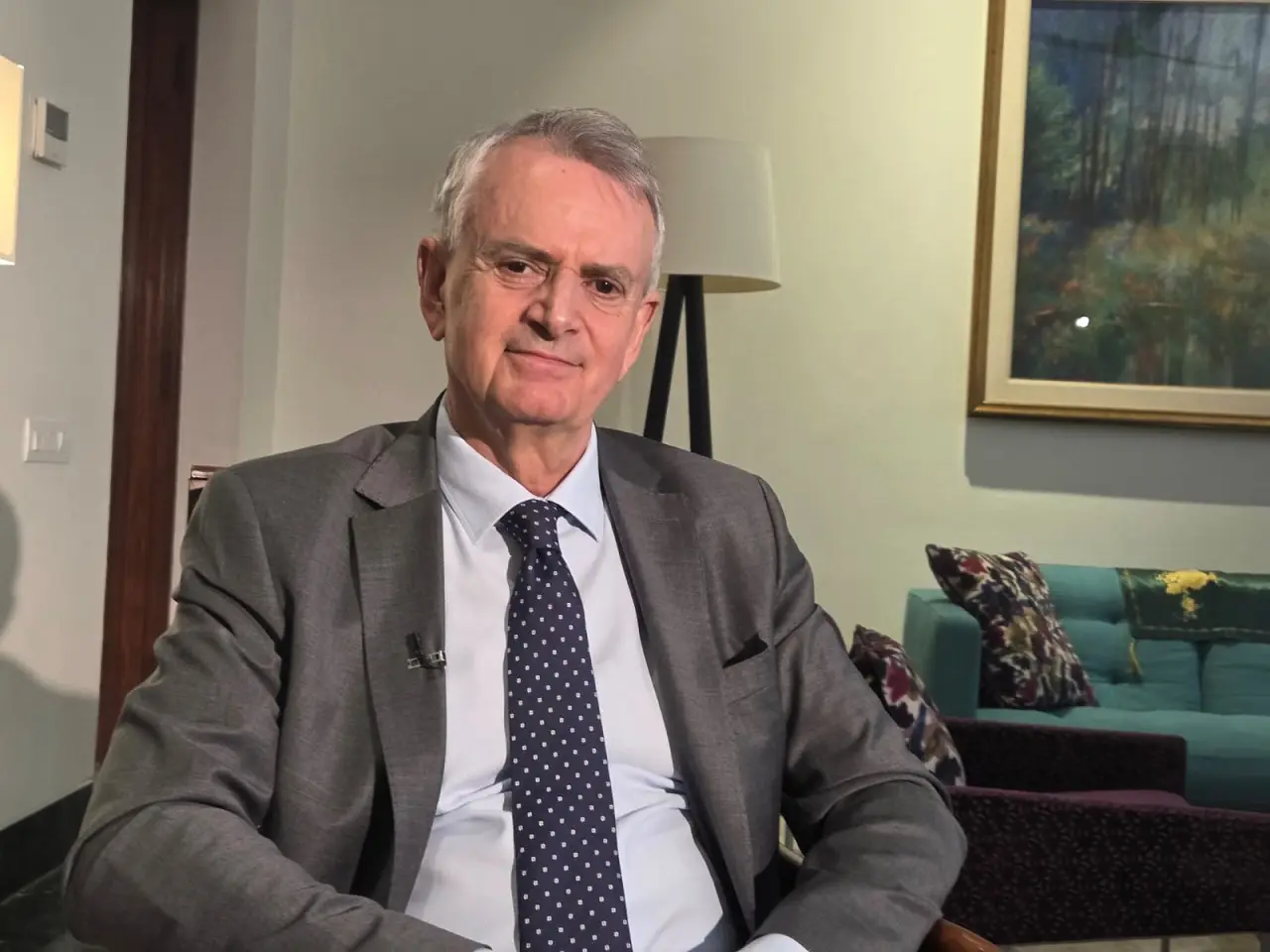
Canadian High Commissioner Christopher Cooter
Defence ties, previously minimal, are set for rapid cooperation. With Canada planning to spend an additional $500 billion on defence by 2035, Cooter revealed upcoming high-level talks, military-to-military engagement and potential industry collaboration in aerospace and auto sectors.
Canada and India are experiencing an unprecedented thaw in relations, with the Canadian High Commissioner declaring it “probably never been as good a moment” for bilateral ties, citing major advances in energy and security cooperation.
In an exclusive interview with WION's Sidhant Sibal, Christopher Cooter highlighted a dramatic “180º turn” since last year, describing the two economies as “complimentary gears” set to propel each other forward.
On energy, Cooter pointed to a landmark 10-year uranium deal with Cameco as “only the beginning,” with broader nuclear cooperation, including small modular reactors and technology, now accelerating. Canada is also positioning itself as a reliable supplier of oil, LNG and green energy to meet India's soaring demand amid West Asia instability.
“We are already an energy superpower... moving from being a provider to the United States to a provider to Asia and particularly India,” he said.
Defence ties, previously minimal, are set for rapid cooperation. With Canada planning to spend an additional $500 billion on defence by 2035, Cooter revealed upcoming high-level talks, military-to-military engagement and potential industry collaboration in aerospace and auto sectors.
On security, Cooter emphasised restored trust through regular intelligence exchanges and joint efforts against extremism. Addressing Indian concerns over Khalistani elements, he acknowledged a “fresh recognition” of the issue, citing Canada’s action on extortion and money laundering. “We’re both democracies... but when it crosses into criminal activity, we are taking steps with renewed vigour,” he said.
Trending Stories
&imwidth=280&imheight=210&format=webp&quality=medium)
&imwidth=280&imheight=210&format=webp&quality=medium)
&imwidth=280&imheight=210&format=webp&quality=medium)
&imwidth=280&imheight=210&format=webp&quality=medium)
&imwidth=280&imheight=210&format=webp&quality=medium)
&imwidth=280&imheight=210&format=webp&quality=medium)
&imwidth=280&imheight=210&format=webp&quality=medium)
&imwidth=280&imheight=210&format=webp&quality=medium)
&imwidth=280&imheight=210&format=webp&quality=medium)
&imwidth=280&imheight=210&format=webp&quality=medium)
&imwidth=280&imheight=210&format=webp&quality=medium)
&imwidth=280&imheight=210&format=webp&quality=medium)
&imwidth=280&imheight=210&format=webp&quality=medium)
&imwidth=280&imheight=210&format=webp&quality=medium)
&imwidth=280&imheight=210&format=webp&quality=medium)
&imwidth=280&imheight=210&format=webp&quality=medium)
&imwidth=280&imheight=210&format=webp&quality=medium)
&imwidth=280&imheight=210&format=webp&quality=medium)
&imwidth=280&imheight=210&format=webp&quality=medium)
&imwidth=280&imheight=210&format=webp&quality=medium)
&imwidth=280&imheight=210&format=webp&quality=medium)
&imwidth=280&imheight=210&format=webp&quality=medium)
&imwidth=280&imheight=210&format=webp&quality=medium)
&imwidth=280&imheight=210&format=webp&quality=medium)
&imwidth=280&imheight=210&format=webp&quality=medium)
&imwidth=280&imheight=210&format=webp&quality=medium)
&imwidth=280&imheight=210&format=webp&quality=medium)
&imwidth=280&imheight=210&format=webp&quality=medium)
&imwidth=280&imheight=210&format=webp&quality=medium)
&imwidth=280&imheight=210&format=webp&quality=medium)
&imwidth=280&imheight=210&format=webp&quality=medium)
&imwidth=280&imheight=210&format=webp&quality=medium)
&imwidth=280&imheight=210&format=webp&quality=medium)
&imwidth=280&imheight=210&format=webp&quality=medium)
&im=FitAndFill=(700,400)&imwidth=280&imheight=210&format=webp&quality=medium)
&imwidth=280&imheight=210&format=webp&quality=medium)
&imwidth=280&imheight=210&format=webp&quality=medium)
&imwidth=280&imheight=210&format=webp&quality=medium)
&imwidth=280&imheight=210&format=webp&quality=medium)
Sidhant Sibal: How do you characterise the relationship?
Christopher Cooter: It's a great moment in our relationship. I was in Canada for 2 weeks, I crossed the country, from Victoria, in the west to Toronto, in the east, and everywhere I met groups of business people, universities, political leaders, there's a lot of excitement about this relationship. We've made at least a 180 turn from where we were just over a year ago, when Prime Minister Carney invited Prime Minister Modi to the G7 summit. I think since then, the relationship has just gone from one success to another. But you could feel that spirit across Canada. A lot of interest on how we keep up this momentum, from different sectors, education sector mining energy. The Prime Minister himself, we met a couple of times when I was in Ottawa, he's very clear and what he wants to do. He wants to move forward on a pragmatic, but principal basis with India, which he sees as a breakout country. I mean, your economic growth is unparalleled in the World for large, a large country, and we are also making changes in Canada that fit exactly into where India is going. In fact, the 2 economies are complimentary, a lot of people have said that to me as I travelled across Canada. So overall, I would say it's probably never been as good a moment for doing business, and just for the overall relationship as we have now.
Sidhant Sibal: How do you see the trading relationship? Any deadline for CEPA trade agreement?
Christopher Cooter: Trade Minister Goyal's visit was not just a big visit, it had a big trade delegation. It was the largest visit by any Indian trade delegation anywhere in the world, so we were delighted to host him, all of the business delegates. We have some targets ahead. Both Prime Ministers agreed that this year we would conclude the free trade agreement, which we're calling the comprehensive economic partnership agreement or CEPA. We also have a deadline of doubling trade by 2030, which the CEPA will of course, help to push forward. So we're pretty ambitious, but there's a lot of interest, and I think you'll also see later this year here, reciprocal visit by our trade minister. We haven't announced that yet, but that's what we're discussing. So lots of action happening there to build that economic relation.
Sidhant Sibal: So this year possibly we will see the signing of the CEPA trade agreement?
Christopher Cooter: I am confident we will see that sighting occur. You've signed a number of agreements with other major trading partners, like the EU like the UK. We have a smaller trading relationship. I think both sides, particularly at the Prime Minister's double and at the level of the trade ministers and the chief negotiators, who've now met a number of types. I think there's a commitment across-the-board, so I think they're going to find a way pretty confident this will happen in 2026.
Sidhant Sibal: Complimentary economy is between India and Canada. Any specific areas that you think so, where cooperation can be firmed up in pharma, AI, agriculture, any specific areas that you can tell our viewers?
Christopher Cooter: Yeah, well, as I said, this is a very special moment. It's partly because we have each come to a realisation that we have these economies that are almost like gears, if you think of it that way, they're coming together like this, and I think once they fit, they're going to propel each other forward. You have enormous demand at scale, the largest population in the world, your energy growth, for example, you'll take 35% of all the energy growth in the world. Over the next 2 years, you are buying 2000 aircraft. AI is booming, you need critical minerals for the transition to a green economy, for defence, etc. Meanwhile, in Canada, we are building up our capacity across-the-board on energy and critical minerals on AI advanced manufacturing. It just so happens at those 2 economies and they're both big economies. Our economy has a much smaller population. We are the second largest country by land area, and many areas are superpower, to say an energy In the fourth largest oil reserves, the fifth natural gas, we are top 2 or 3 in AI research. We're building an infrastructure that will allow us to reach Asia and particularly India much, much more easily, and that's coming up fast. So we will have about a million barrels a day of oil that will be able to pipe out to our new pipeline with the West Coast, the same thing, with LNG, the same thing with LPG. We should be reliable partners for each other. We should integrate our Supply chains and we can rely on that partnership in future. So we have resilience, where there's crises like West Asia.
Sidhant Sibal: Any details on how you provide India energy amid this west Asia crisis?
Christopher Cooter: We are already an energy superpower in our own right. The difference today is that we're moving from being a provider of energy to the United States, to a provider of energy to Asia to Europe and particularly India. The Uranium deal was announced through the Prime Minister's visit, but we've also looked at oil, and I think we've begun to sell some oil. We are very close to other areas like LNG and LPG. But we also have a focus on green energy sources as well. We're very advanced in carbon capture, for example, we're building batteries for EVs in Canada. Because of the Gulf war, the urgency to help India's get to secure sources of supply, there has grown, but we are looking at our wider area of energy sources because you're moving very quickly to the green transition, so are we, and so we want to have that partnership across-the-board in all fields.
Sidhant Sibal: Uranium deal is something that is seen as the biggest outcome from Canada Prime Minister's India visit. Any details?
Christopher Cooter: I was in Saskatchewan during my visit to Canada, and I was meeting with the head of Cameco, which is the company responsible for that as well as the premier or Chief Minister of the province of Saskatchewan. Lots of excitement around this, but it's seen as only the beginning, it's a 10 year deal. I don't know exactly in what portion they will come per year, but we also have the technology around nuclear power. We, in fact, provided reactors over the years to India. We've now got the first operational, small modular reactor in Canada coming online, we've also got scale down reactors that might also be very useful as your energy needs grow. So what we hope to have over the next few years, and this is referred to in the joint statement that the 2 Prime Ministers agreed to, is nuclear cooperation. So the technology as well as the fuel, and we could be looking at all aspects of that from engineering to heavy water, etc. So there's a lot happening in that space. I know you're going from 8 GB to 100 GW of nuclear power, and we want to be a very reliable source of both the materials, the raw materials and the technology as we go forward and we've adopted more nuclear technology ourselves.
Sidhant Sibal: In fact, India has a new law. The Shanti law that basically focused on more private participation as well with safeguards. Do you see this bill essentially enticing more Canadian companies to come when it comes to civil nuclear cooperation?
Christopher Cooter: I do. There's a lot of interest in this, it's a whole new field now and we realised that we need to have nuclear power in order to reach those clean energy goals. So I think over the coming months, we'll start to see our active discussion around that. But again, this is a partnership for us that stretches back to the 1950s. It's actually the one area of energy where we have worked together over the years, but it's fallen over the last decade or so, into a slower track. So we're going to accelerate that, but I hope to be hearing more about that from our industry and speaking with both government industry and the other side to see how we can make that go forward.
Sidhant Sibal: Where does this education pillar stand?
Christopher Cooter: Well at the risk of repeating myself, this is another area where we are kind of a superpower in education, not just in regard to India but I think globally we're seen as a leader both in university education and in skills education. We did have a very large delegation of our Canadian education leadership, colleges and universities. We have 25 or 26th of our university presidents here, including all the famous universities, the big research. So in the last couple of years, the story has got a little bit sour, because we put caps, because there were people taking advantage of that system, and there were also people who were making it turn from a good experience to a bad experience with housing etc. We're turning that around and what we're looking at with colleges and universities. The students are welcome in Canada and right now, we host 400000 Indian students that's more than the EU, the UK and Australia combined. That's more than the United States. Prime Minister Carney was very proud to see that several times during his visit, so we want the students to come to Canada. But at the same time, our universities and colleges want to do something quite near, and this, in part, is an answer to our question. Prime Minister Modi said he would like to see institutions in India. So that's what they're working on right now. Some universities may open a campus, and McGill is going to do so. Others may open programmes where there could be joint degrees. There could be faculty exchanges, undergraduate and graduate students going back-and-forth, but all of that will add up to presence in India. Now that's going to be more cost-effective for students here, and researchers, as well as for parents. Of course, it's also going to lead to a tighter partnership. We don't want the relationship simply to be in one direction anymore. We want this to be a 2 way relationship, reflecting the changes in both countries. So down the road, we would see a much more equal kind of relationship, where we have Canadians coming here, but research partnerships who are all supporting industry in different ways.
Sidhant Sibal: Following past tensions, how is Canada-India law enforcement and intelligence cooperation progressing?
Christopher Cooter: The most important thing that's happened is the reestablishment of trust. A security delegation at senior level came to India, that was in September. Subsequent to that there was your NSA going to Canada. The agencies involved have now been in regular touch. They have a dialogue, and they have established an official dialogue, but beyond that, they are a regular touch between the agencies. And we're starting real progress there. But all of that adds up to the establishment of trust. Now, both countries are, of course, concerned with the security and safety of their own citizens and reminded of that, because we have at the anniversary of the tragedy of the Air India bombing back in 1985, coming up in just a week's time, and we'll actually be commemorating that here at the official residence. But I think what we're doing is that we are building a mature and effective relationship between the 2 countries, between the security agencies so that we are cooperating to avoid problems in future. We've also taken a number of steps in Canada with respect to extortion, money laundering, we've set up a financial crimes commission. We've declared the Bishnoi gang as a terrorist organisation, arrests occurring, there are things going on that you don't see publicly talk about as well. But all that's adding them to greater security for both Canadians and Indians, and is really building that level of trust.
Sidhant Sibal: You also said that they are having a lot of success. If you can define successes in terms of security cooperation??
Christopher Cooter: Some of these things are simply bureaucratic. We did in a certain way, you did it a certain other way. So when we talk about border procedures, making sure that the borders are secure is that kind of thing. So that's something that is mundane, perhaps very important when it comes down to the particular cases, they were reviewing their procedures regularly between each other, exchanging that kind of information. So this is leading to better outcomes for both countries. I can't go into the details about that. But in all areas we try to avoid surprises. If we see something coming up the other side is, hey, look, this is coming up. Can we address this problem? Let's not take it to the public and make it a political issue. Let's deal with it in a mature way, and I think that's very much the attitude of the Carney government.
Sidhant Sibal: India has concerns over Khalistani extremist, So how is this issue being dealt with especially it being a big concern for New Delhi?
Christopher Cooter: Well, we're both democracies, we know that, people will say things that some of us don't agree with. Sometimes, you know, they're awful, but they're also lawful. I think I would agree with where there's criminal activity, we are taking steps. I think it's with renewed vigour to look at things like extortion, to look at money laundering. There was a report tabled by CSIS, a few weeks ago. They noted that, within a democracy, there will be voices, people saying things that an average person doesn't agree with, but as long as it doesn't cross that line. I think there is a fresh recognition there that some of those, we are taking a more serious look at. So I think we're coming closer to a convergence, and how we see that problem.
Sidhant Sibal: I think it was the first time that a Canadian authority has acknowledged khalistani extremists as a cause of concern.
Christopher Cooter: Well, it's the first time it has been acknowledged in that parliamentary setting. I couldn't recall whether we've had a politician state in the past or not, but there was a pretty explicit recognition there. So again this reflects, I think, a convergence of our views.
Sidhant Sibal: How are both countries cooperating in the multilateral aspect?
Christopher Cooter: We're doing an agreement with Australia and India around AI. So AI is something that we are hopeful will lead to a better future. But very conscious of the fact that there are some serious risks, our Finance Minister, among them, had just met recently in multilateral settings, where they talked just about that. So that's something that we can work on together and it's an urgent issue, because AI is developing quickly. We've also I think we'll be able to see more of you in the Indian Ocean as dialogue members of the Indian Ocean Rim Association, so we're hoping for India's support for that. We want to be more present in the Indo-Pacific area in all aspects, and we've got a number of trade agreements in the region as well. India is also a leader of the Global South, we have to make sure the Global South has a greater voice.
Sidhant Sibal: Are you looking at defence cooperation with India..
Christopher Cooter: Absolutely. In the joint statement Between the 2 Prime Ministers, you'll see mention of cooperation in that area. We just had a very successful visit to your national defence college in Canada. They met with military counterparts, but they also met with the defence industry in Canada. Now we plan to scale up very rapidly on defence, in part to meet our NATO commitments, but also because in defence, as in many other fields, Canada wants to stand clearly on its own 2 feet and protect its sovereignty. So we'll be spending $500 billion more in defence by 2035 and bear in mind, when we're going to a 5% of our GDP target and keep in mind that we are still the ninth largest economy in the world. So when you're talking about 5% of the ninth largest economy in the world. That's a lot to spend, so we'll be heading into discussions with you, I hope very soon on defence. We will be looking at the commercial side of that procurement and so forth. Currently, more discussions at the military to military level, it's an area where we've done very, very little. So we've got lots of headroom to grow and there's a big future, lots of interest about industry in India and in Canada. This is something that we're quite excited about and I think there's a great future in that field.
Sidhant Sibal: How do you see future outlook of ties?
Christopher Cooter: There's so many fields where we are surprisingly modest in what we've done so far. Think of the auto sector so you've got a very rapidly growing auto sector on the other hand in Canada, has just started to produce batteries. We'll be producing about $1.8 million by 2028. So can we find some kind of marriage in the auto sector. Aerospace, you're buying 2000 aircraft, will we produce many kinds of aircraft in Canada? We've always had a very large aircraft sector again. We've done very, very little in that area of agriculture, right now, we sell you a few things pulses, not much more than that. Agriculture is our fastest growing sector. It's the fastest growing sector because we're applying technique and technology to protect the soil and have more fertility, so we produce more from the same area of land while using less fuel. We've got science that applies to it, that really is changing the nature of agriculture.