Saudi Arabia's Grand Mufti dies. Why Sheikh Abdulaziz bin Abdullah Al ash-Sheikh was a prominent figure in Arab Kingdom

&imwidth=600&imheight=450&format=webp&quality=medium "Saudi Arabia's Grand Mufti dies. Why Sheikh Abdulaziz bin Abdullah Al ash-Sheikh was a prominent figure in Arab Kingdom")
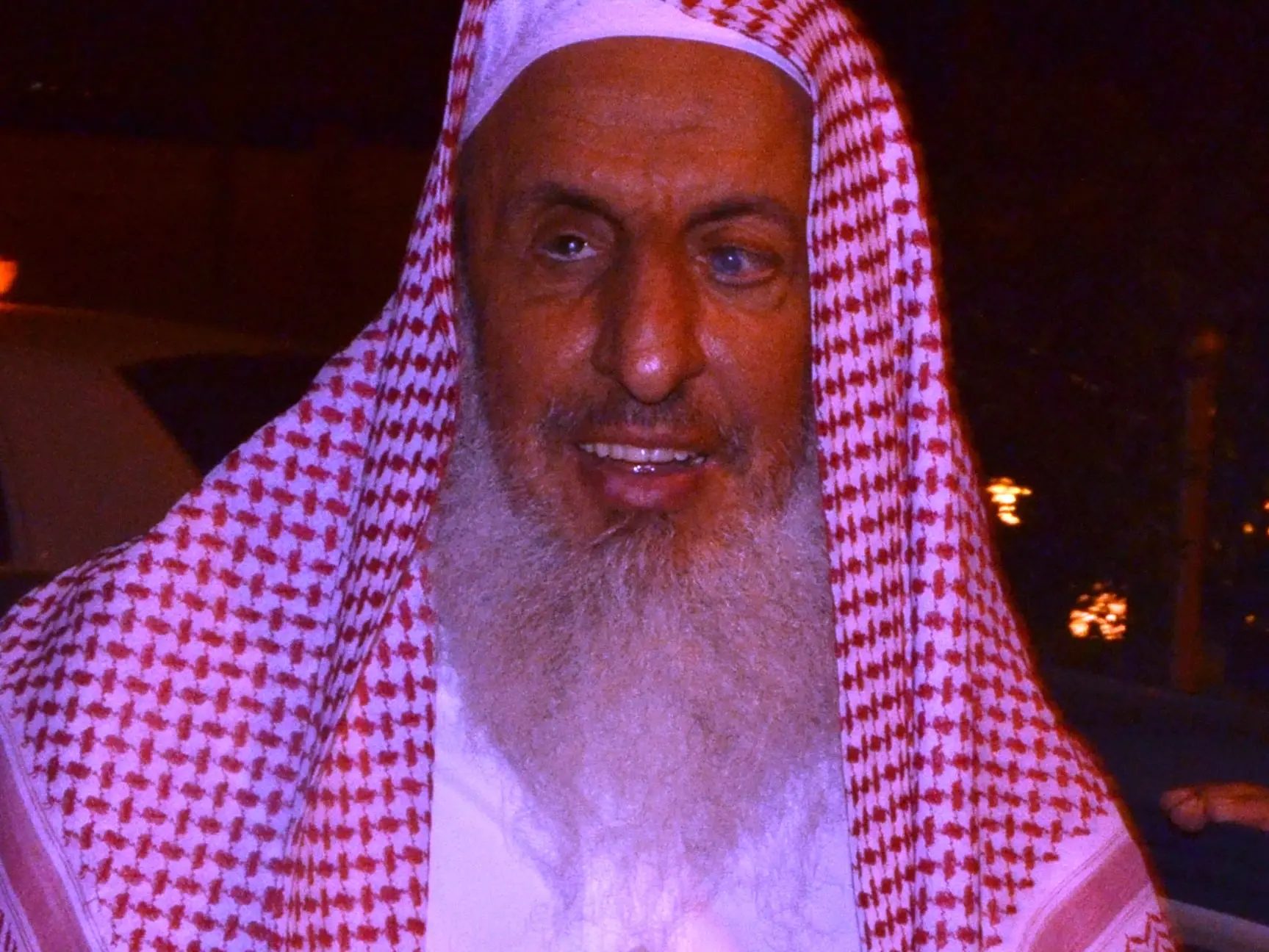
Sheikh Abdulaziz bin Abdullah Al ash-Sheikh, the Grand Mufti of Saudi Arabia Photograph: (Others)
As a descendant of Muhammad ibn Abd al-Wahhab, the Grand Mufiti Sheikh Abdulaziz bin Abdullah Al ash-Sheikh had a major influence on religious matters regarding Islam. He was widely respected globally by the faithful
Sheikh Abdulaziz bin Abdullah Al ash-Sheikh, the Grand Mufti of Saudi Arabia, who died on Tuesday (Sep 23), was a prominent religious figure in the Arab Kingdom. The Grand Mufti, appointed by Saudi king, is the most senior and most influential Muslim religious and legal authority in Saudi Arabia, home to the most sacred sites of Islam. Sheikh Abdulaziz bin Abdullah Al ash-Sheikh was a descendant of Muhammad ibn Abd al-Wahhab, the 18th-century founder of the Wahhabi movement, which gave him significant symbolic authority within the kingdom's religious establishment.
Condoling his death, Indian Prime Minister Narendra Modi said in a post on X: “Deepest condolences on the sad demise of the Grand Mufti of the Kingdom of Saudi Arabia, His Eminence Sheikh Abdulaziz bin Abdullah bin Mohammed Al AlSheikh.”
Who was Sheikh Abdulaziz bin Abdullah Al ash-Sheikh, the Grand Mufti of Saudi Arabia?
Born in Mecca in 1943, the Grand Mufti pursued religious studies, graduating from the College of Sharia at Imam Muhammad ibn Saud Islamic University in Riyadh in 1963. Having studied under notable scholars, including the previous Grand Mufti, Abdulaziz ibn Baz, his career included roles as a teacher in religious institutes and a lecturer at the Higher Institute of Judiciary.
As a preacher or ‘khatib’ at the Namira Mosque in Arafat, he delivered the annual Hajj sermon for 35 years.
He was appointed deputy Grand Mufti in 1996 and became Grand Mufti in 1999. He also served as chairman of the Council of Senior Scholars and the Permanent Committee for Scholarly Research and Ifta (fatwas).
Trending Stories
)
)
)
)
)
)
)
)
)
)
)
)
)
)
)
)
)
)
)
)
)
)
)
&im=FitAndFill=(700,400))
)
)
)
)
)
)
)
&im=FitAndFill=(700,400))
)
)
)
)
)
)
)
)
The Grand Mufti's power and significance in Saudi Arabia
Sheikh Abdulaziz Al ash-Sheikh was a highly significant religious figure, and the kingdom's top religious authority for over two decades. He was one of the most influential Sunni clerics globally.
His role involved interpreting Sharia law, issuing fatwas on a wide range of issues from social reforms to international affairs, and providing religious legitimacy to government policies.
He supported key modernisation efforts under Crown Prince Mohammed bin Salman (MBS), such as allowing women to drive in 2018 and promoting cultural events like concerts and cinemas as part of Vision 2030.
His sermons and rulings shaped public opinion and policy in the Islamic world.
While respected for his conservative Wahhabi roots, he functioned more as a state loyalist, ensuring fatwas supported political priorities, rather than challenging them.
The unique power structure of Saudi Arabia: Clergy-kingdom arrangement
Saudi Arabia is the custodian of Islam's two holiest sites, the Masjid al-Haram in Mecca and the Masjid an-Nabawi in Medina, and its King holds the title of "Custodian of the Two Holy Mosques".
The Grand Mufti, and his power, are closely aligned that of the king and the state.
The power arrangement in Saudi Arabia is a longstanding symbiosis between the ruling Al Saud royal family and the religious clerical establishment, particularly the Al ash-Sheikh family. This dates back nearly 300 years to a 1744 pact between Muhammad bin Saud - the founder of the First Saudi State and the Saud dynasty- and Muhammad ibn Abd al-Wahhab, a prominent cleric of Wahabism.
Also read: Why Russia may block Saudi Arabia from directly confronting India during a war against Pakistan?
This alliance forms the foundation of the kingdom, with the Al Saud family controlling political and military power, while the Al ash-Sheikh family oversees religious affairs, providing ideological legitimacy to the monarchy through Wahhabi interpretations of Islam.
The Al ash-Sheikh family holds prestige in the kingdom, second only to the Al Saud, with marriages between their families reinforcing the bond.
Institutions like the Council of Senior Scholars, chaired by the Grand Mufti, are the sole authority for fatwa issuance since 2010.
These ensure that religious edicts align with state interests, while sidelining independent clerics.