408 migrating Gambians missing since 2014: Government moves to give families answers

&imwidth=600&imheight=450&format=webp&quality=medium "408 migrating Gambians missing since 2014: Government moves to give families answers")
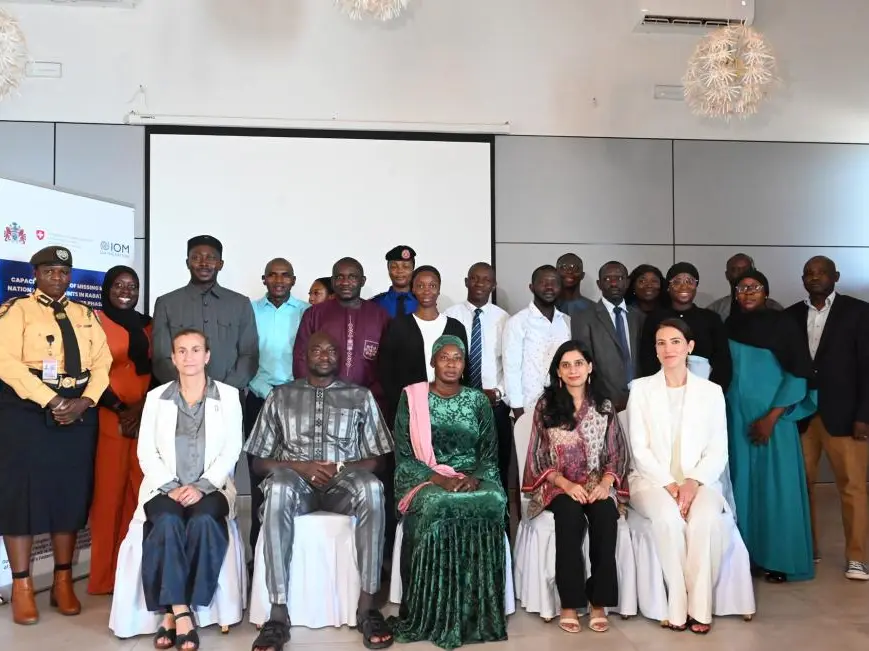
Representatives from the government convened on addressing the challenge of missing migrants, including strengthening support for families seeking answers about the fate and whereabouts of their loved ones. Photograph: (IOM The Gambia/2026)
Families of missing migrants are often left with uncertainty and few answers. Now, The Gambia is strengthening its national response to migrant deaths and disappearances, as official figures show at least 408 Gambians have gone missing along migration routes since 2014.
Banjul – Behind every missing migrant is a family searching for answers. The Gambia is now taking concrete steps to make sure those families are not left in the dark.
From 30 September to 2 October, the International Organization for Migration (IOM) and the Ministry of Foreign Affairs, International Cooperation and Gambians Abroad (MoFA) held a three-day training to strengthen the country's response to migrant deaths and disappearances.
It brought together 23 members of the National Task Force on Missing Migrants (NTFMM), the national coordination body set up by MoFA with IOM's technical support. Gambian diplomatic officials responsible for assisting citizens in Spain, Italy, Greece, Malta, Morocco and Mauritania also took part.
Also read | Ghanaian fashion icon Nana Akua Addo injury videos trigger domestic violence allegations
Participants explored practical ways to prevent migrant deaths and disappearances, search for and identify missing migrants, manage cases, and support families seeking information. The sessions also looked at migration dynamics, vulnerabilities and protection risks facing Gambians along key routes. Drawing on international good practices, they discussed route-based responses.
According to IOM's Missing Migrants Project, at least 408 Gambians have gone missing along migration routes since 2014. The real figure is likely much higher, because incidents, especially at sea, are hard to document.
Trending Stories
)
)
)
)
)
)
)
)
)
)
)
)
)
)
)
)
)
)
)
)
)
)
)
)
)
)
)
)
)
)
)
)
)
)
&im=FitAndFill=(700,400))
)
)
)
)
The Western African Atlantic Route is of particular concern. In December 2025, the Jinack maritime incident claimed more than 25 lives and left about 100 people missing.
According to the Government of The Gambia, strengthening this national response is both a matter of coordination and of ensuring that families are not left without answers. "Every missing migrant represents a human tragedy that extends beyond borders and deeply affects families and communities," said Ndumbeh Saho, Director of Diaspora and Migration at MoFA. She called the training an important milestone toward a coordinated and sustainable framework that upholds the dignity and rights of those affected.
Sibgha Ajaz, IOM The Gambia Officer-in-Charge said that behind every missing migrant is a family coping with uncertainty and hoping for closure. Preventing disappearances and supporting families, she said, is "both a humanitarian responsibility and a collective commitment."
The training also supports the operationalisation of the NTFMM. By clarifying roles and responsibilities across government institutions, the initiative aims to ensure cases get followed up more effectively, and families get better access to information about their loved ones' fate and whereabouts.
The work builds on The Gambia's leadership in regional and international efforts, including its co-chairmanship of the Rabat Process Network of National Focal Points on Missing Migrants.
