Iran likens US pilot rescue operation to 1980 failed American mission – What happened in Operation Eagle Claw?

&imwidth=600&imheight=450&format=webp&quality=medium "Iran likens US pilot rescue operation to 1980 failed American mission – What happened in Operation Eagle Claw?")
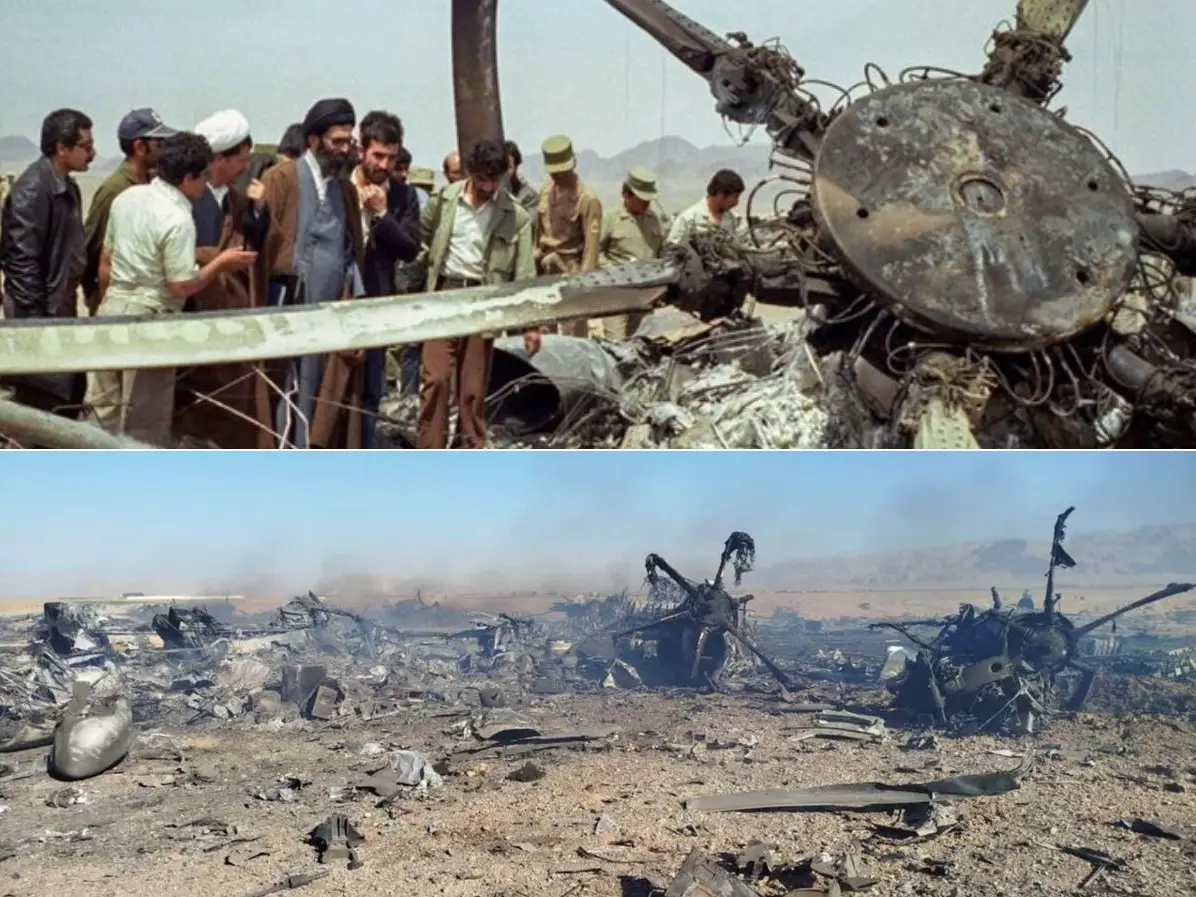
US aicraft wreckage in Tabas, Iran in 1980, images of wreckage of alleged US aircraft released by Iran. Photograph: (X/@IRAN_in_NL, AFP)
Iran is comparing the US pilot rescue to the 1980 failed American mission, alleging that US President Donald Trump is not admitting his losses. What was Operation Eagle Claw? Scroll down to know all about it.
The Iranians are drawing parallels between the US military operation to rescue the F-15E pilot and the 1980 failed American mission to rescue their Embassy staffers in Tehran. They have alleged that US President Donald Trump, who announced that the airman was “SAFE and SOUND” after he was rescued, is not admitting to his losses during the operation. Meanwhile, Iran has released images and a video of what it claimed to be the wreckage of several US aircraft downed during the American military operation to rescue the stranded crew member of the F-15E that was shot down in Iran.
Iran claims several US aircraft downed
Tehran’s military has said that two C-130 military transport planes and two Black Hawk helicopters were destroyed during the US operation in Isfahan. The US has not yet given any confirmation or statement regarding this. Although reports suggested that two US planes that were disabled during the operation were blown up by American troops to prevent them from falling into Iranian hands.
The Iranian military said that the US military used an abandoned airport in southern Isfahan province during the operation to rescue the stranded pilot. In a statement, Ebrahim Zolfaghari, spokesman for the military's central command, Khatam Al-Anbiya, said that “the so-called US military rescue operation, planned as a deception and escape mission at an abandoned airport in southern Isfahan under the pretext of recovering the pilot of a downed aircraft, was completely foiled.”
Slain Iranian supreme leader Ali Khamenei’s X handle, which frequently posts his statements, has posted the image of the wreckage of a US aircraft in Tabas from the 1980 US operation alongside the fresh images of destroyed aircraft in Isfahan. Several Iranian Embassies, state media outlets, and others have made similar posts.
What happened during Operation Eagle Claw?
Operation Eagle Claw remains a dark moment in American history and a stark reminder of failed negotiations by the US to free its hostages. On April 24, 1980, an ill-fated military operation ended the lives of eight US servicemen, who had gone to rescue the US Embassy staffers who were held captive in Iran.
The Iran hostage crisis began on November 4, 1979, when as many as 3,000 militant students stormed the U.S. embassy in Tehran, taking 63 Americans hostage. Three other US diplomats were also captured at the Iranian Foreign Ministry. The incident took place two weeks after then-US president Jimmy Carter had given refuge to the deposed Iranian ruler, Mohammad Reza Shah Pahlavi, in the United States for his cancer treatment. The move was frowned upon by Iran’s new leader, Ayatollah Ruhollah Khomeini, who called for the US to return Shah and demanded the end of Western influence in Iran.
While 13 of the American hostages were returned by mid-November, 53 others were still kept in Iran for about five months due to failed negotiations under the Carter government. As the diplomacy saw no progress, Carter approved the military rescue operation on April 16, 1980. The complex two-day operation called for helicopters and C-130 aircraft to rendezvous on a salt flat in Tabas Desert (code-named Desert One) some 200 miles southeast of Tehran. It involved all four branches of the US armed forces, along with helicopters and C-130s, which would be used for refuelling.
On April 19, the US forces started deploying across Oman and the Arabian Sea, with Operation Eagle Claw beginning on April 24. While the US Delta Force initially secured the Desert One landing zone, a passing bus on a nearby road made the operation complicated, and the ground forces detained over 40 Iranians to preserve operational security.
Out of the eight of the RH-53D Sea Stallion helicopters that left the USS Nimitz, two encountered mechanical failure and could not continue. The entire operation was also hindered by a dust storm in the region that disrupted visibility. The six remaining helicopters managed to land at Desert One more than 90 minutes later than planned. While in Iran, another helicopter was also deemed unfit for service as it suffered a cracked rotor blade due to the sandstorm. The mission, which could not be accomplished by only five helicopters, was aborted. However, as the forces were leaving, a helicopter collided with a C-130 and exploded, destroying both aircraft. Five US Air Force personnel and three Marines were killed in the incident. The remaining troops were quickly evacuated by plane. The American forces left behind several helicopters, equipment, weapons, maps and the dead.
Trending Stories
&imwidth=280&imheight=210&format=webp&quality=medium)
&imwidth=280&imheight=210&format=webp&quality=medium)
&imwidth=280&imheight=210&format=webp&quality=medium)
&imwidth=280&imheight=210&format=webp&quality=medium)
&imwidth=280&imheight=210&format=webp&quality=medium)
&imwidth=280&imheight=210&format=webp&quality=medium)
&imwidth=280&imheight=210&format=webp&quality=medium)
&imwidth=280&imheight=210&format=webp&quality=medium)
&imwidth=280&imheight=210&format=webp&quality=medium)
&imwidth=280&imheight=210&format=webp&quality=medium)
&imwidth=280&imheight=210&format=webp&quality=medium)
&imwidth=280&imheight=210&format=webp&quality=medium)
&imwidth=280&imheight=210&format=webp&quality=medium)
&imwidth=280&imheight=210&format=webp&quality=medium)
&imwidth=280&imheight=210&format=webp&quality=medium)
&imwidth=280&imheight=210&format=webp&quality=medium)
&imwidth=280&imheight=210&format=webp&quality=medium)
&imwidth=280&imheight=210&format=webp&quality=medium)
&imwidth=280&imheight=210&format=webp&quality=medium)
&imwidth=280&imheight=210&format=webp&quality=medium)
&imwidth=280&imheight=210&format=webp&quality=medium)
&imwidth=280&imheight=210&format=webp&quality=medium)
&imwidth=280&imheight=210&format=webp&quality=medium)
&imwidth=280&imheight=210&format=webp&quality=medium)
&imwidth=280&imheight=210&format=webp&quality=medium)
&imwidth=280&imheight=210&format=webp&quality=medium)
&imwidth=280&imheight=210&format=webp&quality=medium)
&imwidth=280&imheight=210&format=webp&quality=medium)
&imwidth=280&imheight=210&format=webp&quality=medium)
&imwidth=280&imheight=210&format=webp&quality=medium)
&imwidth=280&imheight=210&format=webp&quality=medium)
&imwidth=280&imheight=210&format=webp&quality=medium)
&imwidth=280&imheight=210&format=webp&quality=medium)
&imwidth=280&imheight=210&format=webp&quality=medium)
&im=FitAndFill=(700,400)&imwidth=280&imheight=210&format=webp&quality=medium)
&imwidth=280&imheight=210&format=webp&quality=medium)
&imwidth=280&imheight=210&format=webp&quality=medium)
&imwidth=280&imheight=210&format=webp&quality=medium)
&imwidth=280&imheight=210&format=webp&quality=medium)
Investigations later revealed that the operation had failed due to a lack of coordination between the military services. Ayatollah Ruhollah Khomeini had said that the mission had been stopped by an act of God. Meanwhile, Carter lost the 1980 US presidential elections. The hostages were released the day Ronald Reagan took office as the US president.
Disclaimer: WION takes utmost care to accurately and responsibly report ongoing conflicts in West Asia involving Israel, Iran, the US, Gulf nations and non-state actors like Hezbollah, Hamas, Houthis, Islamic State, and others. Claims and counterclaims, disinformation and misinformation are being made online and offline. Given this context, WION cannot independently verify the authenticity of all statements, social media posts, photos and videos.

