Dragon undocks from ISS: Shubhanshu Shukla begins journey back to Earth after 18 days in space - Here’s when the Axiom-4 crew will land

&imwidth=600&imheight=450&format=webp&quality=medium "Dragon undocks from ISS: Shubhanshu Shukla begins journey back to Earth after 18 days in space - Here’s when the Axiom-4 crew will land")
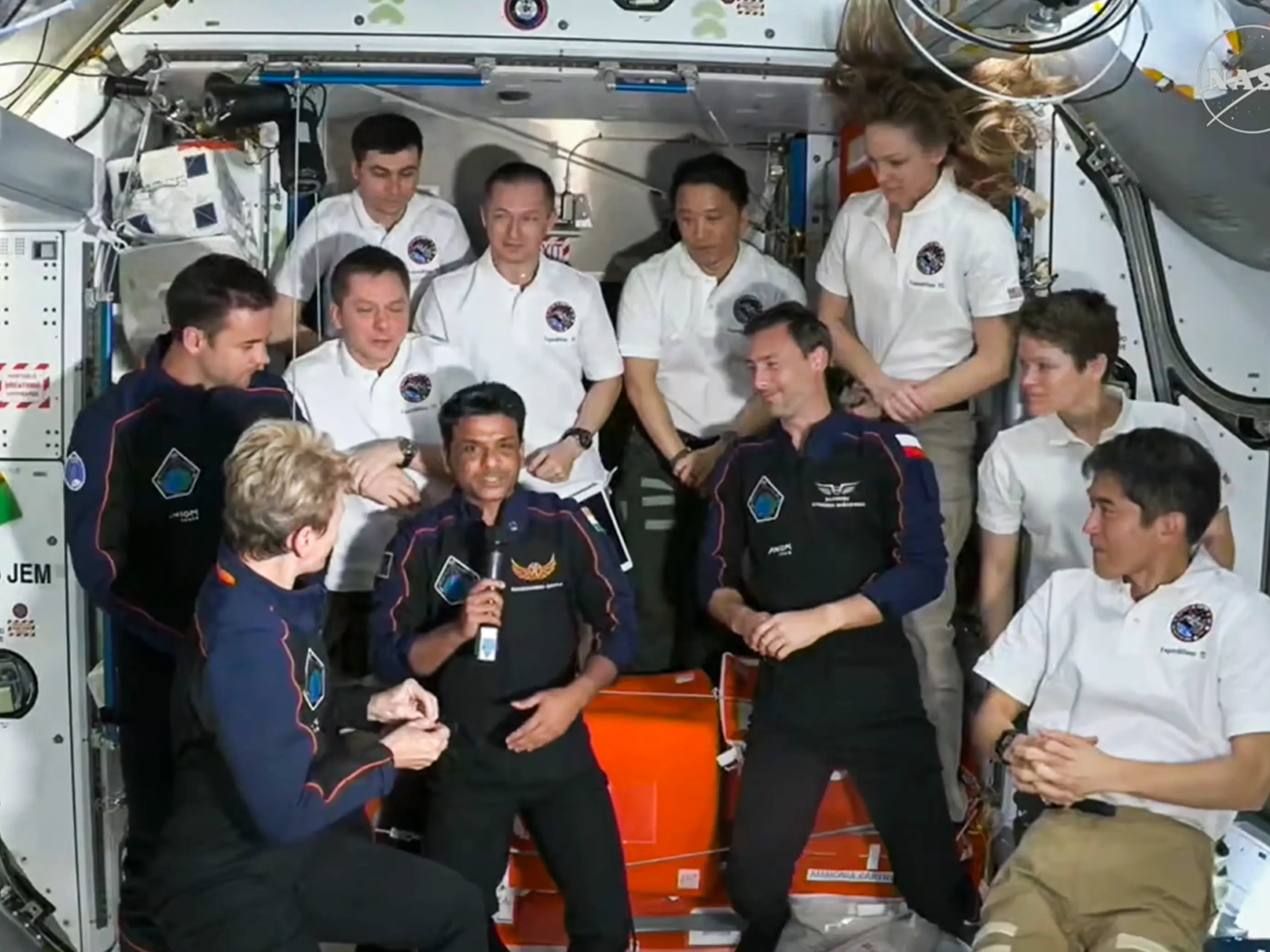
The Axiom Mission 4 with other astronauts inside the International Space Station Photograph: (SpaceX)
As per NASA’s schedule, the splashdown is expected around 3 pm IST on Tuesday, July 15, off the coast of California. The return journey will last about 22-and-a-half hours, NASA’s live broadcast confirmed.
Indian astronaut Shubhanshu Shukla and three fellow crew members of the Axiom-4 mission have started their return to Earth after spending 18 days aboard the International Space Station (ISS). Their journey back began on Monday at around 4:50 pm IST, following the undocking of their Dragon spacecraft, which saw a few delays but no technical issues, according to NASA.
When and where will the spacecraft land?
As per NASA’s schedule, the splashdown is expected around 3 pm IST on Tuesday, July 15, off the coast of California. The return journey will last about 22-and-a-half hours, NASA’s live broadcast confirmed. The spacecraft is also carrying over 250 kilograms of cargo, including scientific samples and equipment used in various experiments during the mission.
When did Shukla’s journey to space begin?
The Axiom-4 mission took off on June 25, with the SpaceX Dragon spacecraft lifting off just after noon IST from NASA’s Kennedy Space Centre in Florida. The spacecraft docked at the ISS the next day. Shubhanshu Shukla, serving as pilot of the mission, became the second Indian to travel to space, after Rakesh Sharma’s flight in 1984. On June 28, Shukla also spoke with Prime Minister Narendra Modi, marking a symbolic moment for India’s growing space presence.
Trending Stories
&imwidth=280&imheight=210&format=webp&quality=medium)
&imwidth=280&imheight=210&format=webp&quality=medium)
&imwidth=280&imheight=210&format=webp&quality=medium)
&imwidth=280&imheight=210&format=webp&quality=medium)
&imwidth=280&imheight=210&format=webp&quality=medium)
&imwidth=280&imheight=210&format=webp&quality=medium)
&imwidth=280&imheight=210&format=webp&quality=medium)
&imwidth=280&imheight=210&format=webp&quality=medium)
&imwidth=280&imheight=210&format=webp&quality=medium)
&imwidth=280&imheight=210&format=webp&quality=medium)
&imwidth=280&imheight=210&format=webp&quality=medium)
&imwidth=280&imheight=210&format=webp&quality=medium)
&imwidth=280&imheight=210&format=webp&quality=medium)
&imwidth=280&imheight=210&format=webp&quality=medium)
&imwidth=280&imheight=210&format=webp&quality=medium)
&imwidth=280&imheight=210&format=webp&quality=medium)
&imwidth=280&imheight=210&format=webp&quality=medium)
&imwidth=280&imheight=210&format=webp&quality=medium)
&imwidth=280&imheight=210&format=webp&quality=medium)
&imwidth=280&imheight=210&format=webp&quality=medium)
&imwidth=280&imheight=210&format=webp&quality=medium)
&imwidth=280&imheight=210&format=webp&quality=medium)
&imwidth=280&imheight=210&format=webp&quality=medium)
&imwidth=280&imheight=210&format=webp&quality=medium)
&imwidth=280&imheight=210&format=webp&quality=medium)
&imwidth=280&imheight=210&format=webp&quality=medium)
&imwidth=280&imheight=210&format=webp&quality=medium)
&imwidth=280&imheight=210&format=webp&quality=medium)
&imwidth=280&imheight=210&format=webp&quality=medium)
&imwidth=280&imheight=210&format=webp&quality=medium)
&imwidth=280&imheight=210&format=webp&quality=medium)
&imwidth=280&imheight=210&format=webp&quality=medium)
&imwidth=280&imheight=210&format=webp&quality=medium)
&imwidth=280&imheight=210&format=webp&quality=medium)
&im=FitAndFill=(700,400)&imwidth=280&imheight=210&format=webp&quality=medium)
&imwidth=280&imheight=210&format=webp&quality=medium)
&imwidth=280&imheight=210&format=webp&quality=medium)
&imwidth=280&imheight=210&format=webp&quality=medium)
&imwidth=280&imheight=210&format=webp&quality=medium)
Who else was on the Axiom-4 crew?
The crew included:
• Shubhanshu Shukla from the Indian Space Research Organisation (ISRO)
• Slawosz Uznanski-Wisniewski of the European Space Agency (ESA)
• Tibor Kapu, part of Hungary’s HUNOR programme
• Peggy Whitson, former NASA astronaut and current director of human spaceflight at Axiom Space
What did the Axiom-4 crew work on?
The astronauts conducted a wide range of experiments across medicine, agriculture, and space biology. Shubhanshu Shukla focused on skeletal and muscle degradation in microgravity. He also tested microalgae growth as a sustainable food source for long-duration space missions. Other experiments included work on cancer research, plant biology, microgreens, and blood circulation in space. The team also participated in a mental health study for astronauts.
