Rethinking the brain's cleanup crew: Sleep does not detox brain as previously thought. Here's what does

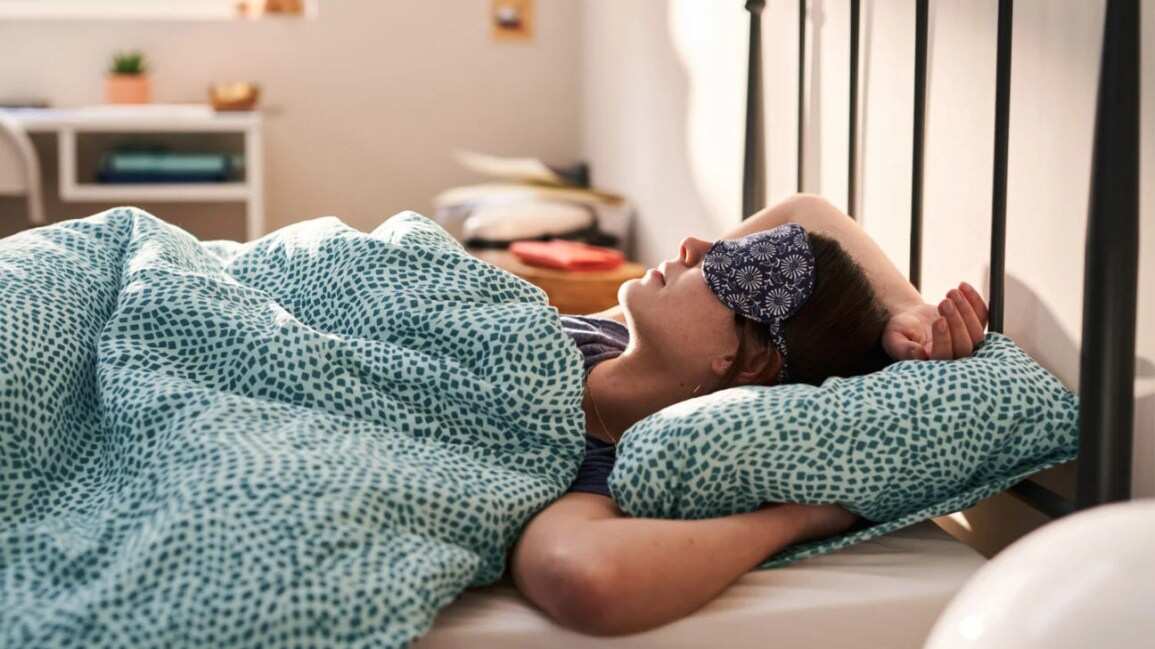
Ímage shows a sleeping woman, as study links compassion to fewer sleep problems
A good night's sleep is commonly known as having a restorative effect, with the prevalent scientific explanation being that the brain washes off toxins during sleeping.
Though it has grown to be a widely accepted hypothesis in neuroscience, a new study raises the possibility that this could be wrong. The study discovered that fluid clearance and mobility in mice's brains were significantly decreased during sleep and anaesthesia.
“If you are sleep-deprived, countless things go wrong – you don’t remember things clearly, hand-eye coordination is poor. The idea that your brain is doing this basic housekeeping during sleep just seems to make sense,” Prof Nick Franks, a professor of biophysics and anaesthesia at Imperial College London and the study's co-lead said. However, they found only indirect evidence that the brain's waste-removal mechanism increases activity during sleep.

The newest study, published in the journal Nature Neuroscience, employed a fluorescent dye to investigate mice's brains. This made it possible for scientists to assess the dye's rate of clearance from the brain directly and to see how rapidly the dye migrated from fluid-filled cavities, called the ventricles, to other parts of the brain.
The study found that dye clearance was lowered by roughly 30% in sleeping mice and 50% in animals under anaesthesia when compared to the mice who were awake.
&imwidth=180&imheight=135&format=webp&quality=medium)
Poland: 19-year-old stabs several at Polish vocational school
&imwidth=180&imheight=135&format=webp&quality=medium)
'Baseless and misconceived': India issues statement after Elon Musk's 'oligarchs' claim over Starlink delay
&imwidth=180&imheight=135&format=webp&quality=medium)
‘Team first and team ahead’: India coach Gambhir pens heartfelt wish for chief selector Ajit Agarkar
&imwidth=180&imheight=135&format=webp&quality=medium)
Trump's naked 23-karat gold statue unveiled near European Parliament
&imwidth=180&imheight=135&format=webp&quality=medium)
Nana Patekar: Remembering a legend of the Indian cinema
&imwidth=180&imheight=135&format=webp&quality=medium)
Captain Smit Machchhar on feet again, walks 10 steps as recovery continues after Flydubai flight attack
&imwidth=180&imheight=135&format=webp&quality=medium)
'They came in, they hit us': New videos show Iranian attacks on US Camp Buehring in Kuwait | Watch
&imwidth=180&imheight=135&format=webp&quality=medium)
Ronaldo sends 'a hug' after Messi says he misses 'wearing the blue and white'
&imwidth=180&imheight=135&format=webp&quality=medium)
Trump distances himself from senior political advisers over work for pro-Russian government
&imwidth=180&imheight=135&format=webp&quality=medium)
Narendra Modi Stadium bomb threat declared hoax; India & Australia U19 squads safe
&imwidth=180&imheight=135&format=webp&quality=medium)
US midterms 2026: Why the Latino vote could shape control of Congress
&imwidth=180&imheight=135&format=webp&quality=medium)
BTS agency HYBE announces first-ever Weverse Con Festival in India
&imwidth=180&imheight=135&format=webp&quality=medium)
US Midterms 2026: Barack Obama hits campaign trail to boost Democratic candidates
&imwidth=180&imheight=135&format=webp&quality=medium)
Shia LaBeouf and Mia Goth head for divorce after nearly 10 years
&imwidth=180&imheight=135&format=webp&quality=medium)
Nicolas Maduro, wife likely to face new charges over alleged torture of US citizens: Report
&imwidth=180&imheight=135&format=webp&quality=medium)
Texas man executed by lethal injection; first US execution since botched Christa Pike execution
&imwidth=180&imheight=135&format=webp&quality=medium)
Jon Rahm quits LIV Golf as breakaway tour attempts to relaunch itself
&imwidth=180&imheight=135&format=webp&quality=medium)
Christa Pike wakes after failed execution, asks 'Where am I and who are you?'
&imwidth=180&imheight=135&format=webp&quality=medium)
Christa Pike 'angry' and 'confused' after failed execution; judge orders to preserve evidence
&imwidth=180&imheight=135&format=webp&quality=medium)
Nigerian President Bola Ahmed Tinubu hails Modi’s 25-year leadership milestone, calls for deeper Nigeria-India strategic ties
&im=FitAndFill=(700,400)&imwidth=180&imheight=135&format=webp&quality=medium)
US midterms 2026: 10 leaders and candidates to watch in the battle for Congress
&imwidth=180&imheight=135&format=webp&quality=medium)
Nana Patekar's #MeToo controversy: From Tanushree Dutta’s allegations to court ruling
&imwidth=180&imheight=135&format=webp&quality=medium)
Veteran actor Nana Patekar dies at 75 after suffering cardiac arrest
&imwidth=180&imheight=135&format=webp&quality=medium)
Musk alleges ‘oligarchs’ blocking Starlink in India, here is what we know so far
&imwidth=180&imheight=135&format=webp&quality=medium)
Lightning strikes IndiGo Patna-Lucknow flight at 17,000 feet, damages nose; all 110 safe
&imwidth=180&imheight=135&format=webp&quality=medium)
Mall of America attack: FBI arrests man over alleged ISIS-inspired mass shooting plot with AK-47 and 200 rounds
&imwidth=180&imheight=135&format=webp&quality=medium)
France holds talks with Taliban government amid diplomatic outreach
&imwidth=180&imheight=135&format=webp&quality=medium)
'I should win it': Trump renews Nobel Peace Prize claim ahead of 2026 announcement
&imwidth=180&imheight=135&format=webp&quality=medium)
IndiGo flight struck by lightning at 17,000 feet, nose of Patna-Lucknow flight damaged
&imwidth=180&imheight=135&format=webp&quality=medium)
US readying to strike Iran? Report suggests Trump preparing to put on show of strength ahead of US midterms
&im=FitAndFill=(700,400)&imwidth=180&imheight=135&format=webp&quality=medium)
World’s top vehicle producers: Top 10 countries making the most cars. Check where India stands
&imwidth=180&imheight=135&format=webp&quality=medium)
Trump to honour Elon Musk, Sergey Brin and Jensen Huang with top science honour at White House. Check the full list here
&imwidth=180&imheight=135&format=webp&quality=medium)
'We don't think so': Trump says Russian plague lab worker's death not linked to bio-weapon
&imwidth=180&imheight=135&format=webp&quality=medium)
France protests: How a Gen Z school movement turned into a political war | The Verdict
“The field has been so focused on the clearance idea as one of the key reasons why we sleep, and we were of course very surprised to observe the opposite in our results. We found that the rate of clearance of dye from the brain was significantly reduced in animals that were asleep, or under anaesthetic,” said Franks.
The researchers expect that the findings will apply to humans because sleep is a basic requirement shared by all mammals. Prof Bill Wisden, interim head of the UK Dementia Research Institute at Imperial College London and co-lead author, stated, "There are many theories as to why we sleep, and although we have shown that clearing toxins may not be a key reason, it cannot be disputed that sleep is important."
The findings are relevant to dementia research since there is growing evidence of a relationship between poor sleep and Alzheimer's risk. It's unclear if sleep deprivation is an early sign of Alzheimer's or if it causes the disease. There was a theory that the brain couldn't remove poisons efficiently if it didn't get enough sleep, but the most recent findings cast doubt on this theory.
“Disrupted sleep is a common symptom experienced by people living with dementia. However, we still do not know if this is a consequence or a driving factor in the disease progression. It may well be that having good sleep does help to reduce dementia risk for reasons other than clearing toxins,” Wisden said.
The study also showedthat brain clearance is particularly efficient during the awake state. In general, being awake, active, and exercising may aid in the removal of toxins from the brain.
