‘US deliberately becoming a lonelier power, its radical repositioning reshaping global order’: EAM Jaishankar

&imwidth=600&imheight=450&format=webp&quality=medium "‘US deliberately becoming a lonelier power, its radical repositioning reshaping global order’: EAM Jaishankar")
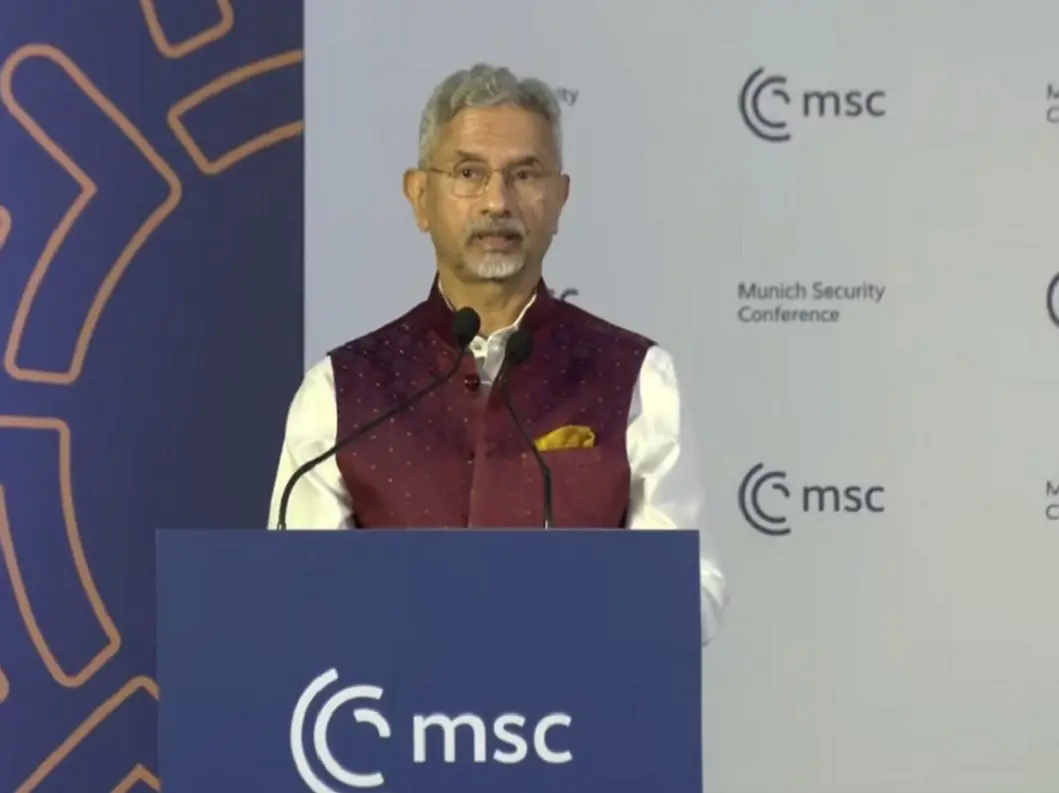
External Affairs Minister S Jaishankar speaking at the 62nd Munich Security Conference on Sunday Photograph: (Screengrab from video on X)
EAM S Jaishankar said the rise of China and subsequent sharp US-China competition are impacting the global order as emerging and middle powers look to diversify their partnerships and reduce risks. This competition has led to weaponisation of any leverage that any country has, he added.
External Affairs Minister S Jaishankar said at the 62nd Munich Security Conference on Sunday that the United States is “deliberately becoming a lonelier power” due to a radical repositioning by Washington, which, along with China’s rise and growing self-reliance of emerging and middle powers, is reshaping the global landscape.
Jaishankar further observed that the rise of China and subsequent sharp US-China competition are impacting the global order as emerging and middle powers look to diversify their partnerships for reducing risks.
“No one in the room would disagree with the fact that the landscape today is primarily marked by a radical repositioning of the United States,” said Jaishankar, adding that the repositioning is “a posture of choice” and that the US had “deliberately become a lonelier power”.
‘China’s economic power translating into political influence’
Jaishankar referred to China’s economic strength, saying it accounts for about one-third of global manufacturing and that its economic capabilities are translating into political influence.
“China, which sees itself as a unique country that is, in a way, both its self-perception and, in many ways, also the reality,” Jaishankar said.
He said the sharp competition between the US and China is not limited to these two countries anymore and has led to a weaponisation of any leverage that any country has.
“...In the context of a US-China rivalry. I think we are looking at what is often called a Goldilocks scenario: you don’t want it to be too hot, you don’t want it to be too good. You want it somewhere in between, at the right temperature. So, where does this leave emerging and middle powers?” Jaishankar said.
Countries working together as they seek self-reliance, resilient supply chains
Trending Stories
)
)
)
)
)
)
)
)
)
)
)
)
)
)
)
)
)
)
)
)
)
)
)
)
)
)
)
)
)
)
)
)
)
)
&im=FitAndFill=(700,400))
)
)
)
)
The EAM further said that the emerging and middle powers were becoming increasingly aware of their own interests and seeking greater self-reliance.
“All of them, in a way, are becoming more self-reliant,” he said, adding that these countries are increasingly assessing what they can bring to the table in discussions and negotiations.
The emerging and middle powers are developing agenda-based cooperation as they are focused on diversification and de-risking.
Jaishankar said the emerging powers are developing new arrangements for more resilient supply chains and added that countries no longer need complete agreement on every issue to work together.
‘De-risking, diversifying, and hedging’
“The operating principle for emerging and middle powers should be, and perhaps is already, a reasonable degree of convergence,” he said.
“The days when you have to have an identity of views or a very strong congruence of interest, I think that’s too high a bar today,” he added.
Jaishankar said countries could work together if they had enough common ground.
“If you have enough touch points, that is good enough for countries to work together,” he said.
He added that a new global architecture was slowly taking shape through “de-risking, diversifying, and hedging”.
Quad and BRICS enable emerging and middle powers
Referring to groupings like Quad and BRICS, Jaishankar said emerging and middle powers can now cooperate with each other while maintaining ties with both the US and China till there is no direct clash of interests.
“BRICS is an example of various parties who feel that their collective voice is much stronger than the individual ones,” he said.
“I would argue that today, most nations are focused on diversifying and de-risking in every sense of the term—not just their economy or their security, but also building more resilient supply chains. In many ways, they are working out new arrangements; they are developing agenda-based cooperation,” he said.
‘Nation now come together when their interests require them to do so’
Jaishankar said countries were increasingly coming together when their interests required cooperation, even when they were not among the world’s leading powers.
“They come together where their interests require them to do so: they find working arrangements, develop an agenda, develop organisations, develop habits of cooperation,” he said.
He described this as part of the world’s “evolving global order”, shaped by countries seeking flexibility, resilience and partnerships based on areas of common interest.