Trump wants US astronauts back on the lunar surface by 2028; signs 'commercial-first' executive order on space launches

&imwidth=600&imheight=450&format=webp&quality=medium "Trump wants US astronauts back on the lunar surface by 2028; signs 'commercial-first' executive order on space launches")
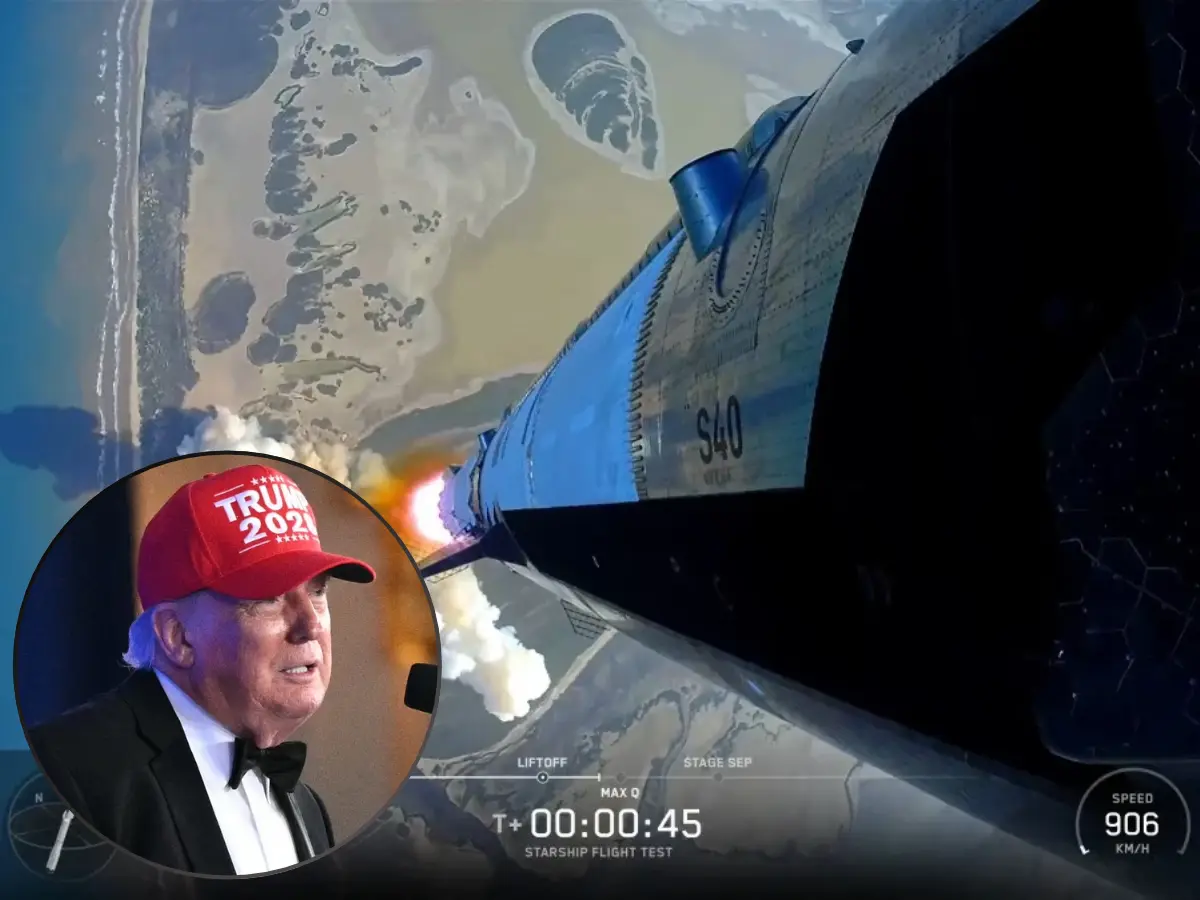
This still image taken from a SpaceX broadcast shows the SpaceX Starship launching from SpaceX Starbase in Starbase, Texas, on July 24, 2026. Inset: Donald Trump. Photograph: (Combination created using images from AFP)
Trump has set an extraordinary new target for America's space industry: 1,000 launches and re-entries every year by 2030. With the US recording just 178 launches last year, the White House is betting heavily on private companies to transform the country's space ambitions.
US President Donald Trump on Thursday (Aug 20) signed a memorandum aimed at dramatically expanding America's commercial space industry, setting a target of at least 1,000 space launches and re-entries every year by 2030.
The proposed expansion would mark a major jump from the 178 launches recorded last year. That figure was already around 10 times higher than the number recorded in 2013, with Elon Musk's SpaceX accounting for much of the recent growth.
Also read | Trump announces ‘crushing’ economic campaign against Iran, threatens allies with ‘tremendous’ penalties
Government land eyed for new launch sites
The memorandum directs federal agencies to identify government-owned land that could be used for future commercial launch and re-entry sites.
Trump has given officials 90 days to identify a new federal re-entry site. Agencies have also been instructed to designate priority airspace for key launch corridors and incorporate space transportation into broader air traffic control modernisation efforts.
Trending Stories
)
)
)
)
)
)
)
)
)
)
)
)
)
)
)
)
)
)
)
)
)
)
)
)
)
)
)
)
)
)
)
)
)
)
&im=FitAndFill=(700,400))
)
)
)
)
The administration wants government agencies to work more closely with private companies on space transportation infrastructure while speeding up permitting and environmental reviews.
Officials have also been asked to ensure sufficient wireless spectrum is available for launch operations.
Also read | America's debt hits a staggering $40 trillion for the first time. Is the US heading for a crisis?
Moon missions remain a priority
The new policy also puts America's return to the Moon at the centre of the administration's space ambitions.
Trump wants US astronauts back on the lunar surface by 2028, while directing NASA to support commercial transportation to the Moon and robotic missions to Mars.
The administration also wants NASA to explore commercial options for eventually sending humans to Mars.
Michael Kratsios, director of the White House Office of Science and Technology Policy, described the policy as a "commercial-first approach".
He said it would support having Americans on the Moon by 2028 and initial elements of a Moon base by 2030, alongside stronger launch capabilities for national security.
Trump's latest space push comes after lawmakers put renewed emphasis on NASA's Artemis Moon programme, despite the president's earlier focus on Mars missions. The memorandum also directs federal agencies to consider, on a case-by-case basis, requests to launch commercial foreign space vehicles from US territory.

