Nigeria 2027 elections: Presidential, governorship candidates face N571bn campaign spending ceiling

&imwidth=600&imheight=450&format=webp&quality=medium "Nigeria 2027 elections: Presidential, governorship candidates face N571bn campaign spending ceiling")
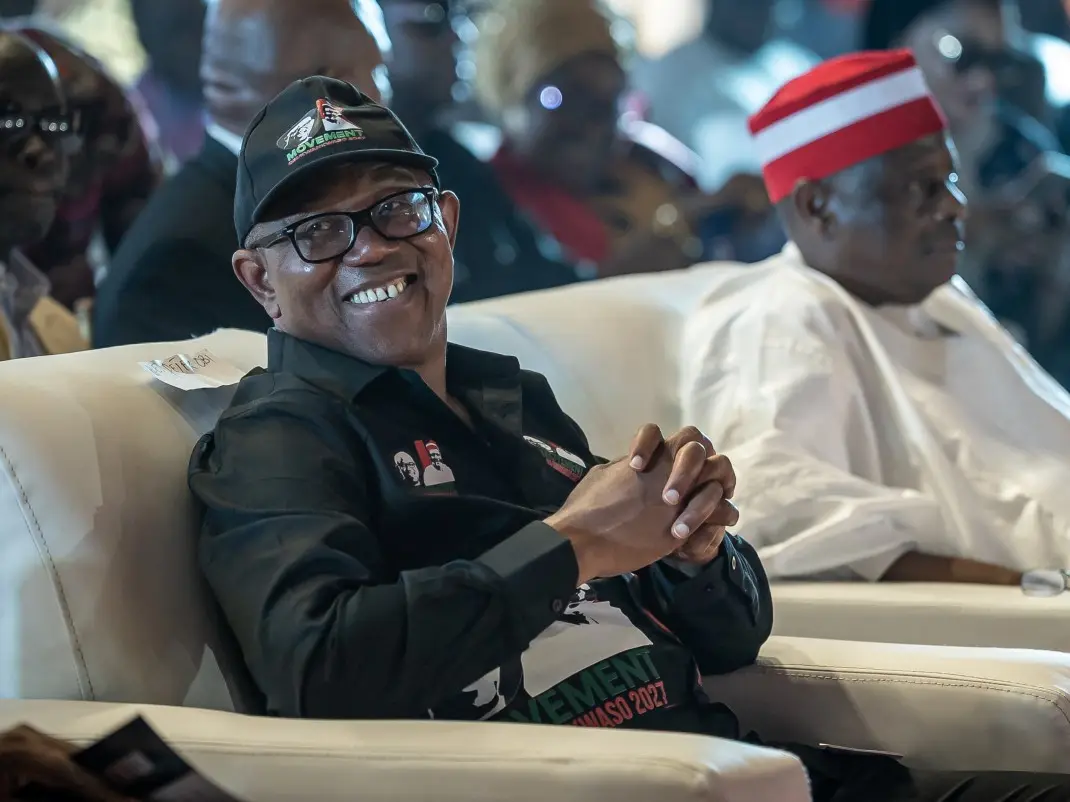
Peter Obi, presidential candidate of the Nigeria Democratic Congress (NDC), looks on as he attends the NDC Special Convention in Abuja on May 30, 2026. Photograph: (AFP)
Nigeria's 2027 election could see presidential and governorship candidates collectively spend up to N571 billion under new legal limits. But who gets how much?
Nigeria’s 2027 general elections are set to operate under significantly higher campaign spending limits, with presidential and governorship candidates collectively allowed to spend as much as N571 billion if every candidate reaches the maximum permitted by law.
The figure is based on the campaign finance provisions contained in the Electoral Act 2026. Under Section 92 of the legislation, a presidential candidate can spend up to N10 billion during the election campaign, while a governorship candidate has a maximum spending limit of N3 billion.
Also read |
With 19 presidential candidates currently listed for the 2027 contest, their combined statutory spending ceiling stands at N190 billion. At the governorship level, election data currently tracks 127 candidates across the 28 states where governorship elections are scheduled to take place. If all of them spend up to the legal limit, their combined expenditure could reach N381 billion.
Together, the two categories produce the N571 billion ceiling. However, the figure does not mean that the candidates will actually spend that amount. It represents the highest total expenditure that would be legally possible if every presidential and governorship candidate exhausted their individual limits.
The new law also establishes spending limits for other elective positions. Candidates contesting senatorial seats are permitted to spend up to N500 million, while House of Representatives candidates have a ceiling of N250 million. State House of Assembly and Area Council chairmanship candidates can spend a maximum of N100 million, while candidates for Area Council councillorship positions are limited to N10 million.
Trending Stories
)
)
)
)
)
)
)
)
)
)
)
)
)
)
)
)
)
)
)
)
)
)
)
)
)
)
)
)
)
)
)
)
)
)
&im=FitAndFill=(700,400))
)
)
)
)
Another important provision concerns campaign donations. An individual is prohibited from contributing more than N500 million to a single candidate. Consequently, although a presidential candidate may lawfully spend N10 billion, no single donor can provide more than N500 million toward that campaign.
The legislation provides penalties for candidates who knowingly exceed the prescribed spending thresholds. A violator may face a fine equivalent to one per cent of the applicable spending limit, imprisonment for up to 12 months, or both.
The effectiveness of the rules, however, is expected to depend heavily on enforcement. Civil society organisations have expressed concerns about the ability of electoral authorities to accurately monitor campaign expenditure, particularly across traditional media, social media, billboards, events, logistics and other campaign activities.
Advocates of stricter monitoring argue that effective enforcement is necessary to prevent wealthy politicians and financiers from gaining an unfair advantage. They have called for stronger penalties and greater cooperation among the Independent National Electoral Commission, anti-corruption agencies, media organisations and civil society groups.
INEC has said monitoring campaign finance falls within its statutory responsibilities, while campaign observers have urged the media and civil society to help identify and document potential violations.
The debate comes as campaigning for the 2027 presidential and National Assembly elections has commenced. INEC has scheduled the presidential and National Assembly elections for January 16, 2027, while governorship and State House of Assembly elections are fixed for February 6, 2027.
As political activities intensify, the N571 billion aggregate ceiling is likely to keep campaign financing at the centre of discussions about transparency, equal opportunity and accountability ahead of the 2027 polls.
