Mount Everest is growing a bit faster than usual. And a 'river capture' may have to do with it

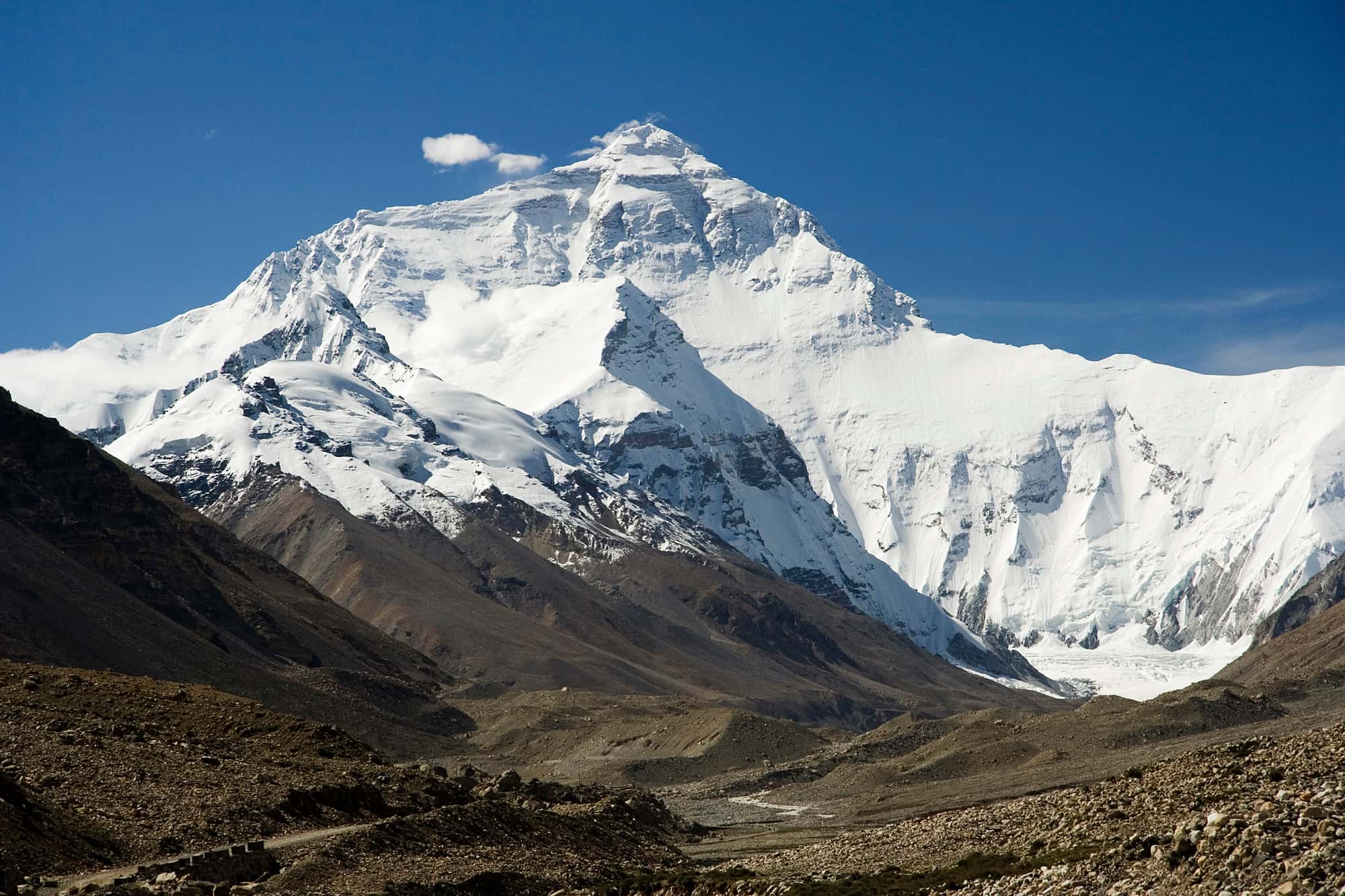
Mount Everest, the world's tallest peak, is growing at a faster rate
Mount Everest has been growing taller slowly over the years and that's not news, as the mountain was created when two tectonic plates crashed into each other over millennia. But a new study has suggested that there's a relatively sudden growth spurt in the world's tallest peak, and this time it's being attributed to "river piracy".
The study published in Nature Journal examined GPS measurements over the years to reach a conclusion. It found that Everest, also known as Chomolungma or Sagarmatha, was growing at 0.08 inches or 2 millimetres per year, as opposed to the regular 0.04 inches or 1mm per year.
The study by University College London researchers said it "uncovers a previously unrecognised, additional mechanism of rock uplift active since river capture."

While Everest is 8,849 metres tall, the nearby peak K2 is 8,611 m. The other three highest mountains in the Himalayas stand at 8,586 m, 8,516 m and 8,485 m, an elevation difference of not more than 100 m.
The researchers suggest that it could be because rocks below the mountain base are being eroded over the years by the rivers flowing in the area.
In science-speak, it is a phenomenon of'river drainage piracy' and 'river capture'.
&imwidth=180&imheight=135&format=webp&quality=medium)
Poland: 19-year-old stabs several at Polish vocational school
&imwidth=180&imheight=135&format=webp&quality=medium)
'Baseless and misconceived': India issues statement after Elon Musk's 'oligarchs' claim over Starlink delay
&imwidth=180&imheight=135&format=webp&quality=medium)
‘Team first and team ahead’: India coach Gambhir pens heartfelt wish for chief selector Ajit Agarkar
&imwidth=180&imheight=135&format=webp&quality=medium)
Trump's naked 23-karat gold statue unveiled near European Parliament
&imwidth=180&imheight=135&format=webp&quality=medium)
Nana Patekar: Remembering a legend of the Indian cinema
&imwidth=180&imheight=135&format=webp&quality=medium)
Thai Actors Fourth Nattawat, Gemini Norawit face racism accusations from Indian fans over viral Bollywood act
&imwidth=180&imheight=135&format=webp&quality=medium)
Captain Smit Machchhar on feet again, walks 10 steps as recovery continues after Flydubai flight attack
&imwidth=180&imheight=135&format=webp&quality=medium)
'They came in, they hit us': New videos show Iranian attacks on US Camp Buehring in Kuwait | Watch
&imwidth=180&imheight=135&format=webp&quality=medium)
Ronaldo sends 'a hug' after Messi says he misses 'wearing the blue and white'
&imwidth=180&imheight=135&format=webp&quality=medium)
Trump distances himself from senior political advisers over work for pro-Russian government
&imwidth=180&imheight=135&format=webp&quality=medium)
Narendra Modi Stadium bomb threat declared hoax; India & Australia U19 squads safe
&imwidth=180&imheight=135&format=webp&quality=medium)
US midterms 2026: Why the Latino vote could shape control of Congress
&imwidth=180&imheight=135&format=webp&quality=medium)
BTS agency HYBE announces first-ever Weverse Con Festival in India
&imwidth=180&imheight=135&format=webp&quality=medium)
US Midterms 2026: Barack Obama hits campaign trail to boost Democratic candidates
&imwidth=180&imheight=135&format=webp&quality=medium)
Shia LaBeouf and Mia Goth head for divorce after nearly 10 years
&imwidth=180&imheight=135&format=webp&quality=medium)
Nana Patekar's philanthropic legacy: His work for farmers and rural communities
&imwidth=180&imheight=135&format=webp&quality=medium)
Nicolas Maduro, wife likely to face new charges over alleged torture of US citizens: Report
&imwidth=180&imheight=135&format=webp&quality=medium)
Texas man executed by lethal injection; first US execution since botched Christa Pike execution
&imwidth=180&imheight=135&format=webp&quality=medium)
Christa Pike wakes after failed execution, asks 'Where am I and who are you?'
&imwidth=180&imheight=135&format=webp&quality=medium)
Christa Pike 'angry' and 'confused' after failed execution; judge orders to preserve evidence
&imwidth=180&imheight=135&format=webp&quality=medium)
Nigerian President Bola Ahmed Tinubu hails Modi’s 25-year leadership milestone, calls for deeper Nigeria-India strategic ties
&im=FitAndFill=(700,400)&imwidth=180&imheight=135&format=webp&quality=medium)
US midterms 2026: 10 leaders and candidates to watch in the battle for Congress
&imwidth=180&imheight=135&format=webp&quality=medium)
Nana Patekar's #MeToo controversy: From Tanushree Dutta’s allegations to court ruling
&imwidth=180&imheight=135&format=webp&quality=medium)
Veteran actor Nana Patekar dies at 75 after suffering cardiac arrest
&imwidth=180&imheight=135&format=webp&quality=medium)
Musk alleges ‘oligarchs’ blocking Starlink in India, here is what we know so far
&imwidth=180&imheight=135&format=webp&quality=medium)
Lightning strikes IndiGo Patna-Lucknow flight at 17,000 feet, damages nose; all 110 safe
&imwidth=180&imheight=135&format=webp&quality=medium)
Mall of America attack: FBI arrests man over alleged ISIS-inspired mass shooting plot with AK-47 and 200 rounds
&imwidth=180&imheight=135&format=webp&quality=medium)
France holds talks with Taliban government amid diplomatic outreach
&imwidth=180&imheight=135&format=webp&quality=medium)
IndiGo flight struck by lightning at 17,000 feet, nose of Patna-Lucknow flight damaged
&imwidth=180&imheight=135&format=webp&quality=medium)
US readying to strike Iran? Report suggests Trump preparing to put on show of strength ahead of US midterms
&im=FitAndFill=(700,400)&imwidth=180&imheight=135&format=webp&quality=medium)
World’s top vehicle producers: Top 10 countries making the most cars. Check where India stands
&imwidth=180&imheight=135&format=webp&quality=medium)
Trump to honour Elon Musk, Sergey Brin and Jensen Huang with top science honour at White House. Check the full list here
&imwidth=180&imheight=135&format=webp&quality=medium)
'We don't think so': Trump says Russian plague lab worker's death not linked to bio-weapon
&imwidth=180&imheight=135&format=webp&quality=medium)
Sri Lankan Tamil worker gets death sentence in Saudi Arabia over blasphemy, calls for pardon intensify
&imwidth=180&imheight=135&format=webp&quality=medium)
France protests: How a Gen Z school movement turned into a political war | The Verdict
The erosion of the rocks appears to affect the nearby peaks more than Mount Everest.
It is being caused by the merging of two rivers down below that happened tens of thousands of years ago.
Watch: Everest faces the challenge of overcrowding, commercialisation hits Mount Everest hard
The river capture that may be helping Everest grow
The 'river capture event' happened in the Kosi River drainage basin some 89,000 years ago. Kosi merged with its tributary Arun River and changed course.
The researcherschasing the question, 'Is there an underlying mechanism raising Everest ever higher?' looked for answers insurrounding rivers.
The Arun Riverdrains a large area to the north of the Everest region before turning south.
Also read: Not Mount Everest but THIS is the tallest mountain in solar system. Can humans scale this?
The drainage capture and river incision erode the rocks in the surrounding areas, while relatively keeping Everest intact though tectonic processes remain the basic reason for Everest's gradual growth, the researchers posited.
To reach their conclusion, the scientists reconstructed the capture process using computer models.
"Our best-fit model suggests the capture event occurred approximately 89,000 years ago and caused acceleration of downstream incision rates," wrote the researchers in the study.
"We suggest that part of Chomolungma [Everest]’s anomalous elevation (~15–50 m) can be explained as the isostatic response to capture-triggered river incision, highlighting the complex interplay between geological dynamics and the formation of topographic features," said the study.

