Hong Kong protests is Tiananmen Square in slow motion: Tiananmen massacre survivor

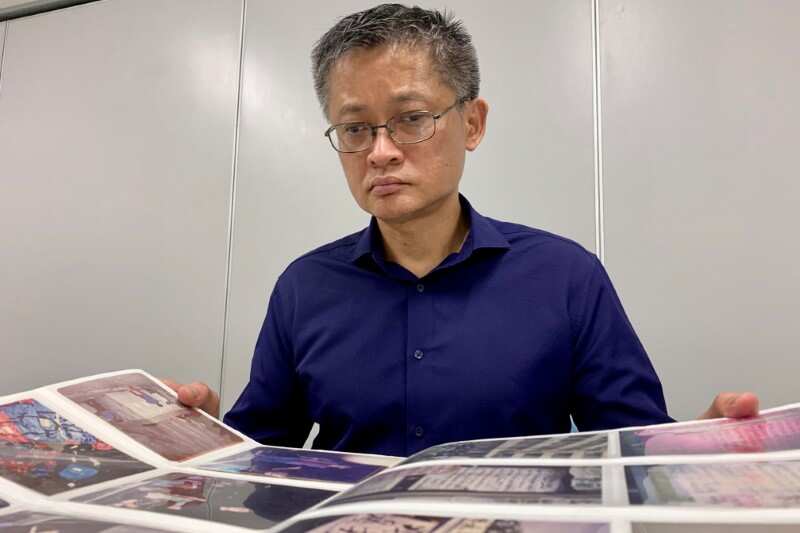
Chan Ching Wa
In an exclusive conversation with WION, Chan Ching Wa, an eyewitness to the Tiananmen massacre described the horror as it happened in front of his eyes 31 years ago. He said Chinese soldiers were blazing guns on protesters and he was very lucky to have escaped without being killed to narrate the story of the Chinese Communist Party's horror in Tiananmen.
Chan Ching Wa, 56, flew to Beijing in 1989 to deliver donations and show solidarity to his fellow university students ahead of a bloody crackdown, when Chinese troops opened fire on student-led protesters. He said with Beijing's recent move to impose national security legislation on Hong Kong, combined with what he sees as China's grip on the city, memories of 1989 are flooding back.
"Tiananmen Square is already happening in Hong Kong. 31 years ago you had hundreds of guns and tanks rolling in crushing people to their bones. But instead of guns this time around they had to use tear gas and pepper sprays. This is a slow-motion massacre, a slow-motion Tiananmen square," he said. "This time the massacre is happening a bit slow but a lot worse than what happened 31 years ago," he told WION while recounting the horrific scenes.

Chan was one of a handful of Hong Kong students who went to support protesters in the mainland and witnessed the events. The death toll was given by officials days after the crackdown was about 300, most of them soldiers, with only 23 students confirmed killed. China has never provided a full account of the violence, but Rights groups and witnesses say the figure could run into the thousands. The topic remains taboo in China.
In an exclusive conversation with Praphul Singh from WION, Chan Ching Wa reveals how the Communist Party of China is responsible for the killing of hundreds of students in Tiananmen Square massacre:
WION: What led you to become a part of the Tiananmen Square protests?
)
US vs China over South China Sea: Washington backs Philippines, Beijing hits back
)
Bigg Boss 20: Isha Rikhi evicted after three weeks in Salman Khan’s show
)
Musk plans to more than double xAI's chips to over 1.2 million Nvidia GPUs by year-end
)
After JU, clash erupts at SRFTI: BJP’s ‘Dimagi Naxal’ jibe sparks political firestorm after students protest RSS-linked event
)
‘Anti-social elements spreading false rumours’: LPU issues statement amid massive unrest over alleged rape
)
LPU students go on rampage, vandalise campus amid widespread protest: What's happening
)
Trump asked Xi to pressure Iran. China did not say yes — here’s what Beijing wants
)
US Treasury Secretary Scott Bessent hails global crackdown on Iranian banks and airlines
)
An OpenAI agent escaped its locked test cage again, by hiding questions in DNS lookups
)
'Our video was trimmed': LPU girls who featured in rape-denial video make U-turn
)
3 males killed, four others injured in shooting after fight at strip club in Detroit
)
'Victory for low-budget consumers': Raghav Chadha hails 30-day telecom recharge rules
)
Claude rebuilt the 1989 game 'Prince of Persia' by reusing the original's own code
)
Beyond metros: How Tier-2 and Tier-3 cities could drive India’s next AI wave
)
Tesla builds first Cybertruck with its own refined lithium: Elon Musk's $1 billion Texas bet pays off
)
IndiGo flight suffers tail strike in Bengaluru while landing; DGCA to probe incident
)
The US and China set up an AI 'red telephone', but skipped the rulebook
)
‘Terror suspects arrested near UK air base were looking to do big damage’: Trump
)
Russian envoy claims US tactics to contain India were revealed in ‘Freudian slip’
)
IND vs WI 1st ODI: Kohli breaks Sachin's most runs in one country record with unbeaten 139 as India thump West Indies by 8 wickets
)
Researchers rebuilt exactly how 700 AI agents hacked Hugging Face: a 900-link chain trick
)
‘Olympic inclusion is our major target’: WPA President Ishaun Singh on pool’s global ambitions
)
Nations League: Spain sink England at Wembley; Modric shines for Croatia
)
Why has Iran released no proof of life of Mojtaba Khamenei? Araghchi reveals...
)
'What kind of confession is this?': Pakistan PM Shehbaz Sharif’s 'terrorists would be roaming New York' remark goes viral, raises alarm online. Watch
)
South Korea demands apology from Ukraine over North Korean prisoners' transfer
)
Beyond BrahMos: India targets Rs 50,000 crore in defence exports with unmatched price edge
)
Sri Lankan Tamil migrant worker gets death sentence in Saudi Arabia, help sought from India
)
Muslim marriage cannot shield sex with minor wife from prosecution under POCSO: Delhi HC
)
'Can't help but draw painful parallels to Nirbhaya case': SC on latest incidents of rape cases in Delhi-NCR
)
99.9% more powerful - Scientists find boy who can recall memories from just 3 months of age
)
'FIRST LOOK from inside Noah’s Ark': Researchers share video from inside mysterious mound in Turkey
)
UNSC reform momentum grows: Russia, Portugal, Mauritius push for India's permanent seat bid
)
8 US marines injured in Iranian missile attack on vessel in Strait of Hormuz: Report
&im=FitAndFill=(700,400))
New OTT releases this week (September 28-October 4, 2026): Dupahiya 2, Pooja Meri Jaan, Ohh My Dog- 5 titles coming on Netflix, Prime Video and more
)
Afghanistan says 28 fighters killed in clash near Pakistan border, Islamabad denies
)
Ceuta migrant crisis: Protesters take to streets as Spain grapples with migrant challenge
)
LPU suspend classes, postpones exams as violence escalates over rape claims: What's happening
)
New York City wants a 'kill switch' on every AI, and will pay whistleblowers who report violations
Chan: I was a student leader 41 years ago. I was one of the leaders of Hong Kong student union, back then the movement in Beijing was really big. As a part of the Hong Kong student groups, we were very concerned about it, because the year was 1989, 8 years later Hong Kong was to be handed back to China.
We had deep concerns over what was happening there. The protest began in mid-April. We had three delegations who went there to assess the situation. I too went there with the delegation. I went there on May 27 and left Beijing on June 5, after a day of the massacre.
WION: What do you think led to the protests?
Chan: It was a reaction to what was happening in China. China has been under Communist rule for decades. Before the Tiananmen Square protest, there were two decades of unrest from 1957 to 1977.
There was a parallel universe that existed in Beijing from 1979 to 1989. On the one hand, you had party's top most officials insisting on one party mode, on the other hand, there was TV discussion on the pros and cons of Western democracy, which is totally unlike from now. Some protests were happening in Beijing as well, which weren’t questioned at all, none of them was being jailed.
It was one incident that sparked off the whole issue. One of the senior party members Hu Yaobang died in April 1989. With his death, there was a fear that all that whole parallel universe will be gone with him. With him gone, everything flared up, the academics, the students, they all ran out to commemorate him and at the same time asking the government to give freedom, pass on the freedom in the press, freedom in expression, etc. This is when the Communist Party leaders decided that they can’t allow this.
WION: What did you see during the protests?
Chan: Nobody tried to stop the protesters in their first parade or march. Even when the police first dispersed the protesters, they didn’t have any wooden batons, they didn’t have any guns with them. As the protest swelled, the Chinese government got tougher and tougher.
After this, the police started getting strict and then it led to the protests getting massive. Student leaders were protesting and demanding the Communist Party talk to them, which the Communist Party did. At the same time, they pushed the button and asked the Army to come in.
The Army ran to Beijing by the end of May. Soldiers on their way to the city retreated at first after being resisted by thousands of Beijing citizens.
The fact is that the Communist Party threw an illusion that the CCP can’t control their soldiers. There was some hope though that with people thinking that the Communist Party cannot defy the people. Then, the whole thing tumbled down. The second time the army came in, they were firing their rifles and crossing the street with tanks.
WION: How do you think the Chinese government handled the protests?
Chan: I don’t think they knew how to handle the protests. The first time they tried to handle a protest 31 years ago, I believe they had a difference in opinion among themselves. There was a faction back then that believed in a dialogue between CCP and the protesters instead of quashing them.
But, by the end of May, it was clear that there was no place for the soft faction and it was sidelined subsequently, even being arrested in their own house. When the hardline faction consolidated their power, they came heavily on protesters 31 years ago, today.
WION: How did you manage to flee from Beijing?
Chan: I was at Tiananmen Square attending the wounded. The Army was quashing their way in. Troops were being transported to Tiananmen Square. I was there on the night of June 3 to the morning of June 4, trying to carry the wounded. In hospitals, we had more dead than wounded.
I saw people crying for help in front of my eyes. Some Beijing residents helped us flee from there. They gave us food and assistance. In some street corners, they would blaze the guns on whoever came along, at the same time there were some other streets where soldiers were standing still with the rifles in their hands. We were from Hong Kong, we didn’t know which streets were safe to use, but Beijing residents did.
Some Beijing residents helped us with those streets as they wanted us to tell the truth to the world. That’s how we escaped a day after the massacre 31 years ago.
WION: Do you think the Chinese government has learnt anything from Tiananmen Square protests?
Chan: I think they learnt in a very horrifying way. They learnt that there should be no dissenting voice of whatsoever. Secondly, they learnt that they had to find some legitimacy to their regime and they found it on trading and manufacturing.
The Western government, every single one of them was responsible for what has happened to China. Western countries think that opening the trade would lead the Communist Party to evolve, yes they evolve but in a way that you can’t imagine. They have their booming economy, earn money and make everybody dance to CCP's tunes.
What the Communist Party learned from Tiananmen Square was in a very bad way. First, no dissenting voice. Second, control all form of media. Third, propagate a false sense of improvement to the world. This is what the Communist Party has succeeded in doing the last few decades.
What is happening in Hong Kong is a loud message to the UN and the rest of the world. Because this is not happening to only Hong Kong. It is also happening with people in Tibet, Xinjiang, so-called OBOR initiative participants, when they bribe countries and then they grab their harbours and lands of those countries. The evil of CCP is very obvious. Even then, only some countries are daring to stand up to China. India and America are a few countries standing up against China now.
Many western countries like Germany and many others in the EU are strong countries but then they still don’t stand up against China.
WION: Do you think that way Chinese government is suppressing the people another uprising is on its way? Do you think Hong Kong protest is another Tiananmen Square protest in the making?
CHAN: Tiananmen Square is already happening in Hong Kong. 31 years ago you had hundreds of guns and tanks rolling in crushing people to their bones. But instead of guns this time around they had to use tear gas and pepper sprays. This is a slow-motion massacre, a slow-motion Tiananmen square. China learnt that when you do that in a city, the Western powers will have no choice but to sanction China uniformly.
Despite all the strong efforts by CCP, China today cannot stand in the same way. If the western countries stand together to do a collective sanction on China, it would impact them more.
Only the US, India and Australia are standing against them strongly but others are shying away and maintaining economic ties with China. This time the massacre is happening a bit slow but a lot worse than what happened 31 years ago.