California chemical tank explosion: Threat 'eliminated' after tank pressure drops, evacuation continue in Orange County

&imwidth=600&imheight=450&format=webp&quality=medium "California chemical tank explosion: Threat 'eliminated' after tank pressure drops, evacuation continue in Orange County")
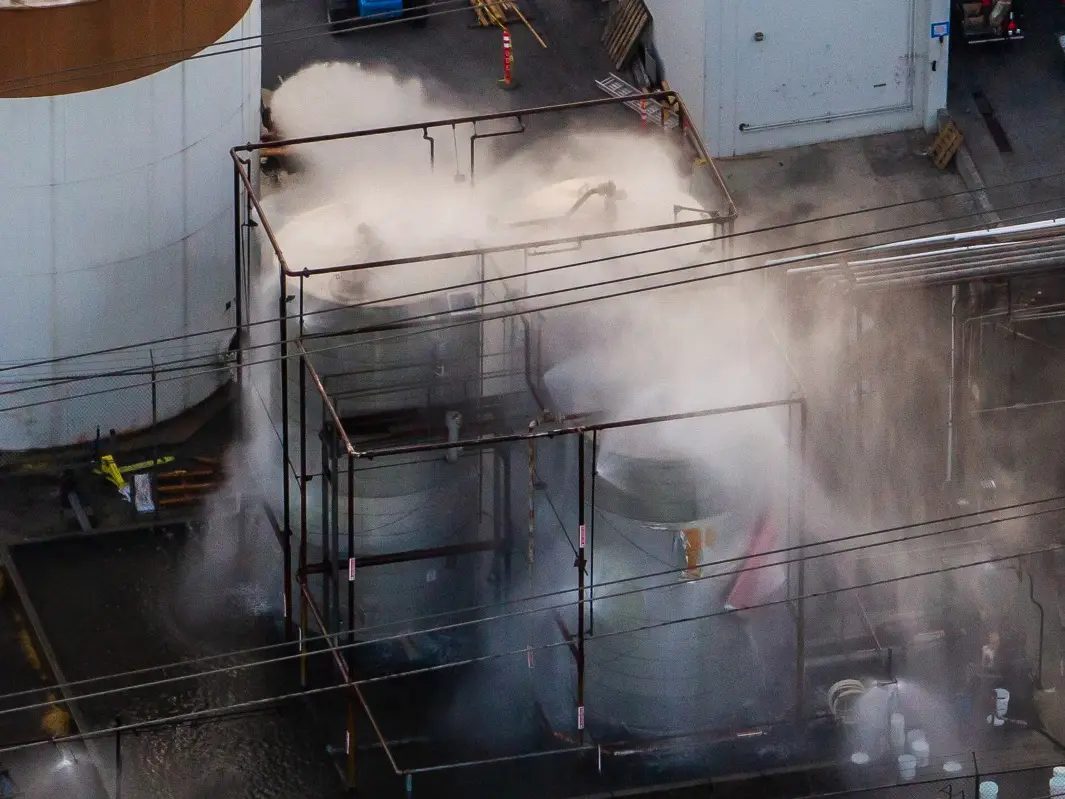
An aerial view of water being sprayed onto an overheated 34,000-gallon tank at GKN Aerospace on May 23, 2026 in Garden Grove, California. Photograph: (AFP)
Officials say the risk of a major chemical explosion in California has been ‘eliminated’, though evacuation orders remain in place
Officials in Southern California said on Monday (May 25) that the danger of a catastrophic vapor explosion at a chemical storage facility in Garden Grove has been significantly reduced after pressure inside a damaged tank started to ease. The incident involved a 7,000-gallon tank containing methyl methacrylate, a toxic chemical commonly used in the production of resins and plastics. Authorities had feared the tank could rupture, potentially causing a boiling liquid expanding vapor explosion (BLEVE) or releasing hazardous chemicals into the surrounding area.
According to the Orange County Fire Authority, a crack in the tank helped release internal pressure, causing temperatures inside the container to decrease. “We are happy to report that the threat of a BLEVE is now off the table. That threat has been eliminated,” interim Orange County Fire Chief TJ McGovern said in an update posted on X. The tank had started heating up and bulging last week, prompting large-scale evacuation orders affecting nearly 50,000 residents. Many evacuees remain in shelters as authorities continue monitoring the situation.
Division Chief Craig Covey said the tank’s internal temperature dropped from 100 degrees Fahrenheit to 93 degrees following the pressure release. The crack was first discovered on Saturday night during a visual inspection at the GKN Aerospace facility in Garden Grove, located about 35 miles southeast of Los Angeles and just a few miles from Disneyland. McGovern said crews worked through the night to determine whether the crack had successfully relieved pressure from the tank.
Also Read: Explosions heard in Iran's Bandar Abbas city, coastal areas near Gulf; cause unknown: State media
Even with the BLEVE threat reduced, officials warned that “there’s still a potential for explosion.” However, McGovern said the lower risk level allows emergency teams to reduce the evacuation zone and focus more effectively on cooling operations. Authorities also confirmed that air monitoring had not detected any toxic chemical leaks from the damaged tank. A White House official said on Monday that the Trump administration is engaged and monitoring the situation. The Environmental Protection Agency has activated air monitoring at 20 locations around the area, while the Federal Emergency Management Agency deployed emergency personnel and activated its airborne hazard assessment systems.
Earlier on Monday, officials confirmed that one of the facility’s three chemical tanks had been neutralized, though the affected tank and another nearby tank still contain methyl methacrylate. Fire officials also dismissed reports suggesting multiple cracks had formed on the tank. “There is also peeling of the weather stripping on the exterior, but this is not an additional crack. There is currently no active leak, and continuous live atmospheric monitoring confirms there are no chemicals leaking,” the authority said in a post on X.
Trending Stories
&im=FitAndFill=(700,400)&imwidth=280&imheight=210&format=webp&quality=medium)
&imwidth=280&imheight=210&format=webp&quality=medium)
&imwidth=280&imheight=210&format=webp&quality=medium)
&imwidth=280&imheight=210&format=webp&quality=medium)
&imwidth=280&imheight=210&format=webp&quality=medium)
&imwidth=280&imheight=210&format=webp&quality=medium)
&imwidth=280&imheight=210&format=webp&quality=medium)
&im=FitAndFill=(700,400)&imwidth=280&imheight=210&format=webp&quality=medium)
&imwidth=280&imheight=210&format=webp&quality=medium)
&imwidth=280&imheight=210&format=webp&quality=medium)
&imwidth=280&imheight=210&format=webp&quality=medium)
&imwidth=280&imheight=210&format=webp&quality=medium)
&imwidth=280&imheight=210&format=webp&quality=medium)
&imwidth=280&imheight=210&format=webp&quality=medium)
&imwidth=280&imheight=210&format=webp&quality=medium)
&imwidth=280&imheight=210&format=webp&quality=medium)
&imwidth=280&imheight=210&format=webp&quality=medium)
&im=FitAndFill=(700,400)&imwidth=280&imheight=210&format=webp&quality=medium)
&imwidth=280&imheight=210&format=webp&quality=medium)
&imwidth=280&imheight=210&format=webp&quality=medium)
&imwidth=280&imheight=210&format=webp&quality=medium)
&imwidth=280&imheight=210&format=webp&quality=medium)
&imwidth=280&imheight=210&format=webp&quality=medium)
&imwidth=280&imheight=210&format=webp&quality=medium)
&im=FitAndFill=(700,400)&imwidth=280&imheight=210&format=webp&quality=medium)
&imwidth=280&imheight=210&format=webp&quality=medium)
&imwidth=280&imheight=210&format=webp&quality=medium)
&im=FitAndFill=(700,400)&imwidth=280&imheight=210&format=webp&quality=medium)
&imwidth=280&imheight=210&format=webp&quality=medium)
&imwidth=280&imheight=210&format=webp&quality=medium)
&im=FitAndFill=(700,400)&imwidth=280&imheight=210&format=webp&quality=medium)
&imwidth=280&imheight=210&format=webp&quality=medium)
&imwidth=280&imheight=210&format=webp&quality=medium)
&imwidth=280&imheight=210&format=webp&quality=medium)
&imwidth=280&imheight=210&format=webp&quality=medium)
&imwidth=280&imheight=210&format=webp&quality=medium)
&imwidth=280&imheight=210&format=webp&quality=medium)
A spokesperson for GKN Aerospace said crews were monitoring the ‘affected material’ and working ‘around the clock to mitigate the risk of a leak’. Covey warned that any explosion could trigger secondary blasts in nearby storage tanks, including a 15,000-gallon tank and another 4,500-gallon container that also holds methyl methacrylate. Officials said a major explosion could impact areas within a half-mile radius, causing severe structural damage and potentially spreading toxic vapors into the atmosphere and nearby waterways.
“We’re talking about possibly one of the worst chemical incidents in California history,” Covey said. The American Red Cross said several emergency shelters in Orange County were nearing capacity as thousands of displaced residents sought refuge. Concerns over the facility first emerged on Thursday after fire officials responded to reports of a vapor release at the aerospace plant. Firefighters have since used sprinklers and hose lines to cool the tank continuously.
Gavin Newsom declared a state of emergency in Orange County on Saturday and later requested federal emergency assistance from President Donald Trump. McGovern said officials are using ‘outside-the-box thinking’ to resolve the crisis safely and return residents to their homes. “We have to get them back,” he said, “but I will assure you we will not get them back until it’s safe to do so.”

