'Locked and loaded': Vance issue stark warning to Iran if talks fail, says 'It takes two to tango' on negotiations with Tehran

&imwidth=600&imheight=450&format=webp&quality=medium "'Locked and loaded': Vance issue stark warning to Iran if talks fail, says 'It takes two to tango' on negotiations with Tehran")
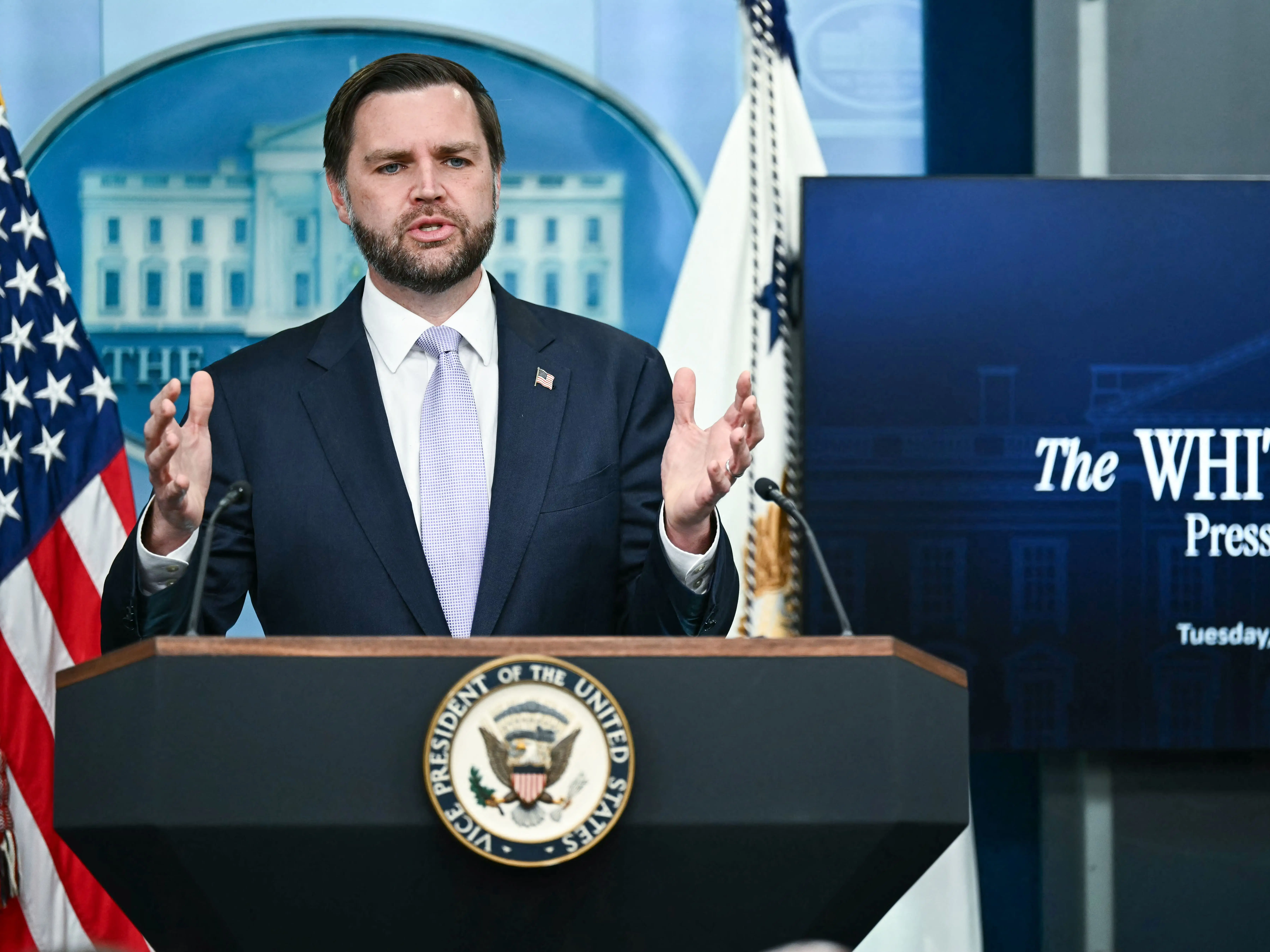
JD Vance during the press briefing at the White House Photograph: (AFP)
JD Vance says Iran’s leadership is fractured, nuclear talks remain unclear, and the United States is prepared to resume military action if needed
US Vice President JD Vance on Tuesday (May 19) said divisions within Iran’s leadership continue to complicate negotiations as the Trump administration pushes for a deal aimed at ending the conflict. Speaking to reporters at the White House, Vance said Iran’s internal power structure has made it difficult to determine the country’s negotiating stance. “The Iranians aren’t themselves quite clear in what direction they want to go; they are also just a fractured country,” Vance told reporters at the White House. “You have the leadership of the country, there’s the supreme leader, and there are a lot of officials below the supreme leader that [have] some influence in negotiation. It’s not sometimes totally clear what the negotiating position of the team is,” he continued.
Vance added that it remains uncertain whether the confusion stems from communication failures or bad faith during negotiations. “I will say with confidence it’s sometimes hard to figure out exactly what it is that the Iranians want to accomplish out of the negotiation,” he said. The vice president also dismissed reports suggesting Russia could take control of Iran’s enriched uranium as part of a future agreement. “That is not currently our plan. That has never been our plan. I’ve seen some reporting on that. I don’t know where it comes from,” Vance said during a White House briefing on Tuesday.
He indicated that such a proposal would likely face opposition from both the United States and Iran. “So, that is not currently the plan of the United States government. The Iranians have not raised it. I sense that it’s not something the Iranians would be particularly excited about, and I know the president isn’t particularly excited about it either,” he added. Still, Vance emphasized that the administration would avoid making fixed commitments during ongoing talks.
“But the vice president said he would not make pre-commitments in a negotiation ‘on any particular topic.’” On domestic matters, Vance addressed the administration’s $1.776 billion compensation fund tied to January 6 prosecutions. He clarified that the program was not designed for individuals who assaulted police officers, though claims would still be reviewed individually. “We’re not trying to give money to anybody who attacked a police officer. We’re trying to give money, not give money, we’re trying to compensate people where the book was thrown at them, they were mistreated by the legal system,” Vance said.
Trending Stories
)
)
)
)
)
)
)
)
)
)
)
)
)
)
)
)
)
)
)
)
)
)
)
)
)
)
)
)
)
)
)
)
)
)
&im=FitAndFill=(700,400))
)
)
)
)
“We do have people who were accused of attacking law enforcement officers,” he said. “That doesn’t mean that we are going to completely ignore some of the claims that they are going to make,” Vance said. Every case would undergo individual review, and denied that members of the Trump family would benefit from the compensation fund. “The people that would get the money are people, some of whom have been prosecuted completely disproportionate to any crime they have ever committed,” he said.
The vice president also claimed the United States had significantly weakened Iran’s military capabilities and said President Donald Trump instructed his team to pursue negotiations aggressively. According to Vance, talks are progressing positively, but he warned that military action remains an option if diplomacy fails. He said negotiations are in a “good spot,” but added that “it takes two to tango” and the United States is “locked and loaded” to restart military operations if necessary.

