'If he wants sweeping tariffs, he should go to US Congress': Neal Katyal slams Trump’s new 15% levies

&imwidth=600&imheight=450&format=webp&quality=medium "'If he wants sweeping tariffs, he should go to US Congress': Neal Katyal slams Trump’s new 15% levies")
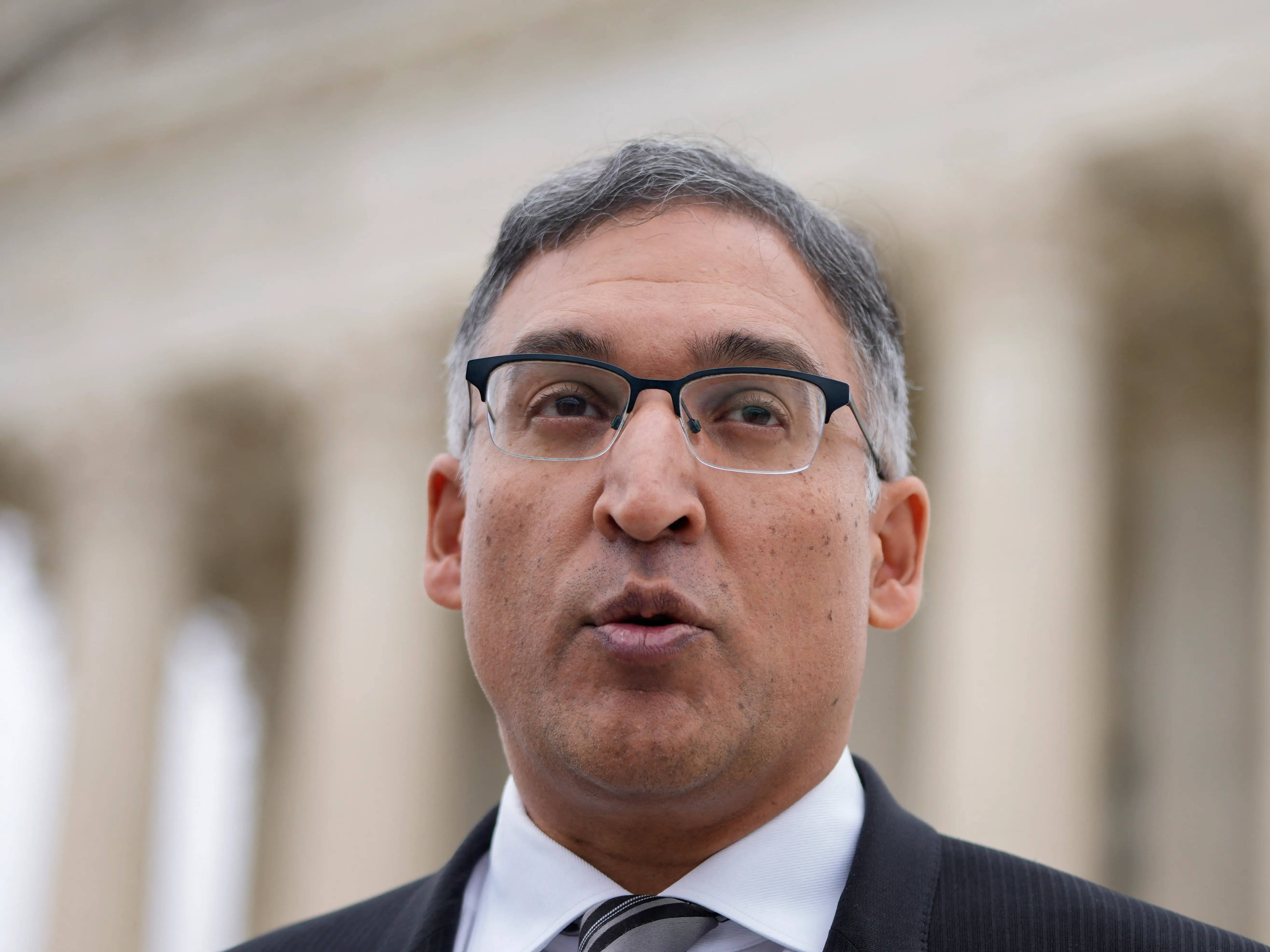
Indian-American lawyer Neal Katyal Photograph: (AFP)
Katyal, who played a key role in getting Trump's earlier tariffs quashed by the Supreme Court, questioned the legal basis for the new duties levied under Section 122 of the Trade Act of 1974.
Indian-origin lawyer, Neal Katyal, who fought a court battle against Donald Trump's sweeping global tariffs, has sharply criticised the US president's decision to impose a new 15 per cent tariffs on countries worldwide, saying he cannot bypass Congress for such measures. Katyal stated that if Trump believes the tariffs are a "good idea," he should follow the Constitution.
Katyal's reaction comes after the US Supreme Court on Friday struck down Trump's global tariffs, which he had imposed under the International Emergency Economic Powers Act (IEEPA) in a 6-3 ruling, saying it "does not authorise the President to impose tariffs."
Soon after the apex court decision, Trump vowed to use other methods to reinstate sweeping tariffs that the Supreme Court struck down. “Other alternatives will now be used to replace the ones that the court incorrectly rejected,” adding that these options could also bring in more revenue.
In a press conference, he announced a new 10 per cent global tariff on US trade partners, invoking Section 122 of the Trade Act of 1974. Trump raised the tariffs to 15 per cent a day after.
Katyal, who played a key role in getting Trump's earlier tariffs quashed by the Supreme Court, questioned the legal basis for the new duties levied under Section 122 of the Trade Act of 1974. He underlined that the Department of Justice (DOJ) had previously told the court that Section 122 can not be invoked in issues such as trade deficits, which are different from balance-of-payment deficits.
In a post on X, he wrote, "Seems hard for the President to rely on the 15 percent statute (sec 122) when his DOJ in our case told the Court the opposite: Nor does [122] have any obvious application here, where the concerns the President identified in declaring an emergency arise from trade deficits, which are conceptually distinct from balance-of-payments deficits."
Trending Stories
)
)
)
)
)
)
)
)
)
)
)
)
)
)
)
)
)
)
)
)
)
)
)
)
)
)
)
)
&im=FitAndFill=(700,400))
)
)
)
)
)
)
)
)
&im=FitAndFill=(700,400))
)
)
)
Katyal added, “If he wants sweeping tariffs, he should do the American thing and go to Congress. If his tariffs are such a good idea, he should have no problem persuading Congress. That's what our Constitution requires.”