India's cancer screening problem may have an unlikely solution: Dogs and AI

&imwidth=600&imheight=450&format=webp&quality=medium "India's cancer screening problem may have an unlikely solution: Dogs and AI")
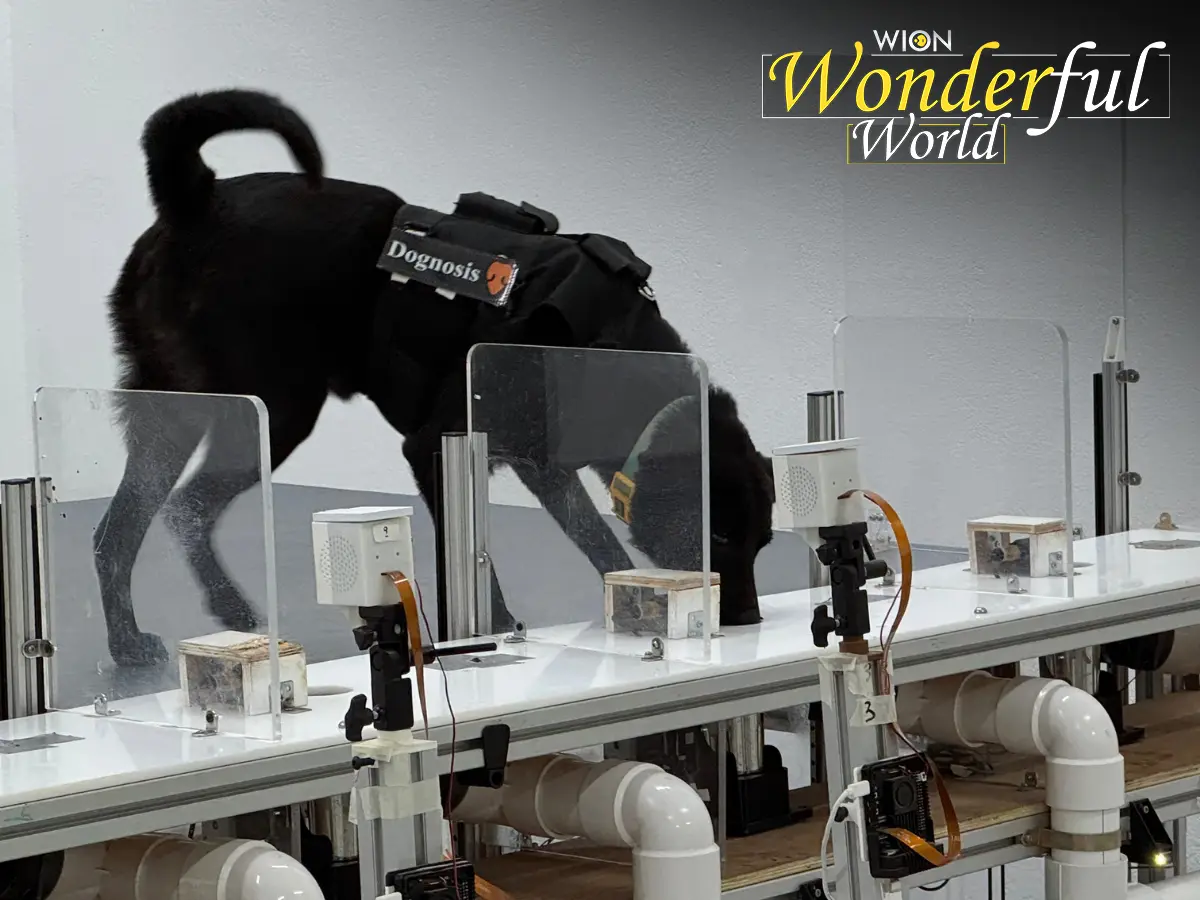
Can dogs smell cancer before humans know they have it? Bengaluru based startup tells WION yes Photograph: (Dognosis)
Can dogs smell cancer before doctors find it? In an exclusive conversation with WION, a Bengaluru startup revealed how trained dogs and artificial intelligence identified cancer in about nine out of 10 cases, including early-stage patients.
Can dogs smell cancer before humans know they have it? A Bengaluru startup believes the answer is yes, and a newly published peer-reviewed study is giving scientific weight to a claim that sounds more like science fiction than medicine.
Researchers from Bengaluru-based Dognosis Biosciences have reported that trained dogs, working alongside an artificial intelligence-powered analytical system, were able to detect multiple types of cancer from breath samples with more than 90 per cent sensitivity and specificity. The findings were published in the Journal of Clinical Oncology, one of the world's leading cancer research journals. To find out more about the diagnostic process, WION spoke with Dognosis. Here's all you need to know.
Research-backed claims: Dogs can predict who has cancer
Dognosis's study involved 3,275 participants across six hospitals in Karnataka. Notably, in the final test cohort of 1,502 participants, they achieved "90.8% sensitivity (95% CI, 87.2 to 94.5) and 91.3% specificity (95% CI, 89.7 to 92.9), with a receiver operating characteristic AUC of 0.962 (95% CI, 0.952 to 0.969). The sensitivity for early-stage disease (stage I to II) was 90.6% and remained consistent across major cancer types".
Also read | Can you really wear period panties all day? Doctors tell WION it's not that simple | WION Decodes
Put simply, the dogs were able to spot cancer in roughly nine out of 10 patients while also correctly identifying nine out of 10 healthy participants as cancer-free. Their accuracy stayed largely consistent even in early-stage cancers, when the disease is often hardest to detect.
Trending Stories
&imwidth=280&imheight=210&format=webp&quality=medium)
&imwidth=280&imheight=210&format=webp&quality=medium)
&imwidth=280&imheight=210&format=webp&quality=medium)
&imwidth=280&imheight=210&format=webp&quality=medium)
&imwidth=280&imheight=210&format=webp&quality=medium)
&imwidth=280&imheight=210&format=webp&quality=medium)
&imwidth=280&imheight=210&format=webp&quality=medium)
&imwidth=280&imheight=210&format=webp&quality=medium)
&imwidth=280&imheight=210&format=webp&quality=medium)
&imwidth=280&imheight=210&format=webp&quality=medium)
&imwidth=280&imheight=210&format=webp&quality=medium)
&imwidth=280&imheight=210&format=webp&quality=medium)
&imwidth=280&imheight=210&format=webp&quality=medium)
&imwidth=280&imheight=210&format=webp&quality=medium)
&imwidth=280&imheight=210&format=webp&quality=medium)
&imwidth=280&imheight=210&format=webp&quality=medium)
&imwidth=280&imheight=210&format=webp&quality=medium)
&imwidth=280&imheight=210&format=webp&quality=medium)
&imwidth=280&imheight=210&format=webp&quality=medium)
&imwidth=280&imheight=210&format=webp&quality=medium)
&im=FitAndFill=(700,400)&imwidth=280&imheight=210&format=webp&quality=medium)
&imwidth=280&imheight=210&format=webp&quality=medium)
&imwidth=280&imheight=210&format=webp&quality=medium)
&imwidth=280&imheight=210&format=webp&quality=medium)
&imwidth=280&imheight=210&format=webp&quality=medium)
&imwidth=280&imheight=210&format=webp&quality=medium)
&imwidth=280&imheight=210&format=webp&quality=medium)
&imwidth=280&imheight=210&format=webp&quality=medium)
&imwidth=280&imheight=210&format=webp&quality=medium)
&imwidth=280&imheight=210&format=webp&quality=medium)
&im=FitAndFill=(700,400)&imwidth=280&imheight=210&format=webp&quality=medium)
&imwidth=280&imheight=210&format=webp&quality=medium)
&imwidth=280&imheight=210&format=webp&quality=medium)
&imwidth=280&imheight=210&format=webp&quality=medium)
Why does it matter?
In India, due to the high diagnosis costs (₹20,000 to ₹65,000 on average), only a small percentage of people undergo cancer screening. Many of those who undergo screening do so at later stages, when treatment options are limited. In such cases, pocket-friendly diagnosis using dogs could be the difference between life and death.
The startup insists that its long-term goal is not to replace conventional cancer diagnostics but to create an inexpensive first-line screening tool that can identify people at higher risk and direct them towards further medical testing.
"We want to operate as a risk stratification tool," Dognosis representative Manal Shakeel told WION. "Our end goal is not to replace traditional screening methods. We want to identify people who may be at high risk so they can undergo follow-up testing."
Dognosis said that it envisions the technology as a population-level screening tool that could reach remote and underserved regions where access to advanced diagnostics remains limited.
"What we aim to build is a population-based mass screening tool that can be deployed in low-income settings and even the most remote areas because it doesn't require heavy infrastructure," it said.
Also read | NCERT Mohenjodaro Dancing Girl controversy: Is India's obsession with modesty threatening its culture?
How much would it cost?
In India, the average total cost for a comprehensive cancer diagnosis ranges from ₹20,000 to ₹65,000. By comparison, canine-backed screening is expected to cost about one-tenth of current market rates, Dognosis representative Srishti A told WION.
She added that future deployments through government partnerships could potentially be offered free to end users. The company has already begun discussions with public health authorities. According to Shakeel, Dognosis is in advanced talks with Punjab's National Health Mission and is also engaging with officials in Karnataka and Andhra Pradesh regarding pilot deployments.
Which dog breeds participated in the study?
The study relied on 16 trained dogs, including Beagles, a Labrador, a Labrador-Indie mix and a Dutch Shepherd-Belgian Malinois mix. Researchers found that diagnostic performance remained largely consistent regardless of which dog evaluated the sample.
Like all screening tools, the system is not perfect. Shakeel acknowledged that there have been false positives, where participants were flagged despite not having cancer. She also revealed that follow-up checks identified two participants who were initially missed by the test but were later diagnosed with cancer several months afterwards.
Despite that, the company believes the technology could help address one of India's biggest healthcare challenges: detecting cancer before symptoms become severe.
"When cancer is detected early, treatment outcomes are much better, and the financial burden is reduced," Shakeel noted. "One of the biggest goals we have is to make screening reach more and more people."

