From space station, astronaut Shukla calls ISRO Chief and top officials

&imwidth=600&imheight=450&format=webp&quality=medium "From space station, astronaut Shukla calls ISRO Chief and top officials")
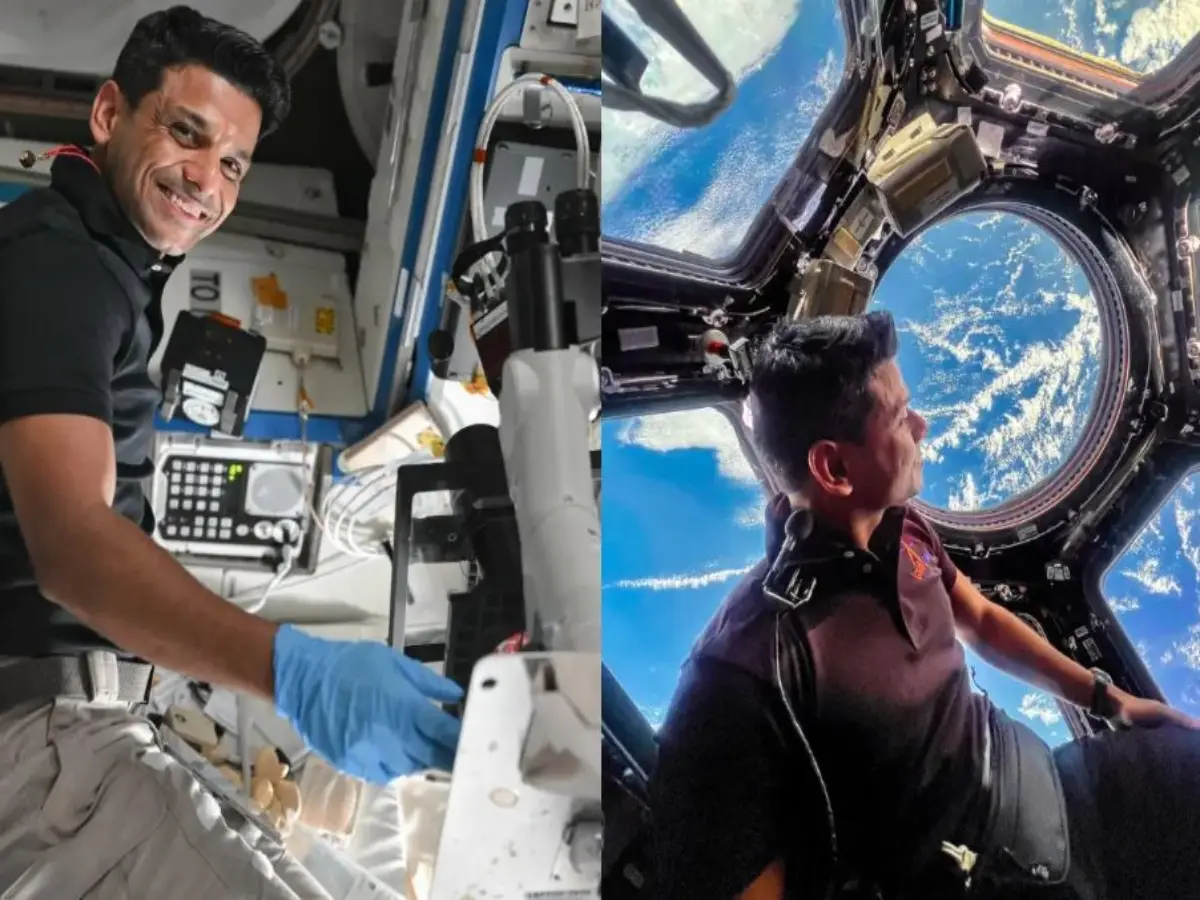
Indian astronaut Shubhanshu Shukla aboard the International Space Station Photograph: (X/MyGovIndia)
The Gaganyaan program aims to demonstrate India's capability to launch a crewed spacecraft into low Earth orbit, using its own rocket and spacecraft, other associated technologies.
After having spent more than 10days aboard the International Space Station, Indian astronaut Group Captain Shubhanshu Shukla rang up the ISRO Chief and top officials. According to ISRO, the call was held on Sunday, July 6th. During the call, ISRO Chief Dr. V.Narayanan expressed keen interest in Shubhanshu's well-being and inquired about the various scientific experiments and activities being conducted on the ISS.
Given that Shukla's Axiom-4 mission serves as a precursor to India's own Gaganyaan human spaceflight programme, the ISRO Chief emphasized the significance of documenting all experiments and activities meticulously after Shubhanshu's return to Earth. Shukla's experience would provide valuable insights and inputs for Gaganyaan, which India hopes to carry out by the end of this decade.
The Gaganyaan program aims to demonstrate India's capability to launch a crewed spacecraft into low Earth orbit, using its own rocket and spacecraft, other associated technologies.
The discussion with astronaut Shukla was attended by several senior officials from ISRO, including Dr. Unnikrishnan Nair, Director of Vikram Sarabhai Space Centre (VSSC) and Chairman of the Program Management Council for Human Space Programme, M. Mohan, Director, iquid Propulsion Systems Centre (LPSC), Padmakumar, Director of ISRO Inertial Systems Unit (IISU), Ganesh Pillai, Scientific Secretary, ISRO, and Shri N Vedachalam, former Director of LPSC. They deliberated over various aspects of the mission and the experiments being conducted aboard the space station.
During the call, Shubhanshu Shukla expressed his heartfelt gratitude to Prime Minister Narendra Modi for providing him with this incredible opportunity to represent India on the ISS, ISRO said. Shukla is the first Indian aboard the International space station and the second Indian to undertake space travel. He also shared updates on the progress of the experiments and activities being carried out on the space station, highlighting the scientific objectives and the challenges being addressed.
Over the last four decades(since the first Indian astronaut in space), technology, computing, automation, sensors and software have undergone a complete modernization and have changed the experience of human spaceflight. Further, human spaceflight is all about highly sophisticated human-machine interfaces, something that is outside of ISRO's core expertise. ISRO has vast experience in launching rockets and satellites, but has not undertaken missions involving humans. Which is why Axiom-4 offers many practical learning opportunities.
Trending Stories
&imwidth=280&imheight=210&format=webp&quality=medium)
&imwidth=280&imheight=210&format=webp&quality=medium)
&imwidth=280&imheight=210&format=webp&quality=medium)
&imwidth=280&imheight=210&format=webp&quality=medium)
&imwidth=280&imheight=210&format=webp&quality=medium)
&imwidth=280&imheight=210&format=webp&quality=medium)
&imwidth=280&imheight=210&format=webp&quality=medium)
&imwidth=280&imheight=210&format=webp&quality=medium)
&imwidth=280&imheight=210&format=webp&quality=medium)
&imwidth=280&imheight=210&format=webp&quality=medium)
&imwidth=280&imheight=210&format=webp&quality=medium)
&imwidth=280&imheight=210&format=webp&quality=medium)
&imwidth=280&imheight=210&format=webp&quality=medium)
&imwidth=280&imheight=210&format=webp&quality=medium)
&imwidth=280&imheight=210&format=webp&quality=medium)
&imwidth=280&imheight=210&format=webp&quality=medium)
&imwidth=280&imheight=210&format=webp&quality=medium)
&imwidth=280&imheight=210&format=webp&quality=medium)
&imwidth=280&imheight=210&format=webp&quality=medium)
&imwidth=280&imheight=210&format=webp&quality=medium)
&imwidth=280&imheight=210&format=webp&quality=medium)
&imwidth=280&imheight=210&format=webp&quality=medium)
&imwidth=280&imheight=210&format=webp&quality=medium)
&imwidth=280&imheight=210&format=webp&quality=medium)
&imwidth=280&imheight=210&format=webp&quality=medium)
&imwidth=280&imheight=210&format=webp&quality=medium)
&imwidth=280&imheight=210&format=webp&quality=medium)
&imwidth=280&imheight=210&format=webp&quality=medium)
&imwidth=280&imheight=210&format=webp&quality=medium)
&imwidth=280&imheight=210&format=webp&quality=medium)
&imwidth=280&imheight=210&format=webp&quality=medium)
&imwidth=280&imheight=210&format=webp&quality=medium)
&imwidth=280&imheight=210&format=webp&quality=medium)
&imwidth=280&imheight=210&format=webp&quality=medium)
&im=FitAndFill=(700,400)&imwidth=280&imheight=210&format=webp&quality=medium)
&imwidth=280&imheight=210&format=webp&quality=medium)
&imwidth=280&imheight=210&format=webp&quality=medium)
&imwidth=280&imheight=210&format=webp&quality=medium)
&imwidth=280&imheight=210&format=webp&quality=medium)
Further, Shukla acknowledged the efforts of ISRO in ensuring his safe travel to the ISS. Dr. Narayanan reiterated that the entire ISRO team is working closely to support him throughout the mission.
About Axiom-4 and its astronauts
Axiom-4 mission has flown a crew of four astronauts to the International Space Station, where they would stay for two weeks and perform 60 experiments. The astronauts flew on the SpaceX Falcon 9 rocket and the Crew Dragon capsule. Peggy Whitson, America's seniormost astronaut and director of human spaceflight at Axiom Space, leads the Axiom-4 mission, while ISRO (Indian Space Research Organization) astronaut Shubhanshu Shukla serves as pilot or second-in-command. The two mission specialists are ESA (European Space Agency) project astronaut Sławosz Uznański-Wiśniewski of Poland and Tibor Kapu of Hungary. Apart from Peggy, all those aboard this mission are first-time astronauts.
This Axiom-4 mission facilitated the return to human spaceflight for India, Poland, and Hungary, given that each nation’s first and only government-sponsored spaceflight had taken place more than 40 years ago. The Indian Government has paid almost $64mn(Rs.550cr) for Shukla's training and spaceflight as part of Axiom-4.
