Did birds evolve from dinosaurs? Fossils of largest feathered dinosaur hint at ancestry

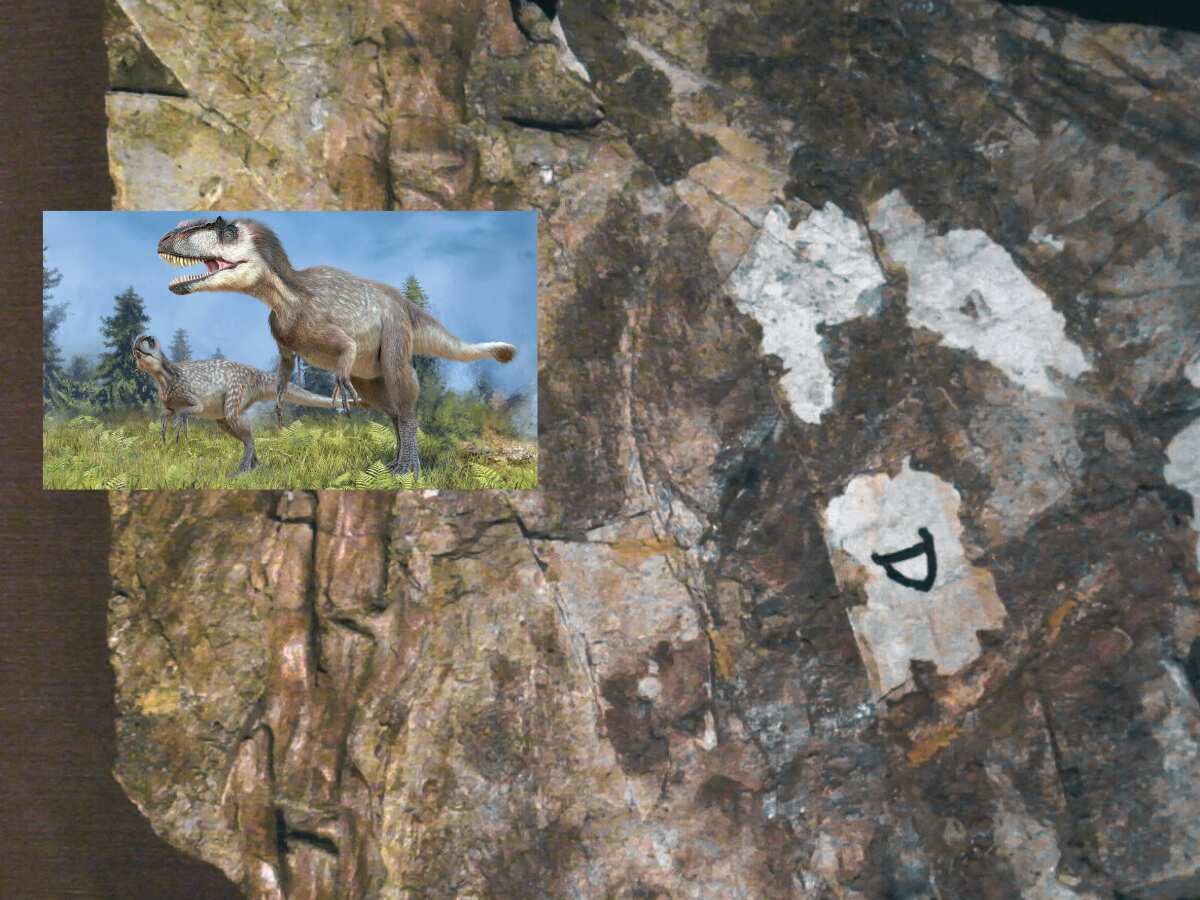
Fossils of largest feathered dinosaur
It has long been debated that birds were once dinosaurs with feathers, or, in other words, birds evolved from their giant ancestors- the feathered dinosaurs.
In a recent fossil study, palaeontologists termedYutyrannus hauli as the largest feathered dinosaur. The fossil is around ninemetres long and weighs close to 1,400 kilogrammes with partial or complete feathers (which is still up for debate). This might be the largest feathered dinosaurs, but the modern birds have closer resemblance to a theropod group called- Tyrannoraptors. This group includes everybody’s favourite bipedal predator, the Tyrannosaurs rex. or T. rex.
Also Read |A rare black hole is lurking 6,000 light-years away in Earth's cosmic backyard

The T. rex fossils are believed to have had patches of skin with few feathers on them, much like with a scaly reptile-like skin that is more commonly associated with softer bird-like feathers.
But recent evidence show that Yutyrannus hali is the biggest dinosaur discovered till date with feather. Yutyrannus hali,literally meaning “beautiful feathered tyrant”, was discovered in 2012 after a fossil was purchased from a dealer.
The “beautiful feathered tyrant” was big and fuzzy and lived 125 million years ago
&imwidth=180&imheight=135&format=webp&quality=medium)
Trump distances himself from senior political advisers over work for pro-Russian government
&im=FitAndFill=(700,400)&imwidth=180&imheight=135&format=webp&quality=medium)
US midterms 2026: 10 leaders and candidates to watch in the battle for Congress
&imwidth=180&imheight=135&format=webp&quality=medium)
‘Team first and team ahead’: India coach Gambhir pens heartfelt wish for chief selector Ajit Agarkar
&imwidth=180&imheight=135&format=webp&quality=medium)
US readying to strike Iran? Report suggests Trump preparing to put on show of strength ahead of US midterms
&imwidth=180&imheight=135&format=webp&quality=medium)
Narendra Modi Stadium bomb threat declared hoax; India & Australia U19 squads safe
&imwidth=180&imheight=135&format=webp&quality=medium)
Christa Pike wakes after failed execution, asks 'Where am I and who are you?'
&imwidth=180&imheight=135&format=webp&quality=medium)
Veteran actor Nana Patekar dies at 75 after suffering cardiac arrest
&imwidth=180&imheight=135&format=webp&quality=medium)
'We don't think so': Trump says Russian plague lab worker's death not linked to bio-weapon
&imwidth=180&imheight=135&format=webp&quality=medium)
IndiGo flight struck by lightning at 17,000 feet, nose of Patna-Lucknow flight damaged
&imwidth=180&imheight=135&format=webp&quality=medium)
France protests: How a Gen Z school movement turned into a political war | The Verdict
&imwidth=180&imheight=135&format=webp&quality=medium)
Lightning strikes IndiGo Patna-Lucknow flight at 17,000 feet, damages nose; all 110 safe
&imwidth=180&imheight=135&format=webp&quality=medium)
Mall of America attack: FBI arrests man over alleged ISIS-inspired mass shooting plot with AK-47 and 200 rounds
&imwidth=180&imheight=135&format=webp&quality=medium)
Christa Pike 'angry' and 'confused' after failed execution; judge orders to preserve evidence
&imwidth=180&imheight=135&format=webp&quality=medium)
Shia LaBeouf and Mia Goth head for divorce after nearly 10 years
&imwidth=180&imheight=135&format=webp&quality=medium)
Ronaldo sends 'a hug' after Messi says he misses 'wearing the blue and white'
&imwidth=180&imheight=135&format=webp&quality=medium)
'They came in, they hit us': New videos show Iranian attacks on US Camp Buehring in Kuwait | Watch
&imwidth=180&imheight=135&format=webp&quality=medium)
Poland: 19-year-old stabs several at Polish vocational school
&imwidth=180&imheight=135&format=webp&quality=medium)
Nicolas Maduro, wife likely to face new charges over alleged torture of US citizens: Report
&imwidth=180&imheight=135&format=webp&quality=medium)
US Midterms 2026: Barack Obama hits campaign trail to boost Democratic candidates
&imwidth=180&imheight=135&format=webp&quality=medium)
France holds talks with Taliban government amid diplomatic outreach
&imwidth=180&imheight=135&format=webp&quality=medium)
Trump to honour Elon Musk, Sergey Brin and Jensen Huang with top science honour at White House. Check the full list here
&imwidth=180&imheight=135&format=webp&quality=medium)
Nigerian President Bola Ahmed Tinubu hails Modi’s 25-year leadership milestone, calls for deeper Nigeria-India strategic ties
&imwidth=180&imheight=135&format=webp&quality=medium)
Captain Smit Machchhar on feet again, walks 10 steps as recovery continues after Flydubai flight attack
&imwidth=180&imheight=135&format=webp&quality=medium)
'Baseless and misconceived': India issues statement after Elon Musk's 'oligarchs' claim over Starlink delay
&imwidth=180&imheight=135&format=webp&quality=medium)
BTS agency HYBE announces first-ever Weverse Con Festival in India
&imwidth=180&imheight=135&format=webp&quality=medium)
Musk alleges ‘oligarchs’ blocking Starlink in India, here is what we know so far
&imwidth=180&imheight=135&format=webp&quality=medium)
Nana Patekar's #MeToo controversy: From Tanushree Dutta’s allegations to court ruling
&imwidth=180&imheight=135&format=webp&quality=medium)
US midterms 2026: Why the Latino vote could shape control of Congress
&imwidth=180&imheight=135&format=webp&quality=medium)
'I should win it': Trump renews Nobel Peace Prize claim ahead of 2026 announcement
&im=FitAndFill=(700,400)&imwidth=180&imheight=135&format=webp&quality=medium)
World’s top vehicle producers: Top 10 countries making the most cars. Check where India stands
&imwidth=180&imheight=135&format=webp&quality=medium)
Jon Rahm quits LIV Golf as breakaway tour attempts to relaunch itself
&imwidth=180&imheight=135&format=webp&quality=medium)
Trump's naked 23-karat gold statue unveiled near European Parliament
&imwidth=180&imheight=135&format=webp&quality=medium)
Texas man executed by lethal injection; first US execution since botched Christa Pike execution
&imwidth=180&imheight=135&format=webp&quality=medium)
Nana Patekar: Remembering a legend of the Indian cinema
Whether Yutyrannus huali was partially or completely feathered is contentious, but we do know that it had proto feathers that differ from modern feathers.
Proto feathers have long filaments (around 20 centimeters, according to the Australian Museum) that lacked the barbs, barbules, and hooks we see in modern feathers, but are thought to have formed a shaggy coat that would’ve enabled Yutyrannus to keep warm in cold climates.
When it comes to comparing proto and modern feathers of Yutyrannus and T. rex, researchers believe that Yutyrannus lived around 125 million years ago during the early Cretaceous period, and by the time T. rex arrived, the feathers saw an evolution.
Also Read |Gen Zs are ditching smartphones for 'dumbphones' with minimal features to curb doomscrolling
It is estimated that baby T. rex would’ve been the size of a terrier, and it too may have sported a coat of fuzzy proto feathers. Then, as it reached its teenage growth spurt years (when they triple in size in less time), the feathers may have reduced to small patches that could've been useful in mating rituals.
One reason to doubt whether adult T. rex were covered in featherscomes down to their physiology. As T. rex grew, its volume increased significantly more than its surface area (skin). In other words, metabolically speaking, it wouldn’t have made sense to be covered in feathers as it would’ve been too hot.
Also Read |'Spacebug' found lurking in ISS. Here's how it is threatening Sunita Williams, crew
T. rex’s issue wasn’t getting cold but quite the opposite. When it was a baby and it had high surface area to body volume ratio that would have benefited from the warmth of feathery jacket. That is likely why feathers evolved in the first place, as a form of thermoregulation for small animals with big surface areas that made it hard for them to retain the heat made by their bodies.
This approach likely didn’t suit the giant T.rex, however, and so the feathers were lost in some groups but retained by others, including the dinosaurs we share this planet with today.
(With inputs from agencies)