Lenskart in a soup over 'no bindi, kalawa' rule in dress code while allowing hijab, CEO issues clarification

&imwidth=600&imheight=450&format=webp&quality=medium "Lenskart in a soup over 'no bindi, kalawa' rule in dress code while allowing hijab, CEO issues clarification")
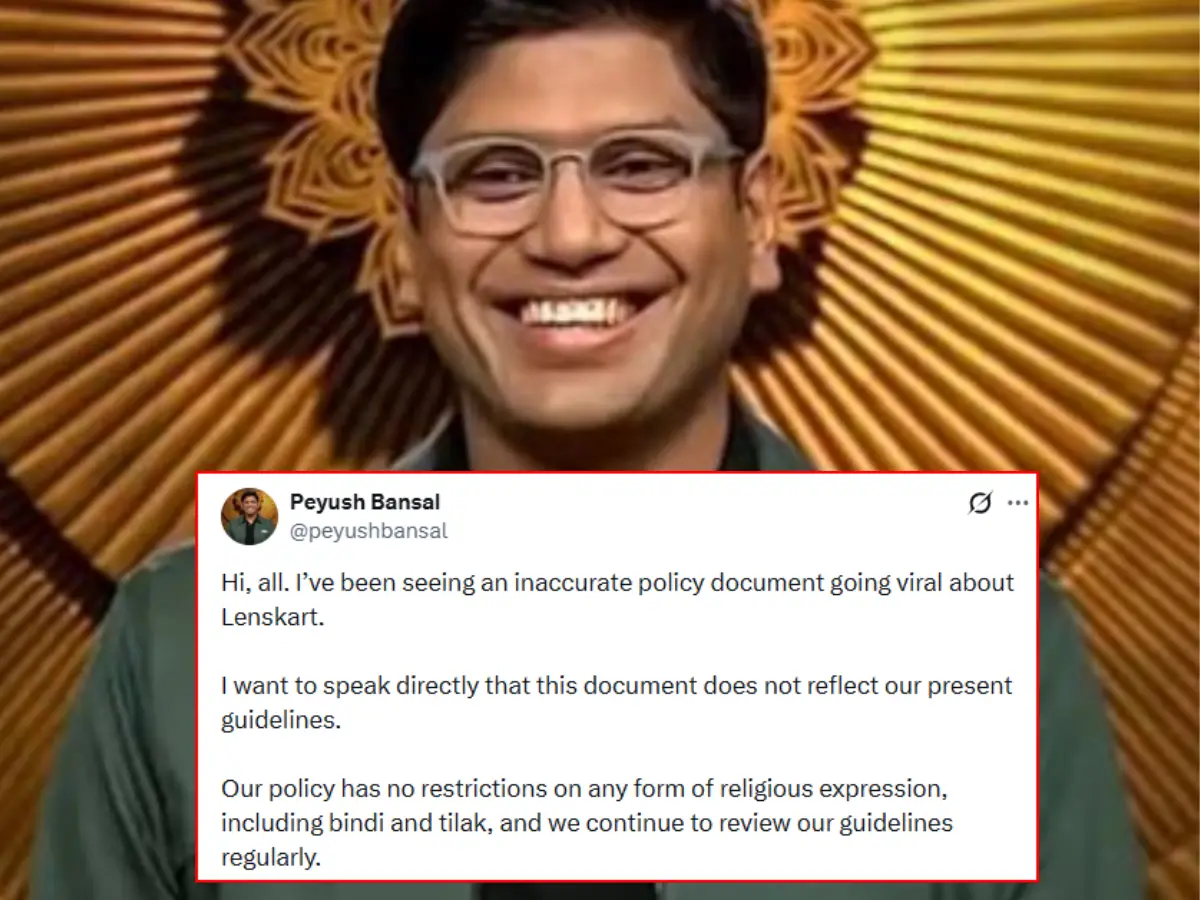
lenskart staff uniform and grooming guide triggers controversy. Photograph: (X/Peyush Bansal)
An alleged dress code document for Lenskart staff is circulating online, which forbids bindis, tilak, and kalawa in the workplace, while allowing the hijab. Peyush Bansal, the founder and CEO, issued a clarification after it snowballed into a major controversy.
Eyewear brand Lenskart is under the scanner for its alleged dress code, which allows female staff to wear hijab but forbids bindi/tilak (forms of vermilion) at work. A document, purportedly an office dress code for Lenskart, has triggered major controversy after being shared online on several social media platforms. It also dictates rules on wearing sindoor (vermilion) for married Hindu women. The document reads, "If wearing sindoor, it should be placed minimally and should not fall on the forehead." Meanwhile, "bindi is not allowed" and "religious threads/wristbands must be taken out". Hijab for Muslim women is allowed, but should meet certain guidelines. "If wearing [a] hijab/turban, it should [be] black in colour. The hijab should be of medium chest coverage and must not cover the logo. Wearing a burkha in the store is not allowed," it reads. Author and activist Shefali Vaidya, tagged the Lenskart founder, and wrote on X, “Hi Peyush Bansal, can you please clarify why hijab is okay but bindi/kalawa is not at Lenskart.”
Also Read: TCS Nashik BPO sex abuse case: HR manager Nida Khan emerges as key suspect and remains untraceable
What Lenskart CEO said
As the note generated more reactions online, Peyush Bansal, the founder and CEO of Lenskart, clarified that it was "an inaccurate policy document" and that it "does not reflect our present guidelines." He added, "Our policy has no restrictions on any form of religious expression, including bindi and tilak, and we continue to review our guidelines regularly." However, his statement reflected that the policy document on the dress code was in force at some point in time.
Bansal stressed on the Indianness of Lenskart
"Our grooming policy has evolved over the years, and outdated versions do not represent who we are today. We apologize for the confusion and concern this situation has caused," Bansal wrote. He insisted that the company has "thousands of team members across Bharat who wear their faith and culture proudly every day". He stressed that "Lenskart was built in Bharat, by Indians, for Indians.
People raised questions on Lenskart grooming guide
Netizens asked if it is outdated; it means it was in force previously. A user wrote, “If this document was ‘outdated’… then why did it exist in the first place?” Another asked, "If the grooming policy has indeed evolved over time, when exactly was it that one religious identity was deemed acceptable while another was prohibited?"
He posted another clarification hours later, stating that the "document currently circulating is an outdated internal training document. It is not an HR policy." He admitted that the "line about bindi/tilak" should never have been written. Bansal said that they caught the wording on February 17, long before people started talking about it, and it was "immediately removed." He added, "Let me be absolutely clear. Lenskart does not and will never restrict any form of respectful religious expression. This includes bindi, tilak, or any such symbols of faith."
&imwidth=280&imheight=210&format=webp&quality=medium)
&imwidth=280&imheight=210&format=webp&quality=medium)
&imwidth=280&imheight=210&format=webp&quality=medium)
&imwidth=280&imheight=210&format=webp&quality=medium)
&imwidth=280&imheight=210&format=webp&quality=medium)
&imwidth=280&imheight=210&format=webp&quality=medium)
&imwidth=280&imheight=210&format=webp&quality=medium)
&imwidth=280&imheight=210&format=webp&quality=medium)
&imwidth=280&imheight=210&format=webp&quality=medium)
&imwidth=280&imheight=210&format=webp&quality=medium)
&imwidth=280&imheight=210&format=webp&quality=medium)
&imwidth=280&imheight=210&format=webp&quality=medium)
&imwidth=280&imheight=210&format=webp&quality=medium)
&imwidth=280&imheight=210&format=webp&quality=medium)
&imwidth=280&imheight=210&format=webp&quality=medium)
&imwidth=280&imheight=210&format=webp&quality=medium)
&imwidth=280&imheight=210&format=webp&quality=medium)
&imwidth=280&imheight=210&format=webp&quality=medium)
&imwidth=280&imheight=210&format=webp&quality=medium)
&imwidth=280&imheight=210&format=webp&quality=medium)
&imwidth=280&imheight=210&format=webp&quality=medium)
&imwidth=280&imheight=210&format=webp&quality=medium)
&imwidth=280&imheight=210&format=webp&quality=medium)
&imwidth=280&imheight=210&format=webp&quality=medium)
&imwidth=280&imheight=210&format=webp&quality=medium)
&imwidth=280&imheight=210&format=webp&quality=medium)
&imwidth=280&imheight=210&format=webp&quality=medium)
&imwidth=280&imheight=210&format=webp&quality=medium)
&imwidth=280&imheight=210&format=webp&quality=medium)
&imwidth=280&imheight=210&format=webp&quality=medium)
&imwidth=280&imheight=210&format=webp&quality=medium)
&imwidth=280&imheight=210&format=webp&quality=medium)
&imwidth=280&imheight=210&format=webp&quality=medium)
&imwidth=280&imheight=210&format=webp&quality=medium)
&im=FitAndFill=(700,400)&imwidth=280&imheight=210&format=webp&quality=medium)
&imwidth=280&imheight=210&format=webp&quality=medium)
&imwidth=280&imheight=210&format=webp&quality=medium)
&imwidth=280&imheight=210&format=webp&quality=medium)
&imwidth=280&imheight=210&format=webp&quality=medium)

