India@80: How leaders from the Northeast contributed to the freedom movement | Independence Day 2026 special

&imwidth=600&imheight=450&format=webp&quality=medium "India@80: How leaders from the Northeast contributed to the freedom movement | Independence Day 2026 special")
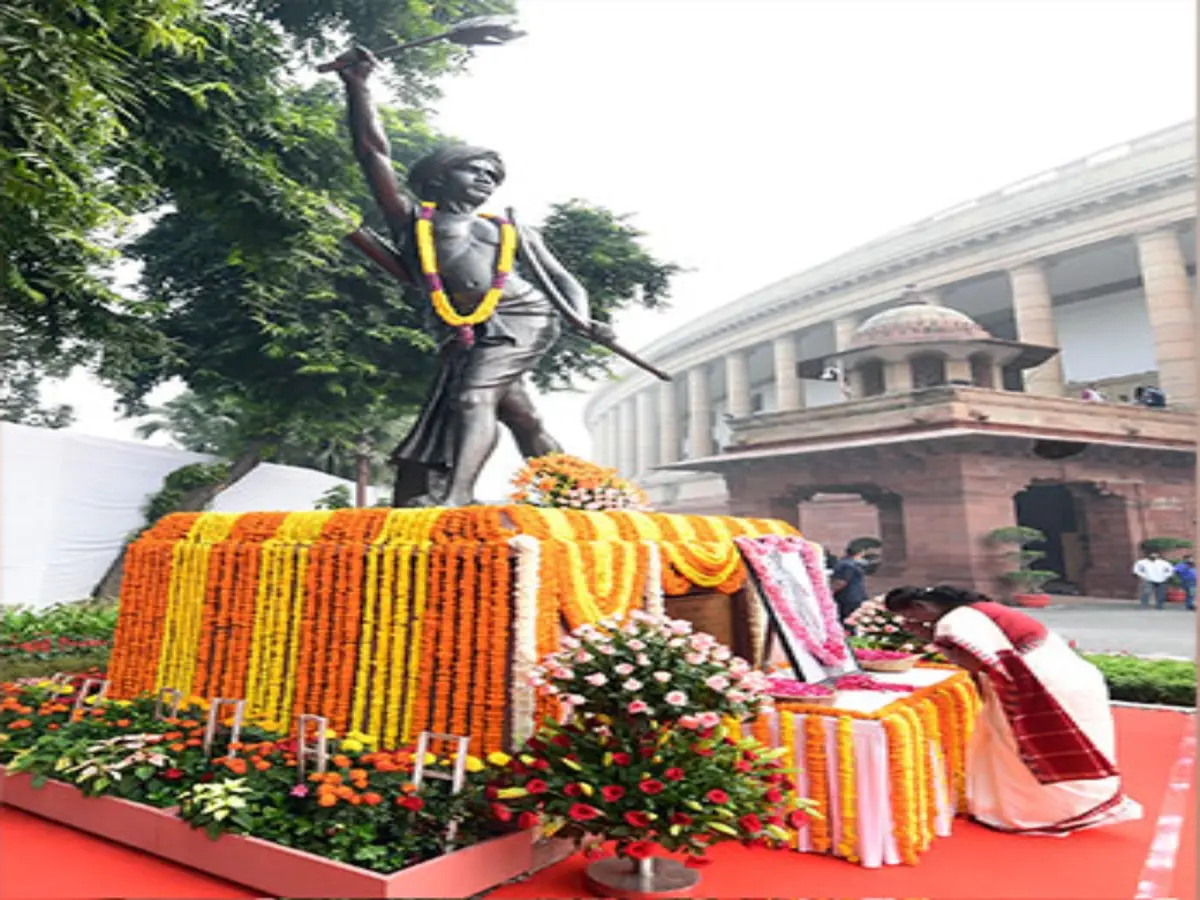
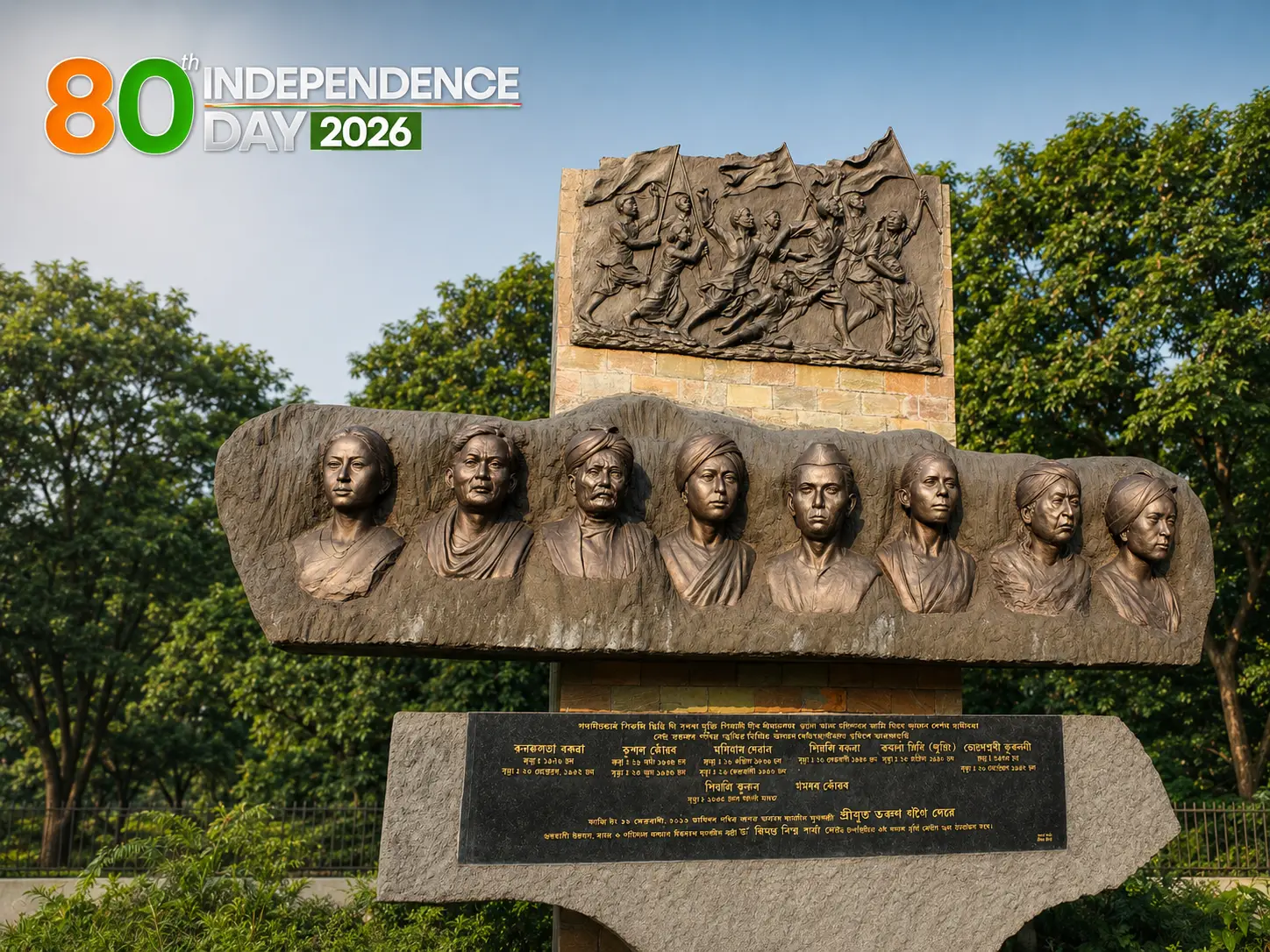
A monument in Assam dedicated to Indian freedom fighters Photograph: (Others)
From Maniram Dewan to Rani Gaidinliu, from tribal chieftains to local princes, several leaders across present-day Northeast resisted British rule. They led armed uprisings, political movements, and joined the larger national movements like Quit India.
Many leaders from what became India's Northeast contributed to the nation's freedom struggle. During British colonial rule, the areas were mainly part of Assam Province, while Manipur and Tripura were princely states. Parts of present-day Nagaland, Meghalaya, Mizoram and Arunachal Pradesh were administered differently. The seven states of the Northeast — Arunachal Pradesh, Assam, Manipur, Meghalaya, Mizoram, Nagaland and Tripura — had tribal leaders, local kings or chieftains, military commanders, Congress leaders and reformists who resisted British colonial rule. Many led armed uprisings or participated in the Non-Cooperation, Civil Disobedience and Quit India movements led by Mahatma Gandhi and the Indian National Congress.
Freedom fighters from Assam: From Maniram Dewan to Kushal Konwar
Gopinath Bordoloi was a Gandhian Congress leader who joined the freedom movement in the 1920s. He participated in the Non-Cooperation and Quit India movements and worked to ensure that Assam remained part of India during Partition. He became the first Chief Minister of Assam and served from 1946 until his death in 1950.
Maniram Dewan, or Maniram Dutta Baruah, was hanged by the British for his role in the 1857 uprising. He was one of the first Indians to establish tea gardens in Assam and became an important figure in the development of the tea industry. He and Piyali Barua were publicly hanged at Jorhat Central Jail on 26 February 1858.
Kanaklata Barua was a teenage leader of the Mrityu Bahini during the 1942 Quit India Movement. She was shot dead at the age of 17 while leading an unarmed procession to hoist the national flag at Gohpur police station.
Kushal Konwar, a prominent Quit India leader, was hanged by the British in 1943 after being convicted in connection with the alleged sabotage of a railway bridge. Bhogeswari Phukanani was another martyr of the Quit India Movement from Nagaon. She was shot during a non-violent protest in September 1942.
Trending Stories
)
)
)
)
)
)
)
)
)
)
)
)
)
)
)
)
)
)
)
)
)
)
)
)
)
)
)
)
)
)
)
)
)
)
&im=FitAndFill=(700,400))
)
)
)
)
Chandraprabha Saikiani was an activist, writer and social reformer involved in the freedom movement and women's causes. Bishnuprasad Rabha was a tribal revolutionary and cultural figure who participated in the Civil Disobedience Movement.
Some of these leaders sacrificed their lives to make India free. There were many participants from the Mishing and Bodo communities in the Quit India Movement, as well as in other resistance movements.
Manipur: From a crown prince who led the Anglo-Manipur War to tribal leaders
Bir Tikendrajit Singh was a Crown Prince of Manipur and a military commander who led resistance in the Anglo-Manipur War of 1891 to protect Manipur's territorial integrity. He was publicly hanged by the British. General Thangal fought alongside Tikendrajit. Paona Brajabashi was a major in the Manipuri forces who fought valiantly in the Battle of Khongjom in 1891 against the British and chose death over surrender.
Haipou Jadonang was a Rongmei Naga leader who founded the Heraka movement, a religious reform initiative that developed into an anti-British resistance movement. He was executed by the British in 1931. His follower, Rani Gaidinliu, was a spiritual and political leader born in present-day Manipur's Tamenglong district. Gaidinliu was a leader of the Heraka movement, having joined it at the age of around 13. She was arrested in 1932 at the age of 16 and imprisoned for nearly 14 years. Jawaharlal Nehru later gave her the title "Rani" in recognition of her courage.
Also read: Why Indian PM hoists the Tricolour on Independence Day while President does so on Republic Day
Meghalaya: From a Khasi chief to members of the INA
Several leaders from present-day Meghalaya participated in the freedom movement, including by joining or supporting Netaji Subhas Chandra Bose's Indian National Army (INA). U Tirot Sing Syiemlieh was a Khasi tribal chief of Nongkhlaw who led the Khasis in the Anglo-Khasi War of 1829–1833 against British road construction and attempts to extend colonial control. He was held by the British and died in captivity.
U Kiang Nangbah was a Jaintia leader who led an uprising against British rule in the early 1860s. He was publicly hanged in 1862.
There were many other Khasi and Jaintia resistance figures, including U Manick Daloi. Pa Togan Sangma was another prominent Garo leader who resisted British expansion in the Garo Hills.
Also read: Independence Day 2026: 9 lesser-known facts about India’s freedom struggle
Mizoram: From Mizo fighters from the hills to a female chieftain
Pasaltha Khuangchera, also known as Khuangchera Ralte, was a prominent Mizo warrior who died resisting British forces in the Lushai Hills. He is remembered as a symbol of early armed resistance to British expansion. Lalnu Ropuiliani, better known as Ropuiliani, was a Mizo chieftainess who rallied other chiefs against British annexation and colonial control of their lands. Her resistance included refusing British demands for taxes, labour and other forms of tribute. She was eventually arrested and died in confinement in 1895.
Leaders such as Lalsuthlaha, Ngura, Suakpuilala, Zakapa and Hnawncheuva also resisted British expeditions in the Lushai Hills during the late 19th century. These struggles were primarily efforts to defend Mizo autonomy and territory against colonial expansion.
Nagaland and Naga areas: A struggle for identity and autonomy
Naga resistance against the British often intertwined with Heraka, religious reform and local struggles for autonomy against colonial control.
As mentioned, the efforts of Rani Gaidinliu and Haipou Jadonang spanned areas of present-day Manipur, Nagaland and Assam. Their resistance was strongly associated with Naga identity, the revival of traditional religious practices and opposition to British rule. The Heraka movement sought self-rule for the Nagas and challenged British authority in the region.
Arunachal Pradesh: The warriors who fought the British
Matmur Jamoh was an Adi warrior and village leader who led resistance against British expansion. In 1911, he and his followers killed British official Noel Williamson and others, an incident that contributed to the Anglo-Abor War of 1911–12. Jamoh was later sentenced to life imprisonment and sent to the Andaman Islands.
Moje Riba was an important freedom fighter from the present-day Arunachal Pradesh region and became the first president of the INC in the area then known as the North-East Frontier Tract or NEFT. He participated in the freedom movement, was arrested for his activities, and became the first person in the region to hoist the national flag on 15 August 1947 at Dipa village.
Taji Mideren was a Mishmi leader who resisted British expansion in the Lohit region. He organised members of the Mishmi community against British power. He was captured, sentenced to death, and hanged at Tezpur Jail on 29 January 1918.
Tripura: The brothers who contributed to the freedom struggle
Aziz Ahmed from present-day Tripura was active in regional resistance and nationalist activities against colonial rule. The brothers Umesh Lal Singh and Sachindra Lal Singh also contributed significantly to the freedom struggle. Sachindra Lal Singh, popularly known as Sachin-da, became involved in revolutionary activities while still a student and later played an important role in the political movement in Tripura. He was arrested and spent years in colonial prisons. After Independence, he became the first Chief Minister of Tripura, serving from 1963 to 1971.
Freedom fighters from Northeast: The list is much longer
Many more figures were involved in 19th-century tribal and local resistance against annexation and colonial control during what the British described as "expeditions". Some participated in or were influenced by the wider revolts associated with the 1857 uprising. In the 20th century, many tribal leaders focused on local sovereignty, cultural preservation and opposition to taxes or forced labour alongside broader anti-colonial struggles. Several reformist and Congress leaders were also closely linked to the freedom movement in Assam and other parts of the Northeast.
The freedom struggle in the Northeast was therefore not a single, uniform movement. It included armed resistance by tribal and local leaders, opposition by rulers and chieftains, religious and cultural movements, revolutionary activities, and participation in Gandhi-led mass movements. Dozens of local chieftains, volunteers and community leaders also participated, many of them laying down their lives in resistance to British rule.