Trump to meet Xi Jinping: Who will accompany US president and who won't - here’s what we know

&imwidth=600&imheight=450&format=webp&quality=medium "Trump to meet Xi Jinping: Who will accompany US president and who won't - here’s what we know")
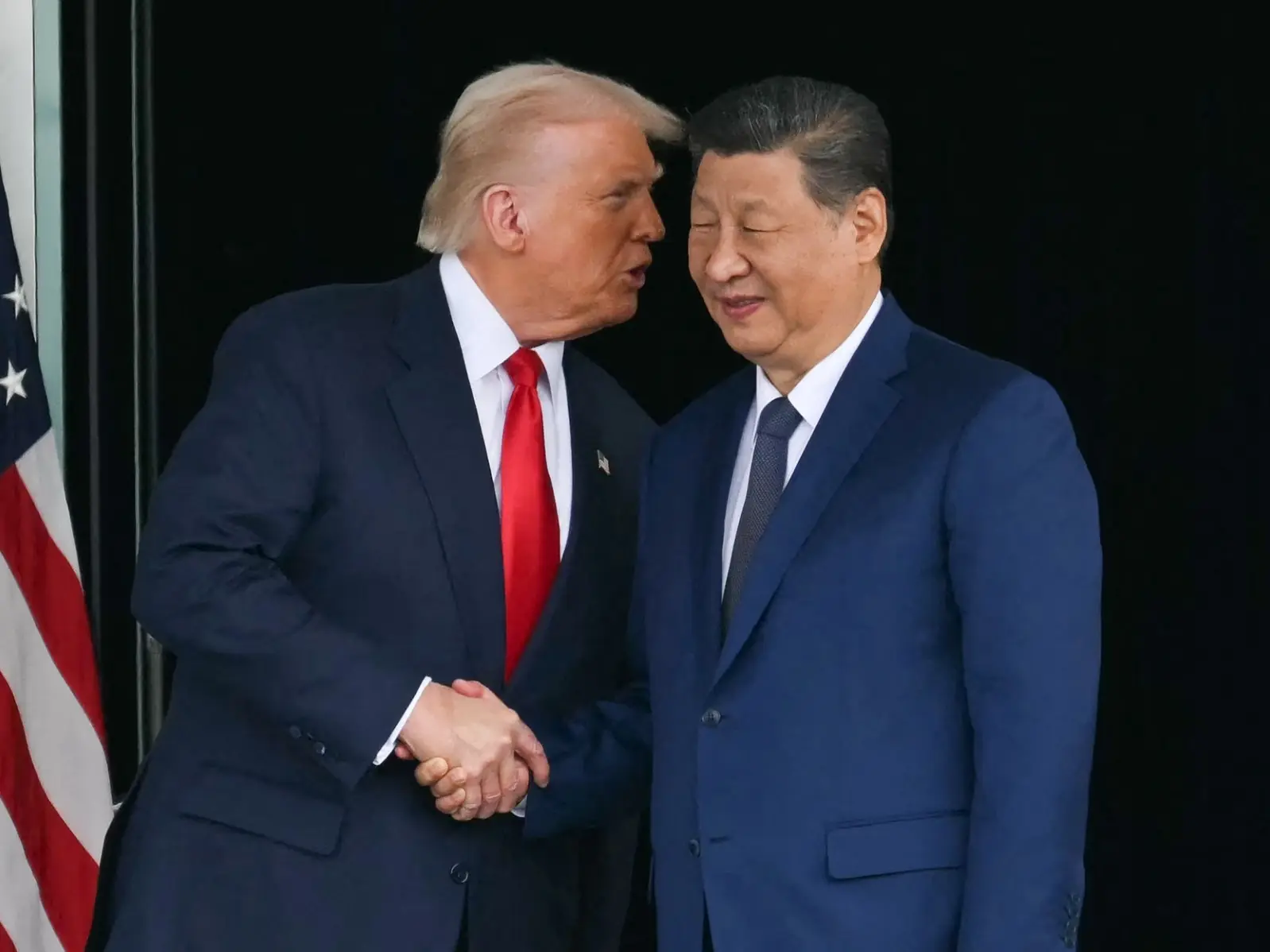
US President Donald Trump (L) and China's President Xi Jinping shake hands as they leave after their talks at the Gimhae Air Base, located next to the Gimhae International Airport in Busan on October 30, 2025. Photograph: (AFP)
President Trump’s May 14–15 China summit includes Elon Musk and Tim Cook in a 16-member business delegation, prioritising trade and Boeing deals. Nvidia’s Jensen Huang was notably excluded.
US President Donald Trump is preparing for a high-profile visit to China this week, where he is set to meet Chinese President Xi Jinping for talks expected to centre heavily on trade and business relations. The visit, scheduled for May 14 and 15, is being framed as a business-focused summit aimed at stabilising ties between the world’s two largest economies. America and China remain deeply linked through trade worth hundreds of billions of dollars despite tensions over artificial intelligence, export controls, rare-earth minerals, Taiwan and the ongoing Iran war.
One of the biggest talking points ahead of the trip is the list of American corporate leaders travelling with Trump, and one major absence from the delegation is Jensen Huang.
Trump invites Elon Musk despite past fallout
Among the business leaders expected to accompany Trump is Elon Musk, a move that has surprised many, given the difficult relationship the two men appeared to share after last year’s fallout. Musk had last year distanced himself from Trump’s DOGE initiative. His inclusion in the China delegation now suggests a shift in the Trump-Musk relationship.
Reports say Musk is joining the trip as part of a wider American business delegation rather than for a separate personal visit. The White House invited him alongside several major corporate chiefs from sectors including technology, finance, aviation and manufacturing.
Trending Stories
)
)
)
)
)
)
)
)
)
)
)
)
)
)
)
)
)
)
)
)
)
)
)
)
)
)
)
)
)
)
)
)
)
)
&im=FitAndFill=(700,400))
)
)
)
)
Musk’s participation is considered significant because of Tesla’s extensive business interests in China. The electric vehicle company has a major manufacturing and market presence there, making Musk an important figure in discussions linked to trade, industrial production and market access.
His presence also signals that the administration wants to showcase American commercial and technology interests during the summit with Xi Jinping.
Jensen Huang left out of delegation
Also read: Iran will ‘never bow to the enemy’, says Pezeshkian as Tehran pushes recovery efforts after conflict
While Musk’s inclusion has drawn attention, the absence of Huang has generated even greater discussion. Huang, the chief executive of Nvidia, had been widely expected to join the trip. Reports from Reuters and Bloomberg said the AI chip company chief would have attended if invited. Huang himself reportedly said that representing the United States would have been “a privilege” and “a great honour”. However, he was not included in the presidential delegation.
Why Nvidia’s absence matters
Nvidia currently sits at the centre of the growing technology rivalry between Washington and Beijing. The company’s AI chips have become a major issue in the wider US-China dispute over advanced technology and export controls. According to reports, the White House may not want the summit to become dominated by debates over AI chip exports or pressure for concessions linked to semiconductor trade.
Because of this, Huang’s absence appears to reflect the administration’s priorities for the trip rather than any personal disagreement.
The situation is particularly notable because Trump is believed to have developed a strong working relationship with Huang since returning to office. The administration had also reportedly agreed to allow Nvidia’s H200 AI chips to be exported to China.

