The author Iran targeted before Trump and Netanyahu: Salman Rushdie’s 'fatwa' and stabbing explained!

&imwidth=600&imheight=450&format=webp&quality=medium "The author Iran targeted before Trump and Netanyahu: Salman Rushdie’s 'fatwa' and stabbing explained!")
Iran issued 'fatwa' against Salman Rushdie Photograph: (Pexels, Reuters)
In February 1989, Iran’s then Supreme Leader Ayatollah Ruhollah Khomeini declared Rushdie’s novel ‘The Satanic Verses’ to be blasphemous. He issued a fatwa calling for Rushdie’s execution, alongside anyone involved in publishing the book.
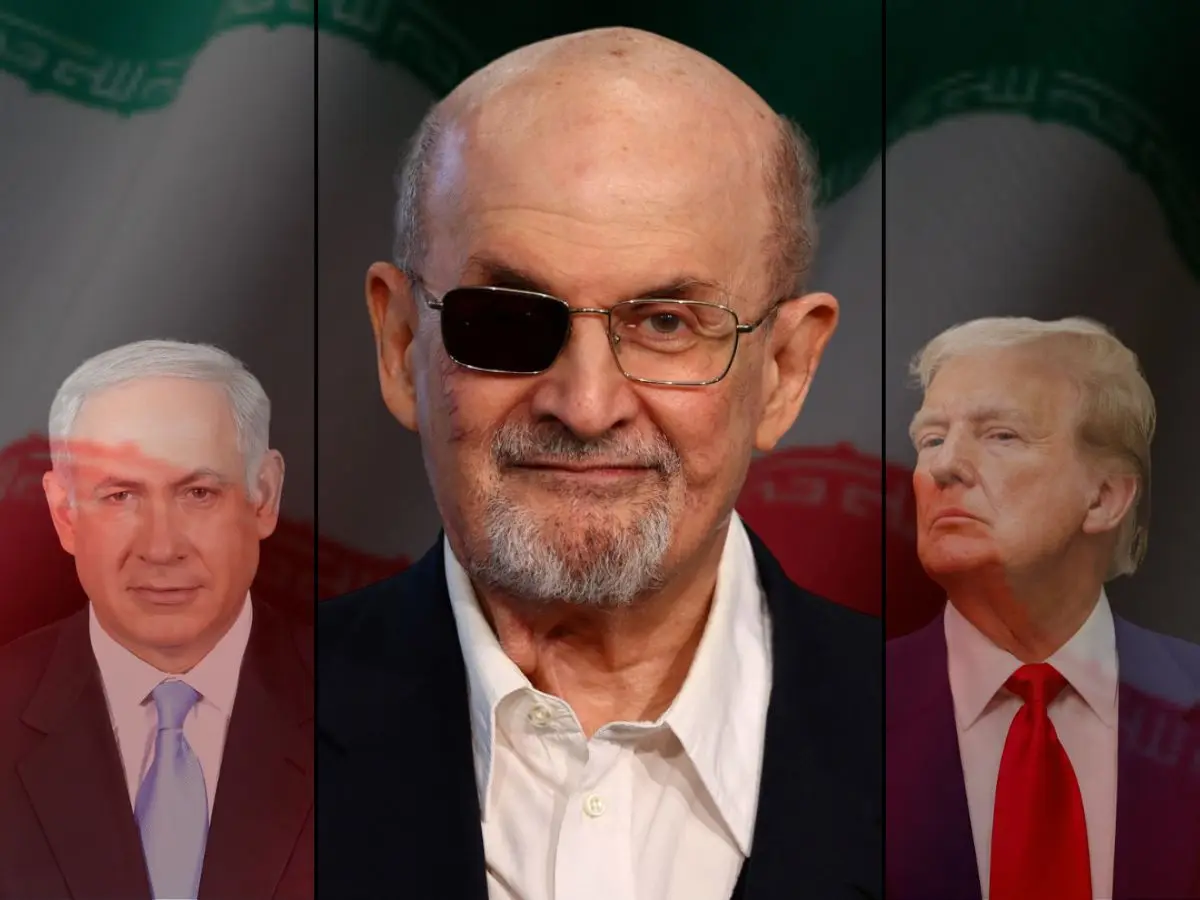
A fatwa is a formal Islamic legal opinion issued by a Marja, a senior Shia cleric. It carries moral and religious weight among followers and can direct personal conduct or, in rare cases, call for punitive action. Recent political and religious tensions in the middle-east have seen Iran's Grand Ayatollah Naser Makarem Shirazi issue fatwas against US President Donald Trump and Israeli Prime Minister Benjamin Netanyahu, describing them as ‘enemies of God’ and urging Muslims to stand united against any perceived threat to Iran’s leadership. However, this is not the first time, the most historically significant fatwa issued by Iran remains that against author Salman Rushdie, launched over three decades ago.
The 1989 fatwa: The Satanic Verses backlash
In February 1989, Iran’s then Supreme Leader Ayatollah Ruhollah Khomeini declared Rushdie’s novel ‘The Satanic Verses’ to be blasphemous. He issued a fatwa calling for Rushdie’s execution, alongside anyone involved in publishing the book. The decree was bolstered by a bounty estimated at $2.8 million, and protests erupted across Muslim-majority countries, including bans in India, Bangladesh, Sudan, and Sri Lanka . The fatwa shocked the literary world, forcing Rushdie into hiding in London, under round-the-clock British protection. Reflecting on his impact, Rushdie later said: “What is freedom of expression? Without the freedom to offend, it ceases to exist.”
Continued impact: A global wave of violence
The fatwa did not fade: in the 1990s, Rushdie’s Japanese translator, Hitoshi Igarashi, was stabbed to death in July 1991, and his Italian translator was injured days earlier. Though the Iranian government declared in 1998 that it would not actively pursue the killing, Khomeini’s initial judgment remained officially in force; in 2017, Supreme Leader Ali Khamenei reaffirmed its validity. Salman had once said, “Frankly, I wish I had written a more critical book..
“A religion that claims it is able to behave like this, religious leaders who are able to behave like this, and then say this is a religion that must be above any kind of whisper of criticism: that doesn’t add up", according to The Independent.
Trending Stories
)
)
)
)
)
)
)
)
)
)
)
)
)
)
)
)
)
)
)
)
)
)
)
)
)
)
)
)
)
)
)
)
)
)
&im=FitAndFill=(700,400))
)
)
)
)
The 2022 stabbing: Fatwa’s long shadow
On 12 August 2022, nearly 34 years later, Rushdie was stabbed while speaking at the Chautauqua Institution in New York. Attacker Hadi Matar, a 24-year-old New Jersey resident, rushed the stage and stabbed Rushdie dozens of times, causing life-threatening wounds. Rushdie lost sight in one eye and use of one hand before reaching hospital where he spent six weeks. He had told NPR: “I was rolling about in bed…people have dreams…you don’t run your daily life because of having a bad dream”. Hadi Matar was charged with attempted murder and assault. In February 2025, he was found guilty and sentenced to 25 years in prison for the violent assault.
Why it took so long, and why it matters
The gap between fatwa and stabbing underscores the lasting potency of such decrees, particularly when issued by a high-ranking cleric like Iran’s Supreme Leader. Unlike formal legal rulings, fatwas require no trial or defence, yet they can inspire violent action by individuals or groups who see them as divine commands. Though the Iranian state said in 1998 it would no longer actively seek Rushdie, the status of the bounty remained. Matar's defense claimed he acted under motivation related to Hezbollah and the enduring fatwa. That the attack occurred decades later shows fatwas can continue to inspire violence long after their issuance, cutting across borders and generations.
Recent fatwas: Political leaders enter the fray
On Monday, Makarem Shirazi issued fatwas against US President Donald Trump and Israeli PM Benjamin Netanyahu. Shirazi labelled them as the 'enemies of God', or mohareb for threatening Ayatollah Khamenei or other senior clerics. He additionally urged global Muslim unity against them, warning that supporting and cooperating with them is religiously forbidden (haram) and that anyone suffering for opposing them would be rewarded in fighting for god’s cause.
Free expression versus religious authority
The Rushdie fatwa triggered one of the most intense global debates on free speech. Western governments condemned the decree as a violation of human rights. Critics argue that such fatwas sidestep due process, offering no chance for defence or appeal. Rushdie, even under threat, continued writing: “Instead of just being the person who got stabbed, I now see myself as the person who wrote a book about getting stabbed,” he reflected after publishing his memoir Knife. Amnesty International and PEN have defended Rushdie's right to free expression.
The enduring legacy of a contested decree
The fatwa issued in 1989 remains officially active. Iranian law regards ‘mohareb’ status as a capital offence. Though Iran later signalled a softer stance, it has never formally revoked Khomeini’s ruling.