Israel-Iran war: How much time does it take for Iran's ballistic missiles to reach Israel? Less than what you think

&imwidth=600&imheight=450&format=webp&quality=medium "Israel-Iran war: How much time does it take for Iran's ballistic missiles to reach Israel? Less than what you think")
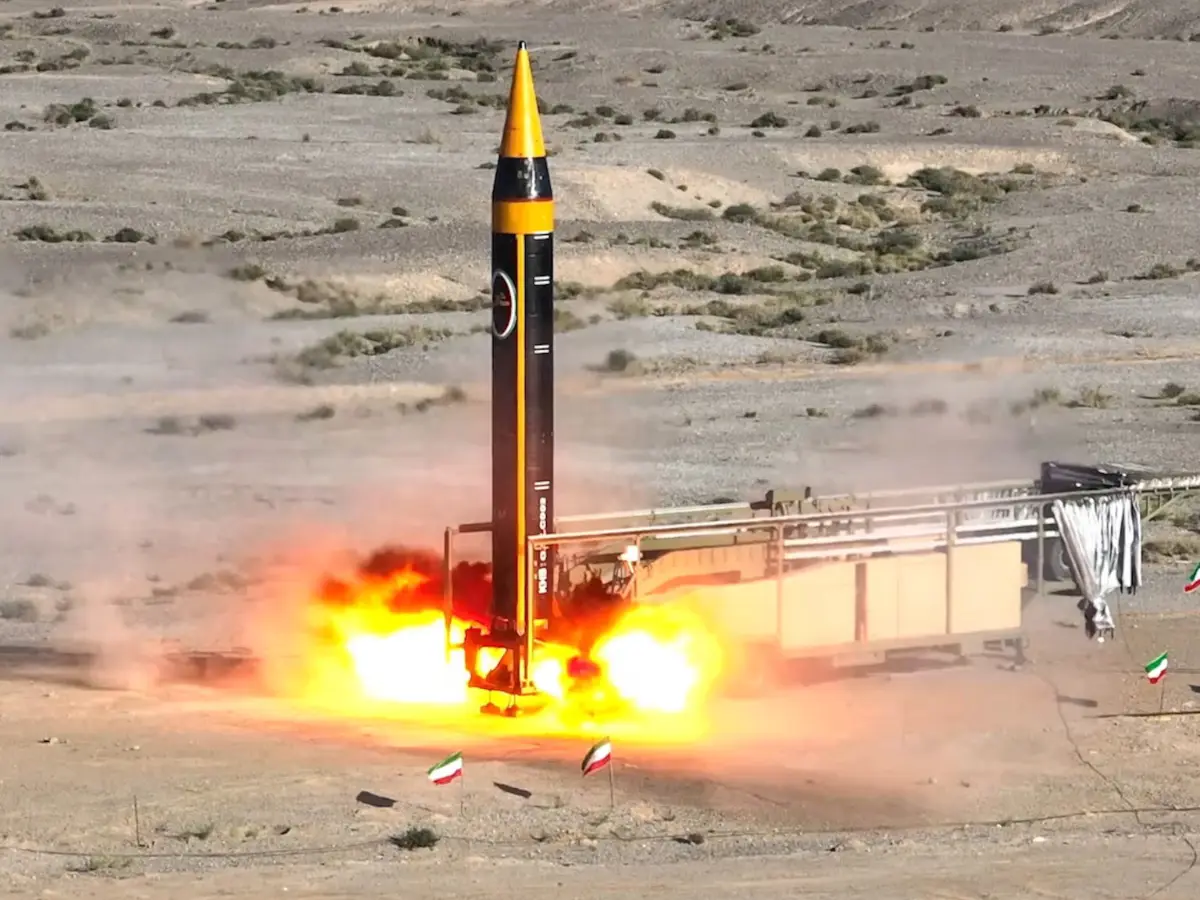
How much time does it take for Iran's ballistic missiles to reach Israel? Less than what you think Photograph: (Reuters)
According to US officials, Iran now has the largest ballistic missile stockpile in the Middle East, with more than 3,000 missiles ready for deployment. Some of these weapons are capable of reaching Israel in just 12 to 15 minutes.
After Israeli airstrikes targeted its nuclear facilities and senior military officials, Iran launched a wave of ballistic missiles in retaliation. Hundreds of projectiles were fired towards Israeli territory, and while many were intercepted, several managed to hit key areas, including central Tel Aviv, causing casualties and serious damage.
According to US officials, Iran now has the largest ballistic missile stockpile in the Middle East, with more than 3,000 missiles ready for deployment. Some of these weapons are capable of reaching Israel in just 12 to 15 minutes.
Iran’s missile capabilities: Why Israel should remain on alert?
Over the past three decades, Iran has built one of the most advanced missile programmes in the region. Its arsenal includes various types of ballistic and cruise missiles, capable of travelling different ranges and speeds.
Trending Stories
)
)
)
)
)
)
&im=FitAndFill=(700,400))
)
)
)
)
)
)
)
&im=FitAndFill=(700,400))
)
)
)
)
)
)
)
)
)
)
)
)
)
)
)
)
)
How far can Iranian missiles reach?
Ballistic missiles are grouped based on how far they can travel:
• BRBM (Battlefield Range Ballistic Missile): Less than 200 km
• SRBM (Short-Range Ballistic Missile): Up to 1,000 km
• MRBM/IRBM (Medium to Intermediate Range): 1,000–3,500 km
• LRBM (Long-Range): 3,500–5,500 km
• ICBM (Intercontinental): More than 5,500 km
Given that Israel lies 1,300–1,500 km from Iran, medium-range missiles can easily cover this distance.
How fast do Iranian missiles travel?
Missile speed is measured in Mach, where Mach 1 equals the speed of sound (about 1,225 km/h or 761 mph).
• Supersonic missiles (typically shorter-range): Travel faster than Mach 1
• Hypersonic missiles (often long-range): Exceed Mach 5 (6,125 km/h or 3,806 mph)
At these speeds, some Iranian missiles can cross the distance to Israel in as little as 12 minutes, depending on the type and launch location.
Why are ballistic missiles hard to intercept?
Ballistic missiles pose a major challenge to air defence systems due to their:
• High velocity: They fly too fast for many systems to respond in time
• High trajectory: After launch, they exit the atmosphere and re-enter at extreme speeds
• Countermeasures: Some carry decoys to confuse radar and missile defences
All these factors make them especially dangerous and difficult to intercept effectively.
Cruise missiles and drones: Slower, but harder to detect
Iran has also launched cruise missiles and drones during this conflict.
• Cruise missiles fly at lower altitudes, more like unmanned planes
• They move slower than ballistic missiles—but are harder to detect and can change direction mid-flight
• A cruise missile from Iran to Israel could take up to two hours
• Drones are even slower—taking as long as nine hours to reach Israeli targets
