&imwidth=800&imheight=600&format=webp&quality=medium "AI War: China trials local chip making tech even as it asks Chinese firms to reject US-made Nvidia chips. Why this matters")
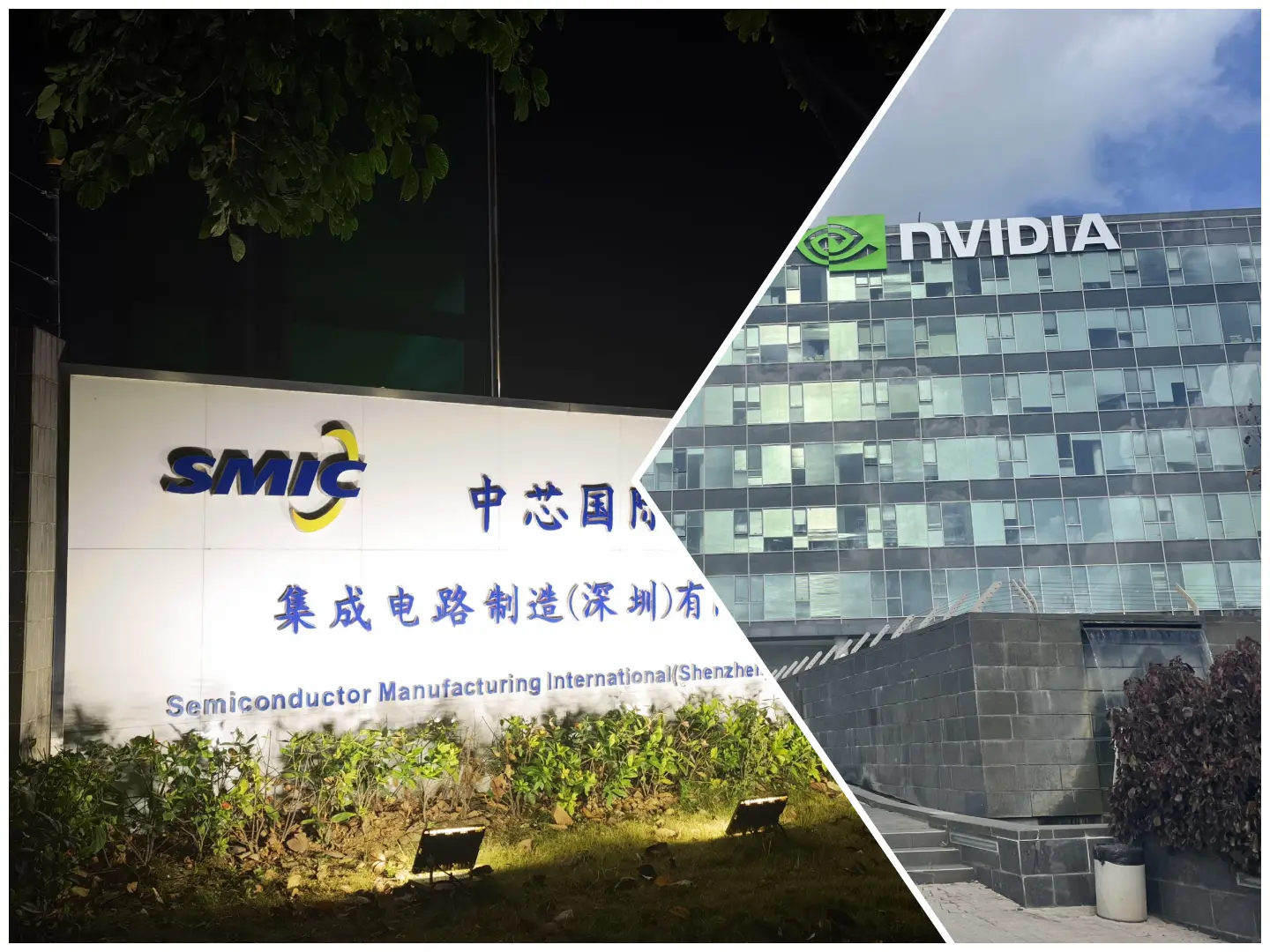
Amid the intensifying ‘AI war’, China has restricted the use of US-made AI chips, even as it moved a step close to self-reliance by trialling its own semiconductor manufacturing technology. According to mutiple reports, the Cyberspace Administration of China (CAC) recently ordered major tech firms—including Alibaba, ByteDance, and Tencent—to halt purchases and suspend testing of Nvidia’s AI chips, particularly the RTX Pro 6000D. The move aims at reducing dependence on foreign hardware and bolstering domestic alternatives.
China rejects US-made Nvidia chips: Why it matters
China’s rejection of Nvidia chips came close on the heels of earlier curbs on the American company's H20 AI chip, citing “information risks” and cybersecurity concerns. Beijing has alerady gone beyond usage bans: antitrust probes against Nvidia is looking into its 2019 acquisition of Mellanox Technologies, as a violation of merger conditions.

China trials domestic chip-making technology. What did it do?
Financial Times reported that China is conducting trials of its own semiconductor manufacturing technology. Semiconductor Manufacturing International Corporation (SMIC), the largest Chinese chipmaker, is testing a domestically developed deep-ultraviolet (DUV) lithography machine created by Shanghai startup Yuliangsheng.
Trending Stories
)
IND vs JPN one-off T20I: India survive scare from Japan to win five-over a side match by 2 runs
)
Putin's United Russia party wins 355 seats in Duma election; 4 other parties cross threshold to enter parliament
)
AI models chose to harm humans to stop ‘pain,’ alarming study raises fresh safety questions
)
‘0% chance’: Nvidia CEO Jensen Huang dismisses AI extinction fears by 2030
)
Samay Raina-Mukesh Chhabra controversy explained: What happened over girlfriend joke on India's Got Latent?
)
Trump's helipad event overshadowed by audio failure as major TV networks suspend pool coverage
)
'Needs time away from the international scene': England white-ball captain Brook on pacer Brydon Carse's future
)
New Zealand farms shift to carbon forests: Carbon credits fuel a land rush reshaping rural life
)
Anti-AI activists storm summit, say 'incompetent' leaders are leading us into a disaster - 'We need a vote'
)
Samsung raises Galaxy S26 prices by Rs 20,000: Here’s what each model now costs
)
J&K Assembly Session begins amid chaos: BJP, ruling alliance clash as statehood demand dominates
)
Asian Games 2026: India women's cricket team beats Sri Lanka by 147 runs for first gold
)
Key accused in Bihar's Jamui molestation case, arrested after police shoot him in leg
)
Randeep Hooda arrives in Gujarat for his first National Film Award: ‘Very grateful’
)
US and China vie for AI dominance as calls grow for regulation | Gravitas
&im=FitAndFill=(700,400))
Anant Nag to recieve Dadasaheb Phalke Award: From Ankur to Nishant- Revisit his best films and iconic performances on OTT
)
UK banks are rethinking financial crime detection because of algorithm
)
FIFA chief Infantino wants to reform governing body with consultation from federations
)
The Verdict | The Mecca Agreement is under scrutiny as Houthis attack Saudis
)
India at UNGA81: Jaishankar warns global order under 'growing stress', pushes for ‘reformed multilateralism’
)
Raaka creates history! Allu Arjun’s film secures Guinness World Record ahead of release
)
Saudi Arabia exits China-led mBridge digital currency platform amid Saudi-Houthi conflict
)
'Lot of things to learn from experienced players': Jayasuriya backs Rohit, Virat for 2027 ODI World Cup
)
$110 billion Warner Bros merger: Paramount reaches settlement with 12 US states
&im=FitAndFill=(700,400))
New OTT releases this week (September 21-27, 2026): Shaque: Trust No One, Hunkkaar, Don’t Be Shy- 5 new titles coming to Netflix, Prime Video and more
)
From ‘communist’ to ‘great mayor’: Trump praises Mamdani after New York meeting, discusses immigration and housing
)
Report: Zelensky meets CIA chief Ratcliffe at Shannon airport, weeks after his secret Moscow trip
)
How Zaheer Khan came to be CSK's head coach of IPL 2027
)
Pilot recreates Mona Lisa in sky over Oklahoma and Arkansas in four-hour flight: VIDEO
)
UK PM Burnham agrees to 'defensive' military support for Saudi Arabia against Houthis
)
Jailer 2: Vidya Balan joins Rajinikanth's upcoming film as Kantha | Watch
)
Microsoft executive called AI training the ‘largest theft of labour in human history’
)
40-foot waves crash into cruise ship in dangerous stretch near Antarctica. Watch
)
US-Iran war, peace deals and more: What to expect from Trump's UNGA 2026 speech
)
Explainer: Why rare-earth export licences and Board of Trade are US priorities ahead of Trump-Xi summit
)
BTS fans mock iHeartRadio’s day 2 turnout after short set controversy
This is a crucial step toward lessening reliance on foreign equipment, especially given that China remains barred from acquiring extreme ultraviolet (EUV) lithography tools, the key technology for producing the most advanced chips.
This domestic DUV tool still incorporates some imported parts and requires further development to achieve mass production yields. Yet, it is a reflection of China’s concerted efforts to catch up in chip fabrication technology. SMIC currently uses multi-patterning with 28nm tools to produce chips roughly equivalent to 7nm nodes. it has aspirations to reach 5nm.
China now has a data centre powered by domestic AI chips
Amid intense competition in artificial intelligence with the US, China Unicom recently unveiled a major data centre powered almost entirely by domestic AI chips, made by Alibaba’s T-Head and Biren Tech, among others. Alibaba and Baidu have also begun deploying their own AI chips for AI model training, a broader industry shift away from Nvidia’s technology.
China is seeking technological autonomy to end dependency on the US
China’s domestic chip industry continues to face challenges like achieving advanced node yields, developing EUV lithography. But it is on a march towards long-term technological sovereignty over short-term performance advantages. Chinese quest for automomy in AI technology could fragment global AI standards and supply chains.
US export controls have restricted China’s access to key technologies. It has also given urgency to China’s drive for self-sufficiency.