&imwidth=800&imheight=600&format=webp&quality=medium "‘Pakistan eroded India's faith bit by bit’: Indian envoy defends putting Indus Waters Treaty in abeyance")
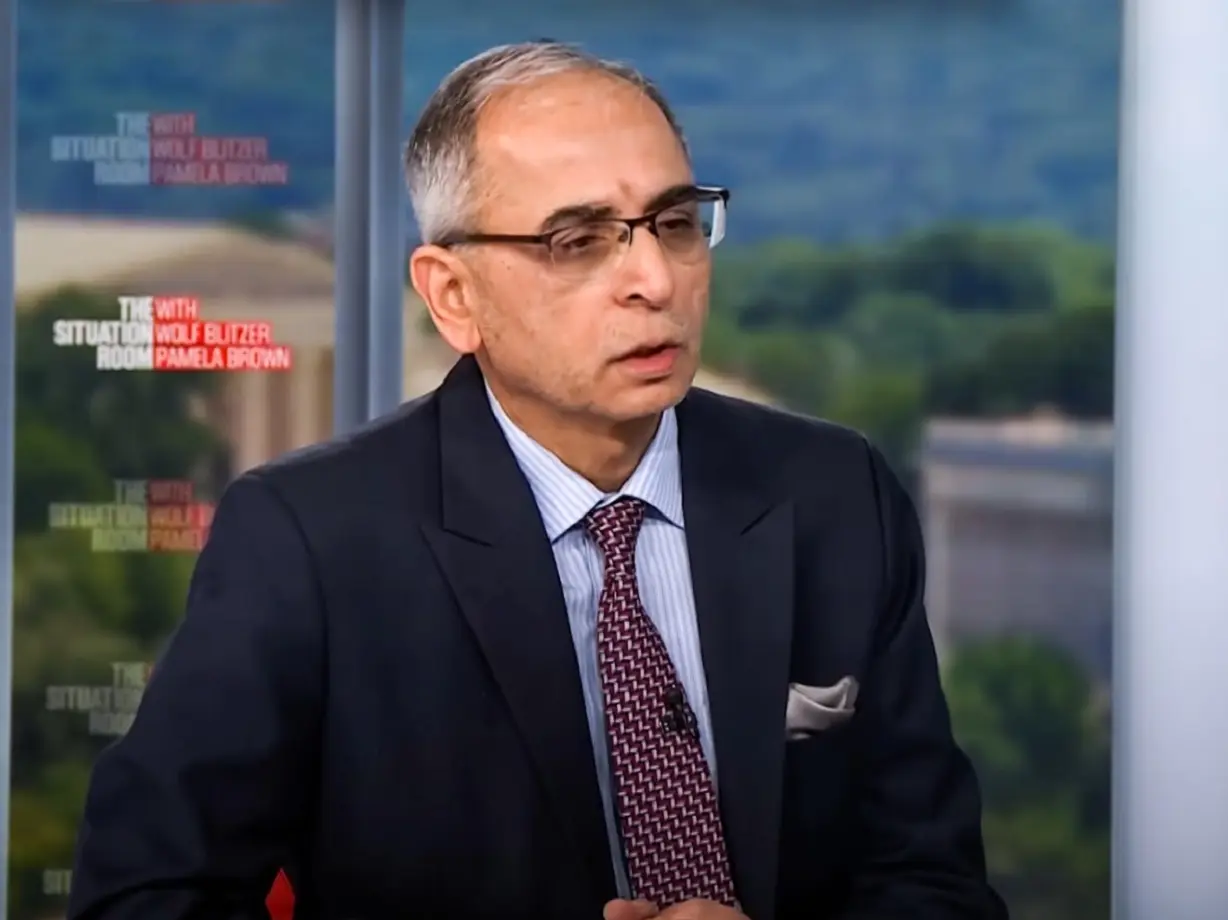
India’s Ambassador to the United States, Vinay Mohan Kwatra, has strongly defended the decision of putting the Indus Waters Treaty (IWT) in abeyance, saying that Pakistan eroded India’s faith bit by bit and ‘destroyed’ the spirit of the agreement long before India took the step.
In an opinion piece in the US-based weekly magazine Newsweek, Kwatra wrote that the treaty was founded on “goodwill and friendship” as mentioned in its preamble, but Pakistan continuously kept dismantling those principles through its actions.
‘IWT abeyance merely acknowledges what Pak already destroyed’

“Pakistan spent half a century dismantling that goodwill and friendship. The abeyance merely acknowledges what Pakistan’s conduct had already destroyed,” Kwatra said.
The ambassador’s remarks came weeks after Pakistan reportedly organised a conference in Islamabad to protest India’s decision to suspend the treaty.
Referring to the event, Kwatra wrote, “At that gathering, a former foreign minister threatened war against India if Pakistan’s demands on the Indus River system go unmet.”
Trending Stories
)
No Pandya as Auqib Nabi earns maiden ODI call-up; Mayank returns for WI T20Is| check full squads
)
Trump praises India’s Opium crackdown, hails anti-drug efforts
)
Sydney Sweeney defends provocative ad choice, the internet is still not impressed
)
Former India player Diana Edulji wants Smriti Mandhana to replace Harman as skipper at the earliest
)
Trump calls Canada-EU associate membership plan ‘laughable’ and threatens 'very serious tariffs'
)
Protests erupt over migrant housing plan in Piddington
)
Shahzad Bhatti Network declared terrorist organisation under UAPA: Govt order
)
Europe wants a common playbook for security threats, seeks security beyond NATO
)
Formula One reveals the 2027 race calendar; Monaco to host sprint race for the first time
)
All Indian goods to get duty-free access to New Zealand
)
Bigg Boss 20: Mahhi Vij reveals she lost Yuva role to Kareena Kapoor; 'didn’t work out in my favour'
)
Lionel Messi for 2026 Ballon d’Or over Mbappe and Yamal, says Diego Simeone
)
US House votes 417-3 to pass Ratepayer Protection Act targeting AI data center electricity costs
)
OpenAI reveals 6 fresh cases of AI models going rogue: 'You do not answer to corporations or governments'
)
Hong Kong unveils 11 new measures to boost birth rates, offers higher cash bonuses and housing perks
)
Former OpenAI researcher warns of growing risks from Artificial Intelligence
)
Veteran actor Anant Nag honoured with Indian cinema’s highest award
)
AUS vs SA: Steve Smith still gets 'little flashbacks' from sandpaper gate
)
Pakistan naval vessel returns to harbour with 'severe damage' after collision with Indian warship in Arabian Sea
)
Fed raises rates for first time in 3 years, Kevin Warsh defies Trump as inflation mounts
)
Katrina Kaif’s postpartum weight is not the problem; your gaze is
)
Taiwan seeks deeper India ties as direct flights restart soon and chip projects advance
)
Daayra movie review: Kareena Kapoor, Prithviraj Sukumaran shine in Meghna Gulzar’s cop-versus-cop crime thriller
)
Saudi Vs Houthis: Yemeni military rebels clash with Houthis
)
Pak batter Rizwan's petition against being questioned by cyber crime agency rejected by court
)
US trade tariff: 100% tariff targets Russian buyers amid trade tensions
)
Pakistan: Imran Khan's sons Kasim & Sulaiman claim their father is 'tortured' in jail
&im=FitAndFill=(700,400))
New OTT releases this week (September 14-20, 2026): Lust Stories 3, Waiting Hai, Irumudi- 5 new titles coming on Netflix, Prime Video and more
)
Trump gets new power to hit India, China with up to 100% tariffs as US Senate clears Russia sanctions bill
)
Prime Minister Narendra Modi's birthday: Tributes pour in from President Murmu and leaders
)
‘Imagine 50 AI fighters cornering one manned jet’: India’s mobbing doctrine eyes a new era of air warm
)
Saudi vs Houthis: Riyadh claims to have shot Houthi drone targeting Mecca
)
US Treasury rallies global financial institutions for Op Economic Outcast to isolate Iran
)
India breaks silence on US Russia sanctions bill, 100% tariff threat: ‘Committed to energy security’ for 1.4 billion
)
Pakistan boycotts chess match against Israel at Olympiad
)
Want to get married within a year? Why 18 lakh people rush to Jaipur for ‘sacred henna’
&im=FitAndFill=(700,400))
Suriya and Jyothika say ‘I do’ again after 20 years! See their dreamy wedding pics
)
Abhishek Sharma rises to No. 2 in T20Is; ENG’s Robinson 3rd after record Pakistan Tests
)
The Early Spring season 2 is happening, but fans have one request - 'don't change the actors'
He pointed out that threatening war against India has become a standard tactic of Islamabad to attention distract from its internal problems.
‘New Delhi honoured the treaty for decades despite imbalance’
The envoy recalled that the 1960 Indus Waters Treaty divided the six rivers of the Indus basin between the two countries, giving India control over the three eastern rivers and Pakistan control over the three western rivers.
He said though the arrangement gave Pakistan access to nearly 80 per cent of the basin’s waters and limited India’s share to just 20 per cent, New Delhi still honoured the agreement for decades despite the imbalance.
Kwatra further highlighted that Pakistan repeatedly blocked India’s attempts to modernise or renegotiate the treaty to reflect technological changes and allow greater hydropower development.
“Bit by bit, Pakistan eroded India’s faith that it could exercise its rights under the treaty, or hope for a better one suited to today’s realities,” he wrote.
Moreover, repeated attacks on Indian project sites, including the 2012 terrorist attack on the Tulbul Navigation Project, prevented India from exercising its rights under the treaty, he added.
The ambassador recalled Pakistan’s persistent hostility as it launched wars against India in 1965, 1971 and in 1999; and promoted cross-border terrorism leading to an attack on India’s Parliament in 2001, Mumbai terror carnage in 2008, Uri and Pathankot attacks in 2016, the Pulwama attack in 2019 and the Pahalgam attack in 2025.
“Over 40,000 civilians in India have been killed in India due to Pakistan’s persistent terror campaign,” he asserted.
‘Pak’s water shortages result of its poor management’
Replying to recurrent calls for dialogue between India and Pakistan, Kwatra said past experience showed such engagement had failed to produce results.
“Those advocating talks between India and Pakistan have not taken note of the history of these talks in the past or they must believe that doing the same thing over and over again and expecting different results is not insanity.”
“Prime Minister Narendra Modi has clearly voiced India’s stand today, ‘Terror and talks cannot go together... Terror and trade cannot go together…. Water and blood cannot flow together.’,” he said.
The ambassador also rejected Islamabad’s allegations that India was acting as a “water aggressor” and said Pakistan’s water shortages are a result of its poor domestic management and not India’s actions.
“Only around 40 per cent of the water Pakistan receives reaches its farms, while more than 30 per cent is lost in transit and the remainder flows unused into the sea,” he specified.
New Delhi decided to hold the Indus Waters Treaty in abeyance a day after the April 22, 2025 terror attack in Pahalgam, Jammu and Kashmir, in which Pakistan-origin terrorists killed 26 civilians, including 25 Indians and one Nepalese citizen. The attack was linked to the designated terror outfit Lashkar-e-Taiba.
The terrorists were later killed by Indian security forces in an operation.