&imwidth=800&imheight=600&format=webp&quality=medium "Spain-Israel social media feud erupts after Ceuta migrant crisis: Why Israel is being linked")
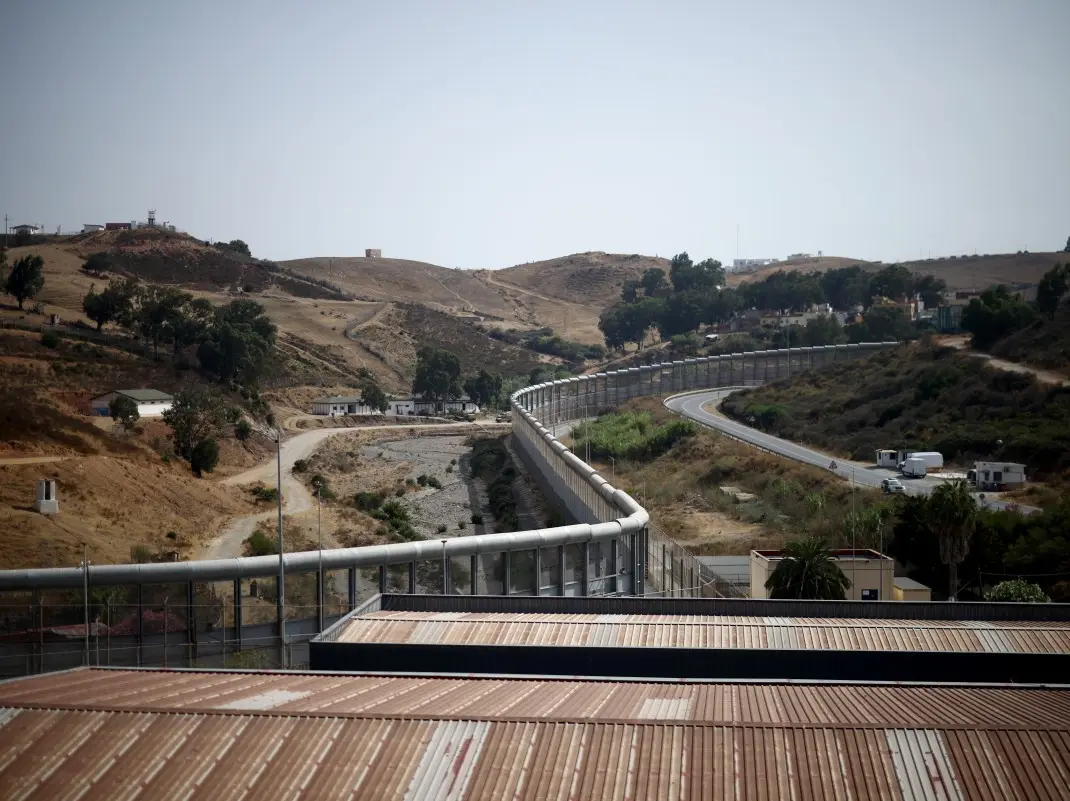
A social media clash has ensued between Spain and Israel following the massive migrant surge in Ceuta, a Spanish North African enclave. Around 60,000 migrants tried to cross into the disputed Spanish enclave, mostly swimming around the small border post that juts into the Mediterranean Sea. The Spanish government announced on Saturday that at least 67 people have been killed, while declaring that the issue was addressed with migrants returning from the enclave.
Ceuta has been a point of dispute
Ceuta and another Spanish-controlled enclave, Melilla, have been a point of dispute between Spain and Morocco. Morocco is the only Arab nation to have signed an open, formal defence pact with Israel. They have normalised relations, and Israel has formally agreed to Morocco's claim over Western Sahara. The ruling royal family has maintained unwavering strategic ties with Israel; the relationship faces consistent internal domestic protests over genocide in Gaza.

The Moroccan Association of Human Rights, which held the Moroccan state responsible for the development, condemned "the worrying silence of officials and institutions" which have still not responded publicly to the crisis. It was clearly not a coincidence that roughly 60000 migrants all chose the same day to cross to the territory.
Spanish Prime Minister Pedro Sanchez blamed the sudden influx on human trafficking mafias who exaggerated a Supreme Court ruling in July that barred authorities from immediately returning migrants who arrive by sea. Ignacio Cembrero, a Spanish journalist specialised in migration in North Africa, said that “without a doubt, the July 8 ruling has played a role… but that doesn’t explain the level of mobilisation.”
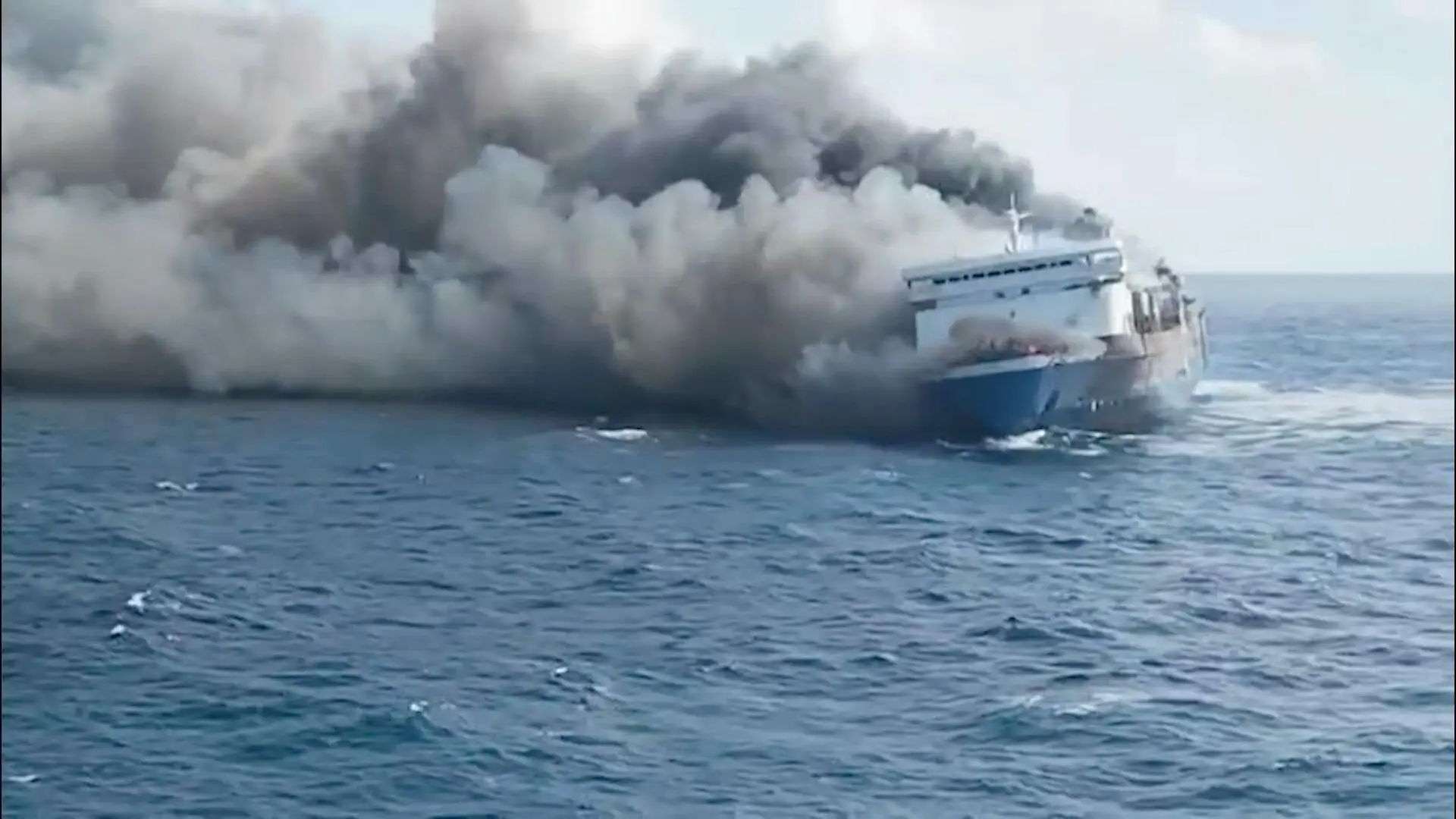
Also Read: Indonesia ferry fire: 5 dead, 41 missing after passenger ship catches fire off East Java coast
Trending Stories
)
No Pandya as Auqib Nabi earns maiden ODI call-up; Mayank returns for WI T20Is| check full squads
)
FBI Director Kash Patel grilled over change of hiring rules on bestiality
)
Sydney Sweeney defends provocative ad choice, the internet is still not impressed
)
War will be ‘completely different and very short’ if Europe attacks Russia, warns Lavrov
)
Shahzad Bhatti Network declared terrorist organisation under UAPA: Govt order
)
US, China dominate global economy: Where does India rank among the world's biggest economies?
)
Finnish president Stubb calls Trump 'good for NATO' as allies increase defense expenditure
)
Hockey: Pakistan urges AHF to move Asian Champions Trophy out of India over security concerns
)
Bigg Boss 20: Mahhi Vij reveals she lost Yuva role to Kareena Kapoor; 'didn’t work out in my favour'
)
All Indian goods to get duty-free access to New Zealand
)
Alex Saab, ally of Venezuela's Maduro, pleads guilty in US corruption case
)
Lionel Messi for 2026 Ballon d’Or over Mbappe and Yamal, says Diego Simeone
)
Veteran actor Anant Nag honoured with Indian cinema’s highest award
)
800 million years old - Scientists discover 'fingerprints' of supercontinent Gondwana in ancient rocks
)
Who was Eliana Moreno? NBC LA aerial reporter killed in Chatsworth crash
)
Trump backs PM Modi’s anti-opium push even as India remains on US illicit drug-producing list
)
Pakistan naval vessel returns to harbour with 'severe damage' after collision with Indian warship in Arabian Sea
)
Fed raises rates for first time in 3 years, Kevin Warsh defies Trump as inflation mounts
)
What is Article 10 of the 1991 treaty at the centre of Pakistan Navy's 'unprofessional conduct'
)
Ex-CIA officer caught with gold bars worth $40 million seeks plea deal | Gravitas
)
Daayra movie review: Kareena Kapoor, Prithviraj Sukumaran shine in Meghna Gulzar’s cop-versus-cop crime thriller
)
Pakistan: Imran Khan's sons Kasim & Sulaiman claim their father is 'tortured' in jail
&im=FitAndFill=(700,400))
New OTT releases this week (September 14-20, 2026): Lust Stories 3, Waiting Hai, Irumudi- 5 new titles coming on Netflix, Prime Video and more
)
Trump's Iran war faces fresh House rebuke; 7 Republicans join Democrats in push to end conflict ahead of midterms
)
PNS Hunain: All you need to know about Pakistani vessel that hit Indian Navy warship
)
US Treasury rallies global financial institutions for Op Economic Outcast to isolate Iran
)
Saudi vs Houthis: Riyadh claims to have shot Houthi drone targeting Mecca
)
Riyadh warns of ‘red line’ after Mecca targeted; Houthis claim downing Saudi fighter jet – What’s happening?
&im=FitAndFill=(700,400))
Suriya and Jyothika say ‘I do’ again after 20 years! See their dreamy wedding pics
)
Abhishek Sharma rises to No. 2 in T20Is; ENG’s Robinson 3rd after record Pakistan Tests
)
Extreme warming in Indian Ocean added 695 billion tons of ice to Antarctica ice sheet
)
BRICS success stuns White House, Trump targets India with 100% tariff | Gravitas
)
Meghan Markle's phone number leaked from children's WhatsApp group, couple switches Archie and Lilibet's school
)
The Early Spring season 2 is happening, but fans have one request - 'don't change the actors'
Why is Spain hinting at Israel?
Spain's Sánchez government has been notably critical of Israel; it recognised a Palestinian state in 2024, has criticised Israeli conduct in Gaza, and Sánchez himself called the Ceuta crossing an "attack on Spain's territorial integrity" while facing criticism from Danon. He has also repeatedly angered the Trump administration over NATO spending, base access during Iran operations, and with his posture toward Washington.
Middle East Forum fellow Amine Ayoub wrote an April article proposing that Israel should back Morocco's claim to Ceuta and Melilla as a way to pressure Spain over its criticism of Israel and the US, laying out diplomatic signalling, lobbying through Washington, and accusations of hypocrisy as tactics. Michael Rubin of Middle East Forum and former Pentagon advisor also publicly called on Trump to formally recognise the enclaves as occupied Moroccan territory, and separately urged Morocco's king to organise a march to "reclaim" them.
On several other occasions, US President and Israeli Prime Minister Benjamin Netanyahu have denounced Sanchez publicly. Congressman Mario Díaz-Balart told a Spanish outlet in April that Ceuta and Melilla “are not part of Spain but lie within Moroccan territory,” though he noted actual US recognition would be an administration decision.A House Appropriations Committee document in late April went further institutionally, describing Ceuta and Melilla as Spanish-administered cities "located in Moroccan territory" and backing Secretary of State Rubio's efforts to encourage dialogue on their “future status”, the first time a US legislative body cast doubt on Spanish sovereignty there.
The ongoing Social media feud between Israeli and Spanish leadership
This has been fuelled by the ongoing social feud. Israel's UN Ambassador Danny Danon criticised Madrid's handling of the crisis, in a post on the social media platform X, he said that Spain has forfeited its moral authority, “Spain, which never misses an opportunity to lecture Israel, has declared a state of emergency in Ceuta following the crisis over its immigration policy,” he continued, "Maybe before it continues lecturing us, it's time it explained to the world why it still maintains colonial enclaves in Africa."
Spanish transport minister Oscar Puente responded with a post,"Well, things are starting to get pretty clear."
Even though the Spanish Transport minister did not provide any elaborate explanation on his social media post, Spanish media widely interpreted Danon's message and ran with it, lending credibility to the conspiracy theories going around about possible Israeli involvement in the crisis, despite no credible evidence linking Israel to the crisis.
Israel's charged'affaires in Spain, Dana Erlich, publicly distanced the government from Danon's comments, saying that it did not reflect official Israeli policy. “The comment made by Israel's Ambassador to the UN on the issue does not represent the position of the State of Israel.”