'Invisible' fault line silent for centuries could trigger the next mega earthquake in THIS region

&imwidth=600&imheight=450&format=webp&quality=medium "'Invisible' fault line silent for centuries could trigger the next mega earthquake in THIS region")
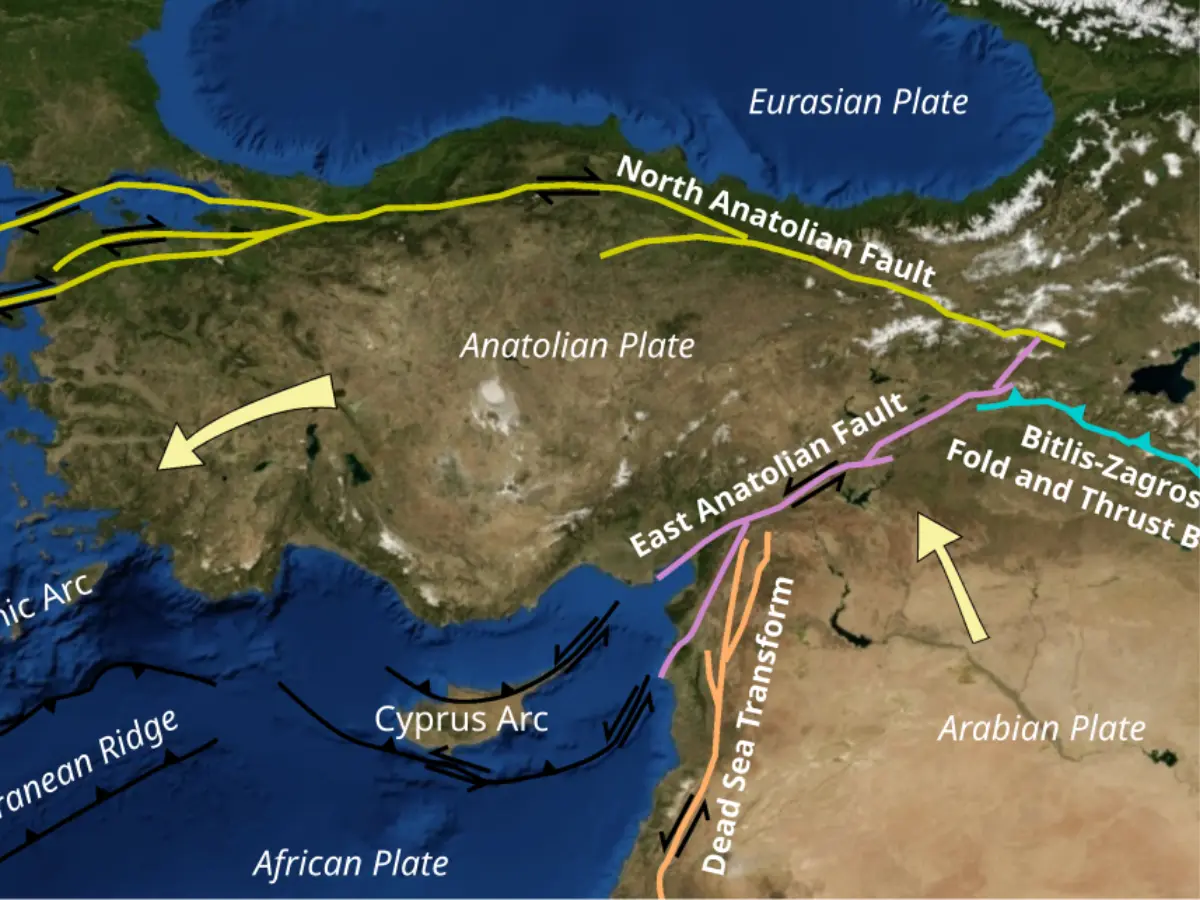
North Anatolian Fault near Istanbul, Turkey, could cause a major earthquake. Photograph: (Wikimedia Commons)
Turkey could be on the verge of a devastating earthquake triggered by a fault line that remained invisible for the longest time. A study has found that this region has been building stress for centuries, and when it is released, Turkey might bear the brunt.
The North Anatolian Fault (NAF) beneath the Marmara Sea near Istanbul, Turkey, hasn't had a major quake in more than 250 years. Stress is building right underneath it, while surrounding sections have ruptured towards the west, triggering devastating earthquakes. Researchers from the Institute of Science Tokyo used electromagnetic "x-rays" and were able to map the "invisible" structure of this fault. The 3D model reveals high-stress zones where tectonic plates are physically jammed together. The study was published in the journal Geology. Many scientists believe this section under the Marmara Sea is most likely the site of the next major earthquake. Istanbul is merely miles away, and sits in the eye of the storm. This map is a race against time to predict exactly where the crust will finally snap. For years, scientists have tried to create a detailed structure of the fault below the Marmara Sea. In the absence of a clear picture, the ability to accurately identify where future earthquakes might begin has remained limited.
3D map of the North Anatolian Fault’s resistivity
Dr. Yasuo Ogawa, Professor Emeritus and Research Fellow at the Multidisciplinary Resilience Research Center, Institute of Integrated Research and Dr. Tülay Kaya-Eken, Assistant Professor at Boğaziçi University, Türkiye, investigated the section under the Marmara Sea to remove the gap in knowledge. Together they were able to create the first full three-dimensional (3D) model of this crucial subsurface area. Using magnetotellurics—a technique that measures subtle changes in Earth’s electric and magnetic fields—they built the first 3D map of the North Anatolian Fault’s "resistivity." They identified areas where the rock is rigid (high resistivity) and where it is weakened by fluids (low resistivity). This helped them locate "locked" zones where immense stress has built up. These boundaries are likely where the next major rupture will begin, providing a new blueprint for disaster mitigation in Turkey.
Also Read: Major catastrophe unfolding in Antarctica as hundreds of earthquakes slam Doomsday Glacier
Identifying location of future megathrust earthquakes
Trending Stories
)
)
)
)
)
)
)
)
)
)
)
)
)
)
)
)
)
)
)
)
)
)
)
)
)
)
)
)
)
)
)
)
)
)
&im=FitAndFill=(700,400))
)
)
)
)
“We believe the resistive anomalies observed signify regions of stress accumulation, shedding light on the ongoing processes of fault mechanics at play in this critical region,” Ogawa said. Referring to their findings, the researchers believe future large earthquakes may begin at the boundaries where weaker and stronger sections of the crust meet or along the edges of highly resistive zones. Ogama added, "Our results can be used to estimate the location and potential magnitude of future megathrust earthquakes, with significant implications for disaster prevention and mitigation."