SpaceX launches upgraded Starship V3 on debut test flight; loses booster on return

&imwidth=600&imheight=450&format=webp&quality=medium "SpaceX launches upgraded Starship V3 on debut test flight; loses booster on return")
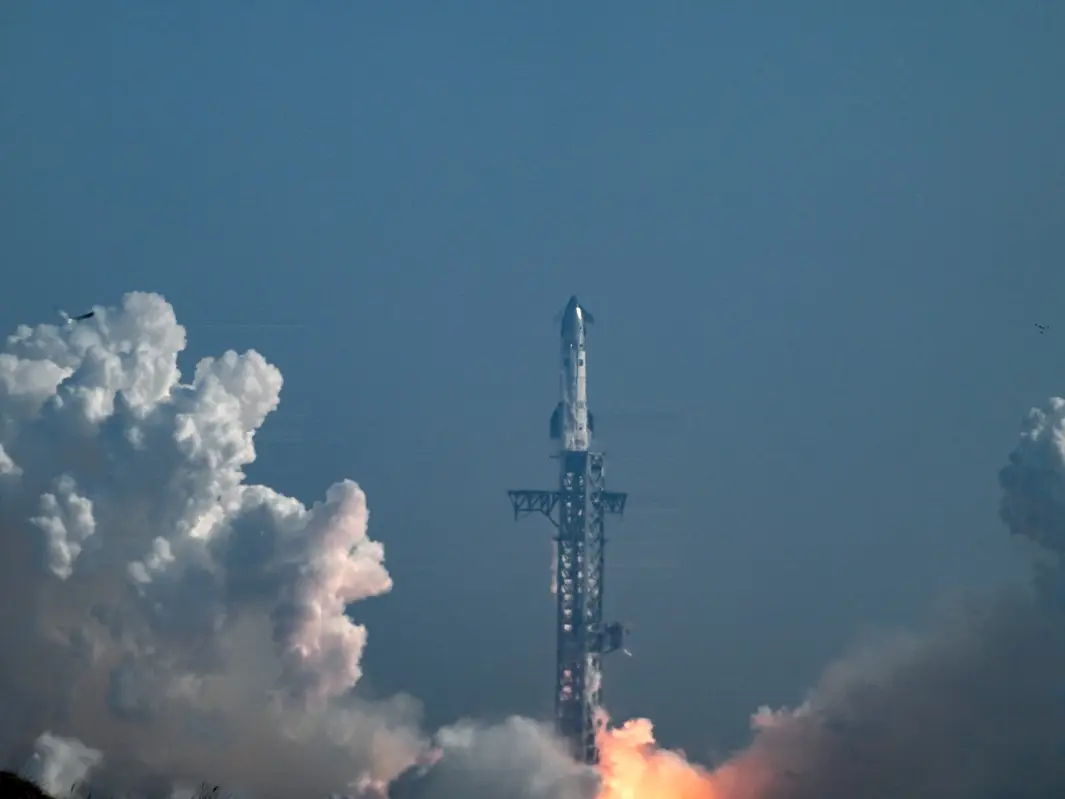
SpaceX's Starship 39 rocket launches from Starbase during the 12th test flight as seen from South Padre Island, Texas, on May 22, 2026. Photograph: (AFP)
Elon Musk's SpaceX launched its most powerful Starship yet in a key test flight for NASA’s Moon and future Mars missions
SpaceX launched its most powerful version of the Starship rocket yet on a major test flight on Friday (May 22), marking a key step in NASA’s plan to return astronauts to the Moon. The upgraded mega rocket, developed by SpaceX CEO Elon Musk, lifted off from Starbase in southern Texas just two days after Musk announced plans for the company’s public listing. The rocket carried 20 mock Starlink satellites intended for deployment during flight. This was the 12th test mission of the Starship program, which Musk envisions eventually carrying humans to Mars.
However, the immediate focus remains supporting the NASA Artemis program for lunar exploration. The previous generation of Starship rockets flew for the last time in October. The newly introduced third-generation model, known as V3, launched from a new pad at Starbase near the US–Mexico border after a brief delay caused by technical issues. SpaceX had aimed to avoid the failures seen in earlier test flights last year, when several prototypes were lost during ascent or re-entry, scattering debris over the Atlantic Ocean.
Watch the liftoff video here
The latest Starship stands 407 feet (124 meters) tall and features a more powerful propulsion system, improved control surfaces, and upgraded navigation systems. It also includes docking hardware designed for future missions to the Moon and orbital operations. The redesigned booster uses fewer but larger grid fins for re-entry control and a strengthened fuel transfer system supporting its 33 engines.
SpaceX plans for full reusability, including catching returning rocket stages with giant mechanical arms. However, this test flight did not attempt recovery; the booster was expected to fall into the Gulf of Mexico, while the upper stage was planned to splash down in the Indian Ocean after completing satellite deployment. NASA is investing billions in SpaceX and also working with Blue Origin to develop lunar landers for future Moon missions.
Both companies are competing to support Artemis missions, including Artemis III, which aims to land astronauts on the Moon as early as 2028 for the first time since Apollo 17 in 1972. Future plans include establishing a long-term lunar base near the Moon’s south pole, supported by astronauts and robotic systems. Starship is also being positioned for commercial space travel. SpaceX is already accepting reservations for private missions to the Moon and Mars.
Space tourism pioneer Dennis Tito and his wife have reserved a future lunar flyby, though the timeline remains uncertain. Meanwhile, crypto investor Chun Wang recently announced plans to fly on a future Starship Mars mission after previously joining a SpaceX polar orbit mission aboard a Dragon spacecraft. No schedule or price has been confirmed for the proposed Mars journey.
SpaceX super heavy booster explodes mid-air during Starship test flight- WATCH
SpaceX suffered another dramatic setback during its latest Starship test mission on Saturday after the massive Super Heavy booster exploded mid-air while descending back to Earth shortly after launch from Texas. Despite the incident, one of the mission’s key objectives, stage separation, was completed successfully. During the manoeuvre, the upper-stage Starship spacecraft separated from the Super Heavy booster using the company’s hot-staging system, in which the spacecraft’s engines ignite before the booster fully detaches.
Trending Stories
&imwidth=280&imheight=210&format=webp&quality=medium)
&imwidth=280&imheight=210&format=webp&quality=medium)
&imwidth=280&imheight=210&format=webp&quality=medium)
&imwidth=280&imheight=210&format=webp&quality=medium)
&imwidth=280&imheight=210&format=webp&quality=medium)
&imwidth=280&imheight=210&format=webp&quality=medium)
&imwidth=280&imheight=210&format=webp&quality=medium)
&imwidth=280&imheight=210&format=webp&quality=medium)
&imwidth=280&imheight=210&format=webp&quality=medium)
&imwidth=280&imheight=210&format=webp&quality=medium)
&imwidth=280&imheight=210&format=webp&quality=medium)
&imwidth=280&imheight=210&format=webp&quality=medium)
&imwidth=280&imheight=210&format=webp&quality=medium)
&imwidth=280&imheight=210&format=webp&quality=medium)
&imwidth=280&imheight=210&format=webp&quality=medium)
&imwidth=280&imheight=210&format=webp&quality=medium)
&imwidth=280&imheight=210&format=webp&quality=medium)
&imwidth=280&imheight=210&format=webp&quality=medium)
&imwidth=280&imheight=210&format=webp&quality=medium)
&imwidth=280&imheight=210&format=webp&quality=medium)
&imwidth=280&imheight=210&format=webp&quality=medium)
&imwidth=280&imheight=210&format=webp&quality=medium)
&imwidth=280&imheight=210&format=webp&quality=medium)
&imwidth=280&imheight=210&format=webp&quality=medium)
&imwidth=280&imheight=210&format=webp&quality=medium)
&imwidth=280&imheight=210&format=webp&quality=medium)
&imwidth=280&imheight=210&format=webp&quality=medium)
&imwidth=280&imheight=210&format=webp&quality=medium)
&imwidth=280&imheight=210&format=webp&quality=medium)
&imwidth=280&imheight=210&format=webp&quality=medium)
&imwidth=280&imheight=210&format=webp&quality=medium)
&imwidth=280&imheight=210&format=webp&quality=medium)
&imwidth=280&imheight=210&format=webp&quality=medium)
&imwidth=280&imheight=210&format=webp&quality=medium)
&im=FitAndFill=(700,400)&imwidth=280&imheight=210&format=webp&quality=medium)
&imwidth=280&imheight=210&format=webp&quality=medium)
&imwidth=280&imheight=210&format=webp&quality=medium)
&imwidth=280&imheight=210&format=webp&quality=medium)
&imwidth=280&imheight=210&format=webp&quality=medium)
Following separation, the booster began its planned descent toward the Gulf of Mexico. SpaceX intended for the rocket stage to perform a controlled return flight before splashing down safely in the ocean. However, during re-entry through the atmosphere, the booster suddenly exploded high above the Gulf. Live broadcast footage captured the massive rocket erupting into flames before it could complete its descent.
Although the booster was lost, the upper-stage Starship spacecraft continued its flight in space after separation, allowing engineers to collect valuable mission data. The Super Heavy booster is the most powerful rocket stage ever developed and forms a crucial part of SpaceX’s long-term goal of building a fully reusable launch system for future space missions. The company has repeatedly stated that failures during experimental launches are expected as engineers continue refining the spacecraft through real-world testing.
Saturday’s explosion underscored the immense engineering challenges involved in recovering and landing such a large rocket booster. Still, the successful launch and stage separation marked another important step forward for the Starship programme, which is expected to support future NASA lunar missions and eventual human missions to Mars.

