Danube River exposes perfectly preserved remains of German soldiers from 80 years ago

&imwidth=600&imheight=450&format=webp&quality=medium "Danube River exposes perfectly preserved remains of German soldiers from 80 years ago")
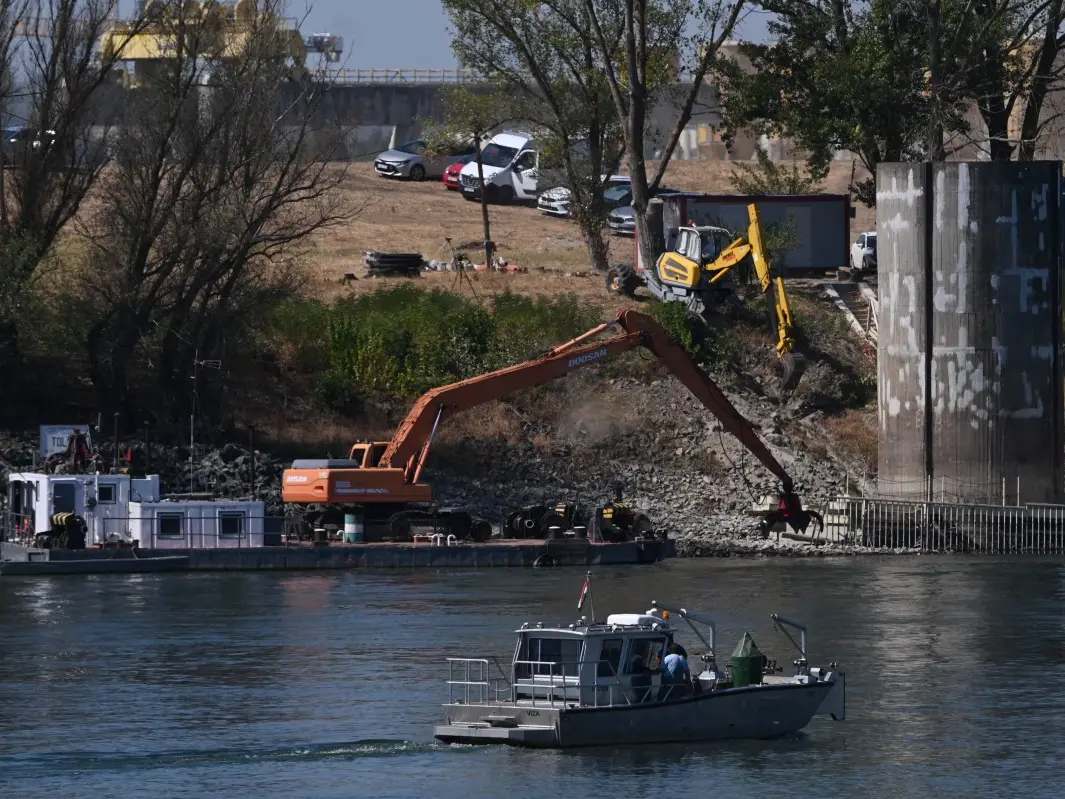
Danube River has reached its lowest level, exposing secrets from decades ago. Photograph: (AFP)
Severe drought in Europe is exposing decade-old artefacts in the Danube River. After Serbia, researchers found a bike in the Danube River in Budapest, along with the remains of the two men who rode it. Their tags are still intact, and the bike is well preserved.
As the Danube River dries up to its lowest level in Europe, dozens of World War II Nazi naval vessels and artefacts are emerging from it. First, it was the Nazi-era warship and the woolly mammoth, and now researchers have found an extremely rare Wehrmacht military motorcycle and the remains of two humans who were likely riding the bike. Despite being underwater for over 80 years, the remains of the bike and the men are extremely well preserved. In fact, officials might be able to identify the men since their military identification tags are still intact. The discovery was made near the Hungarian Parliament building in Budapest.
Bike found in Danube was built by Nazis
The bike and the human remains did not deteriorate because of the condition under the river. A mix of mud, and oil kept them near-perfect, when typically being for so long under the river should have caused an extreme level of deterioration. Since the bike was in such great shape, researchers were able to identify the model of the bike. It is a DKW NZ 350-1 motorcycle, often known as the “Kräder", featuring a single-cylinder. It was built by the Nazis towards the end of World War II in 1944. Nearly 12,000 pieces were made, with the bike having a two-stroke engine providing 11.5 horsepower and a top speed of about 56 mph.
German soldiers in Hungary
Despite being introduced so late, they became popular among the soldiers for reconnaissance, dispatch, and courier missions. Welding the frame required higher amounts of power, so Auto Union AG only made them at night. Researchers said that many of these bikes were likely on the roads of Budapest even if only for about a year. Germans surrendered on February 13, 1945, following the Battle of Budapest in which more than 30,000 Nazis, 80,000 Soviet and Romanian troops, and 17,000 Hungarians lost their lives.
Trending Stories
)
)
)
)
)
)
)
)
)
)
)
)
)
)
)
)
)
)
)
)
)
)
)
)
)
)
)
)
)
)
)
)
)
)
&im=FitAndFill=(700,400))
)
)
)
)
The soldiers found in the river were supposedly two such men who died in the war. According to Commission officials, no one likely learned about their deaths in Berlin since their tags were still on their bodies.

