1,400-year-old plaque upends long-held belief about Christianity in the 7th and 8th centuries

&imwidth=600&imheight=450&format=webp&quality=medium "1,400-year-old plaque upends long-held belief about Christianity in the 7th and 8th centuries")
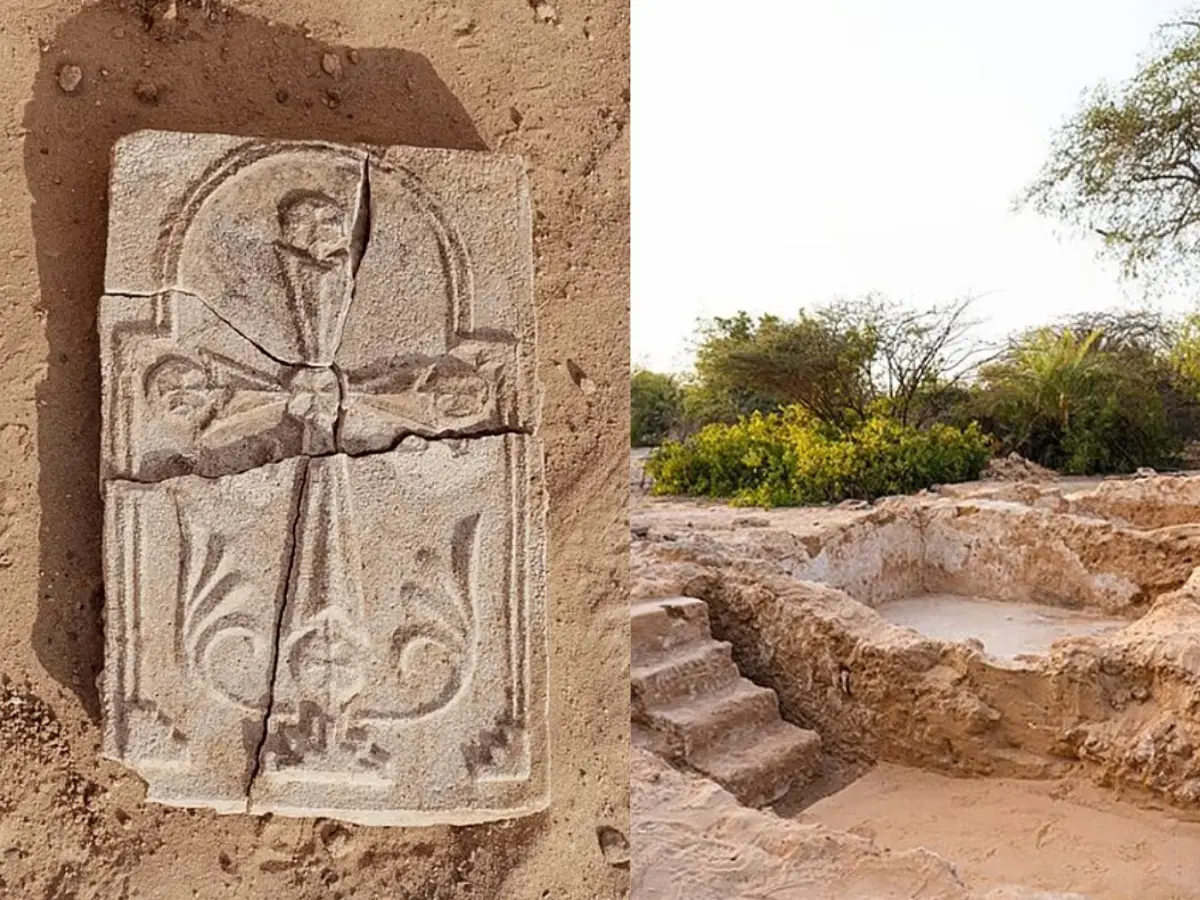
Plaque with the cross in Abu Dhabi changes a belief about Christianity. Photograph: (Department of Culture and Tourism)
Archaeologists have found a plaque with a cross on it that could point to how far east Christianity spread. The discovery in Yas Island amid ruins of a church and monastery changed all beliefs about the religion that likely flourished even when Islam was rising in the region.
A discovery in Abu Dhabi could change the belief about how far Christianity likely spread. Researchers have found a 1,400-year-old plaque depicting a cross with a stepped pyramid that supposedly represents Golgotha, the site of Jesus's crucifixion. The artefact was unearthed on the Sir Bani Yas Island, where the researchers had dug up the ruins of a church and monastery. According to them, this finding suggests that a Christian community was thriving in the region during the seventh and eighth centuries, a time period when the religion was only believed to have existed in the Levant, Mesopotamia and parts of Europe. However, the latest finding changes that perception. Experts say that it is proof that Christianity was not only present but thriving in the southeastern Arabian Gulf island. Maria Gajewska, lead archaeologist at the site, said, "Every element of the cross incorporates regional motifs. It tells us that Christianity in this region was not only present but flourished." Also Read: NASA discovery points to the exact date Jesus Christ was likely crucified
Also Read: Jesus Christ's body found? Scientist claims it is lying in a secret chamber under Great Pyramid
The plaque still had the mark of its maker
This also upends earlier beliefs that the religion and older pagan traditions were fading away in the region at this time, as Islam started spreading rapidly across Arabia. Mohamed Khalifa Al Mubarak, chairman of the Department of Culture and Tourism, calls it a historically significant discovery which proves that the UAE had "values of coexistence and cultural openness", where several religions existed side by side peacefully. The cross that led to this is about 10.6 inches long, 6.7 inches wide, and roughly 0.8 inches thick. The plaque also has the fingerprint of its maker on the back. Archaeologists say that people used it to pray to the Lord by hanging it on a wall. Other evidence, such as the courtyard, pottery, glass artefacts and a small sea-green bottle unearthed at the site, hints at who lived there. According to the archaeologists, monks probably resided in the courtyard buildings and held spiritual retreats in the area. They are believed to have lived a good life, and the clues lie in limestone and coral structures and water cisterns. Also Read: Lost Nile city discovered: Details of religion and Cobra Goddess Wadjet revealed
Also Read: Scientist suggests Egyptian pyramids were 'ancient ports', built near a Nile branch that disappeared
A tourist trail could be built at Yas Island
Trending Stories
&imwidth=280&imheight=210&format=webp&quality=medium)
&imwidth=280&imheight=210&format=webp&quality=medium)
&imwidth=280&imheight=210&format=webp&quality=medium)
&imwidth=280&imheight=210&format=webp&quality=medium)
&imwidth=280&imheight=210&format=webp&quality=medium)
&imwidth=280&imheight=210&format=webp&quality=medium)
&im=FitAndFill=(700,400)&imwidth=280&imheight=210&format=webp&quality=medium)
&imwidth=280&imheight=210&format=webp&quality=medium)
&imwidth=280&imheight=210&format=webp&quality=medium)
&imwidth=280&imheight=210&format=webp&quality=medium)
&imwidth=280&imheight=210&format=webp&quality=medium)
&imwidth=280&imheight=210&format=webp&quality=medium)
&imwidth=280&imheight=210&format=webp&quality=medium)
&imwidth=280&imheight=210&format=webp&quality=medium)
&imwidth=280&imheight=210&format=webp&quality=medium)
&imwidth=280&imheight=210&format=webp&quality=medium)
&im=FitAndFill=(700,400)&imwidth=280&imheight=210&format=webp&quality=medium)
&imwidth=280&imheight=210&format=webp&quality=medium)
&imwidth=280&imheight=210&format=webp&quality=medium)
&imwidth=280&imheight=210&format=webp&quality=medium)
&imwidth=280&imheight=210&format=webp&quality=medium)
&imwidth=280&imheight=210&format=webp&quality=medium)
&imwidth=280&imheight=210&format=webp&quality=medium)
&imwidth=280&imheight=210&format=webp&quality=medium)
&imwidth=280&imheight=210&format=webp&quality=medium)
&imwidth=280&imheight=210&format=webp&quality=medium)
&imwidth=280&imheight=210&format=webp&quality=medium)
&imwidth=280&imheight=210&format=webp&quality=medium)
&imwidth=280&imheight=210&format=webp&quality=medium)
&imwidth=280&imheight=210&format=webp&quality=medium)
&im=FitAndFill=(700,400)&imwidth=280&imheight=210&format=webp&quality=medium)
&imwidth=280&imheight=210&format=webp&quality=medium)
&imwidth=280&imheight=210&format=webp&quality=medium)
&imwidth=280&imheight=210&format=webp&quality=medium)
&imwidth=280&imheight=210&format=webp&quality=medium)
&imwidth=280&imheight=210&format=webp&quality=medium)
&imwidth=280&imheight=210&format=webp&quality=medium)
Hager Al Menhali, an Emirati archaeologist at the department, detailed what pulled her towards the plaque. "The plaster was resting face down and something about it caught my attention," she told The National. The cross and the site would be further studied, and radiocarbon dating would be performed. The courtyard houses would also be explored. Eventually, it could all make up a tourist trail, the researchers said. "These discoveries deepen our connection to the past and inspire future generations to embrace the spirit of unity and mutual respect that has long defined our community," Al Mubarak said.

