The legacy of Albert Einstein in modern science

&imwidth=600&imheight=450&format=webp&quality=medium "The legacy of Albert Einstein in modern science")
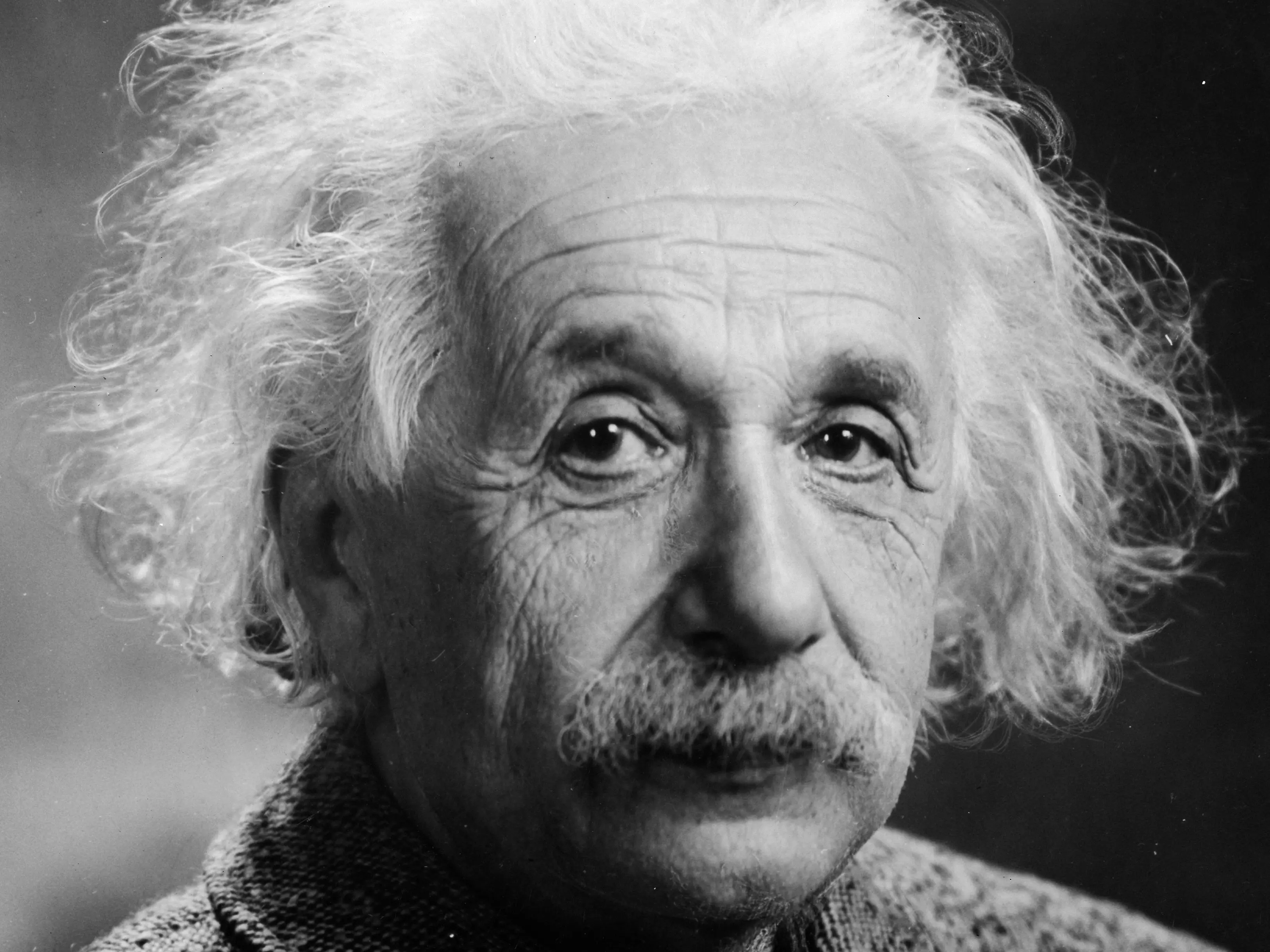
Albert Einstein: His theories revolutionised modern science Photograph: (Wikimedia Commons)
Albert Einstein's revolutionary theories continue to shape modern science and technology. From GPS satellites to medical imaging, his discoveries drive innovations that impact our daily lives and scientific understanding.
Everyone recognises Albert Einstein, but few realise just how deeply his ideas have shaped the world we live in. Over a hundred years ago, this German-born scientist turned the way we understand space, time, and energy completely upside down. His discoveries changed everyday life understandings, from the phones in our pockets to the medicine that saves lives. It was a new way of seeing the universe, and its impact is still felt in countless ways today.
Transformative Discoveries
Einstein's theory of relativity (1905) and general theory of relativity (1915) revolutionised physics and people's understanding of the universe. His equation E=mc² demonstrated the equivalence of mass and energy, leading to nuclear power and advancing atomic theory.
His work on the photoelectric effect, for which he won the Nobel Prize in Physics in 1921, became fundamental to quantum mechanics. Scientific American reports that this discovery helped establish quantum theory and later enabled the development of photovoltaic cells and modern electronics.
"Imagination is more important than knowledge," Einstein famously said, as quoted by the Perimeter Institute. This philosophy drove theoretical breakthroughs that seemed impossible at the time.
Impact on Everyday Life
His theories power numerous technologies we use daily. Global Positioning System (GPS) satellites must account for relativistic effects to maintain accuracy. Without Einstein's corrections for time dilation, GPS would accumulate errors of several kilometres per day.
Medical imaging technologies, including MRI scanners and PET scans, rely on principles Einstein helped establish. National Geographic reports that these diagnostic tools save countless lives by allowing doctors to see inside the human body without invasive procedures.
Nuclear medicine also stems from Einstein's work. His mass-energy equivalence principle enables nuclear power generation and radiotherapy treatments for cancer patients.
His Influence on Science and Society
Trending Stories
)
)
)
)
)
)
)
)
)
)
)
)
)
)
)
)
)
)
)
)
)
)
)
)
)
)
)
)
)
)
)
)
)
)
&im=FitAndFill=(700,400))
)
)
)
)
Modern cosmology owes much to Einstein's general relativity. His theory predicted the expansion of the universe, black holes, and gravitational waves - all later confirmed by observations. The detection of gravitational waves by LIGO in 2015 validated predictions Einstein made a century earlier.
Einstein's advocacy for civil rights and his warnings about nuclear weapons demonstrate how his influence extended beyond physics.
Today's quantum computing research builds upon quantum mechanical principles Einstein helped establish, despite his famous scepticism about quantum indeterminacy. Tech companies worldwide invest billions in quantum technologies that could revolutionise computing, cryptography, and artificial intelligence.
Einstein's legacy reminds us that theoretical science often leads to practical applications that transform society.
