Bihar Polls in just two phases & five days: Here's the real reasons behind the rush?

&imwidth=600&imheight=450&format=webp&quality=medium "Bihar Polls in just two phases & five days: Here's the real reasons behind the rush?")
Bihar Polls in just two phases & five days: Here's the real reasons behind the rush? Photograph: (Credit: ANI)
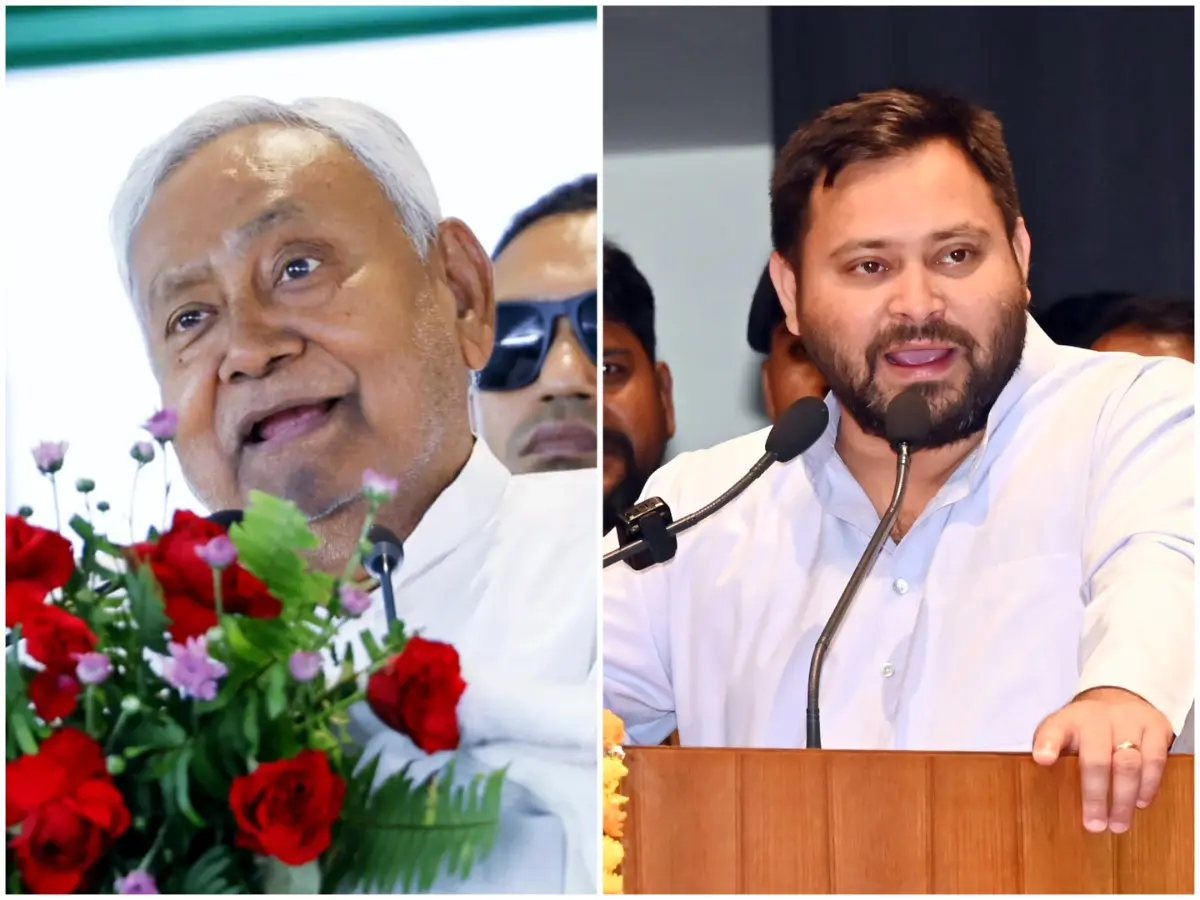
Does Nitish Kumar have the stomach for one last chance at the Kurshi of power? Can Yadav scion Tejashwi Yadav hold off Prime Minister Modi?
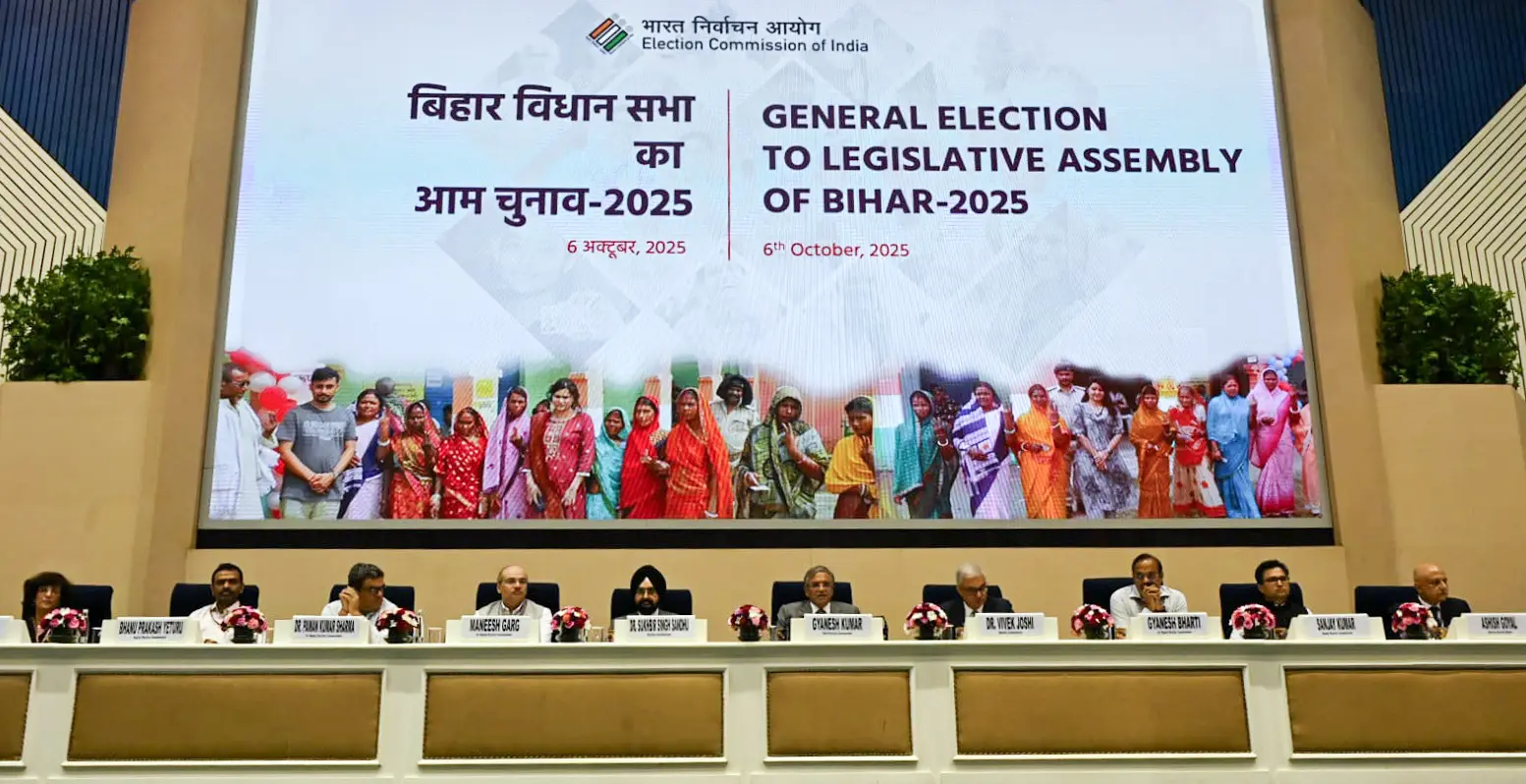
As always, Bihar's elections are interesting and keenly watched. This is the land of Chanakya, where people are not politically incorrect. They love to chew politics like betel paan. Here, pollsters often trip over their speculations. Political experts deem the Bihar poll the mother of all elections in India. So, with all calculations and weighing every layer of the supercharged political atmosphere, the Election Commission announces Bihar's poll schedule—two phases on November 6 and 11, as opposed to three in 2020, after Chhath Puja—the stage is set for a landmark state election. The focus of each party is on swing voters, whose allegiance oscillates according to the political hawa before an election. As two rival coalitions—the JD(U)-led NDA and the RJD-led Opposition—coalesce around compelling narratives, each vote matters a lot to win the battle of Bihar. Voters who switch loyalties and tiny parties that cut votes may decide the outcome. All eyes are on such voters to woo them for favour. The only two-phase election could not give much time for political hawa to influence voters. Given that the 2020 election was decided by a razor-thin margin of just 12,000 votes, even a small dent could change the discourse of poll results.
Does Nitish Kumar have the stomach for one last chance at the Kurshi of power? Can Yadav scion Tejashwi Yadav hold off Prime Minister Modi? Or can Prashant Kishor's Jan Suraaj upset the political apple cart with the narrative of the change Bihar needs? These questions hang heavy over the campaign trail. Nitish, who has flipped alliances more times than a dosa on a tawa, eyes a ninth term as chief minister. At 74, whispers in Patna's corridors suggest this could be his final roll of the dice, banking on his development pitch and the NDA's caste arithmetic. Tejashwi, the young turk who nearly toppled the government in 2020 with promises of jobs and justice, now leads the Mahagathbandhan with renewed fire, targeting Nitish's flip-flops and Modi's unfulfilled vows. Meanwhile, the NDA machine, oiled by BJP's organisational muscle, paints the Opposition as a bunch of dynasts and has-beens.
The entry of political strategist Prashant Kishor adds a wildcard twist. While his high-visibility campaign has grabbed eyeballs, the real test is converting that buzz into votes. If his Jan Suraaj party can secure over 10 percent of the vote, the race could become wide open. Kishor, who once masterminded Modi's 2014 blitz and then turned foe, now pitches himself as Bihar's saviour from the rot of old guards. His door-to-door padyatras and anti-corruption jabs have stirred youth in urban pockets, but rural strongholds remain skeptical. Analysts say even a modest haul from Jan Suraaj could splinter votes from both sides, turning safe seats into knife-edge fights.
The political Hawa is charged up with numerous controversies—from 'Vote Chori' allegations to the infamous Special Intensive Revision (SIR). Opposition leaders like Rahul Gandhi have cried foul over the SIR exercise, claiming it led to the deletion of over 20 lakh names from voter lists, disproportionately hitting minorities and the poor in Opposition-leaning areas. The Election Commission defends it as a housekeeping drive to weed out ghosts and duplicates ahead of the polls, but the timing—months before voting—has fuelled suspicions of foul play. 'Vote chori', a term now echoing from rally podiums, points to claims of manipulated rolls and bogus entries favouring the ruling side. BJP counters that these are desperate smears from a losing camp, but the din has already muddied the waters, with petitions piling up in the Supreme Court.
Now, a speculative take: this short-duration, two-phased election will likely tilt the scales in favour of the ruling NDA. Why? The compressed timeline—from announcement to the last vote in just five days—leaves little room for the Opposition to mount a full-throated counter-offensive. In past multi-phase polls, stretched over weeks, Rajanitik Hawa could shift with viral gaffes or scandals; here, the NDA's deep pockets and district-level cadre can flood constituencies with last-minute sops and rallies, while Tejashwi's team scrambles to match the blitz. Generally fewer phase elections could cut poll costs and disruptions, but the realpolitik edge goes to incumbents who control the levers of state machinery. For the Opposition, it's a sprint they might not train for, especially with SIR shadows lingering. If swing voters stay put, Nitish's arithmetic could hold; else, a quick backlash might still upend the board game.
Trending Stories
)
)
)
)
)
)
)
)
)
)
)
)
)
)
)
)
)
)
)
)
)
)
)
)
)
)
)
)
)
)
)
)
)
)
&im=FitAndFill=(700,400))
)
)
)
)
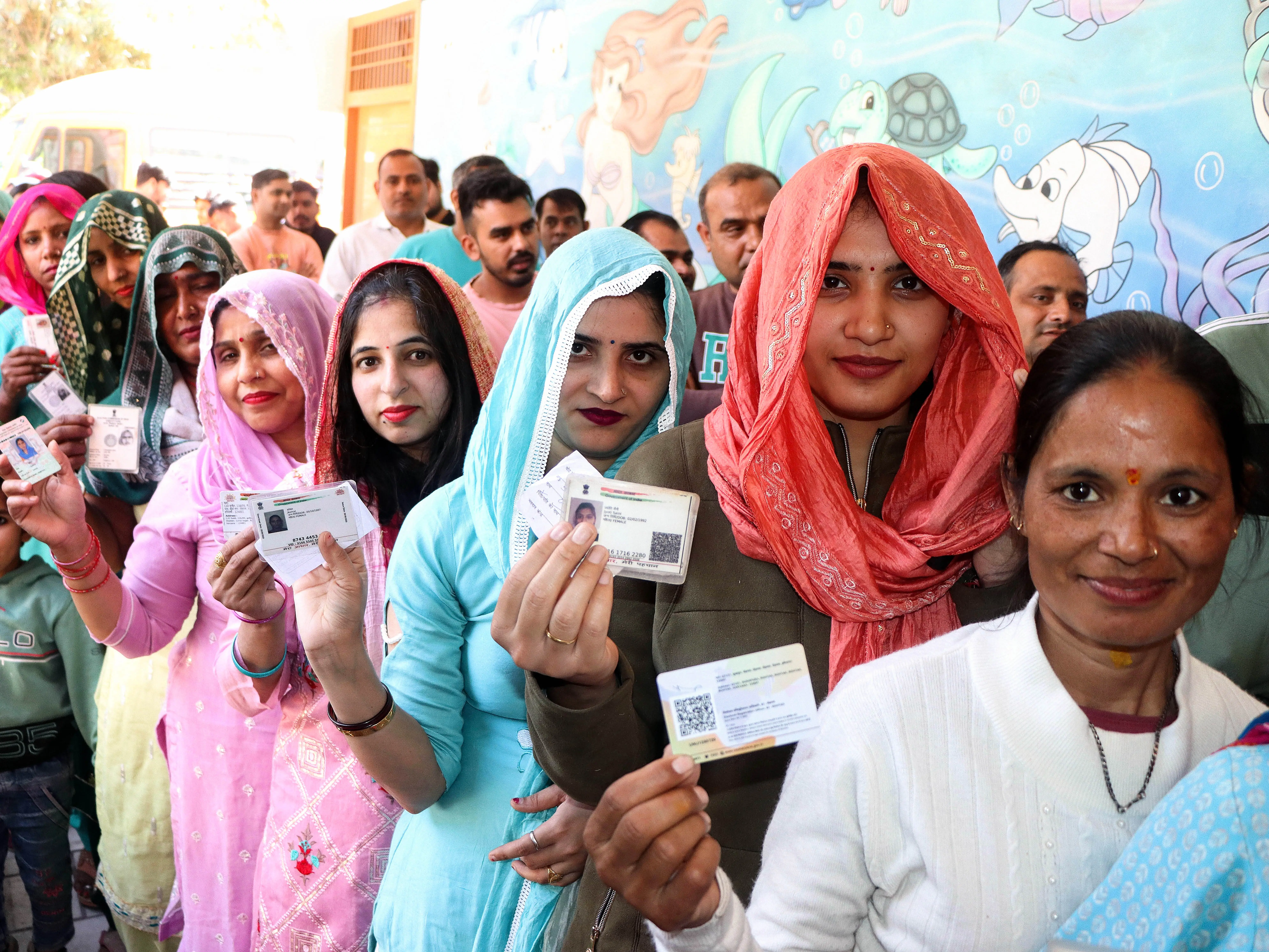
A total of 7.42 crore voters will be eligible to exercise their franchise across 90,712 polling stations, all of which have webcast facilities to ensure transparent elections. Bihar has 3.92 crore male voters and 3.5 crore female voters. Nearly 14,000 voters are more than 100 years old, while 14 lakh will exercise their right to vote for the first time. In the current House, the BJP holds the largest share with 80 MLAs, followed by its ally JD(U) with 45 MLAs. Backed by four MLAs from Hindustani Awam Morcha (Secular), led by Union minister Jitan Ram Manjhi, the NDA’s tally stands at 129, comfortably above the 122-member majority mark. On the opposition side, the RJD, Congress, and Left parties together have 112 MLAs, falling short but eyeing alliances to bridge the gap.
In the end, only Bihari Babus (voters) could know which direction the political Hawa is blowing and which party is being carried along. From the bustling ghats of Patna to the dusty fields of Darbhanga, it is the everyday voter—paan in hand, cynicism in heart—who will tip the balance. As November dawns, Bihar braces for another chapter in its endless poll saga, where promises clash with realities and underdogs dream big. The mother of all elections? You bet— and the verdict will echo far beyond the state's borders.