

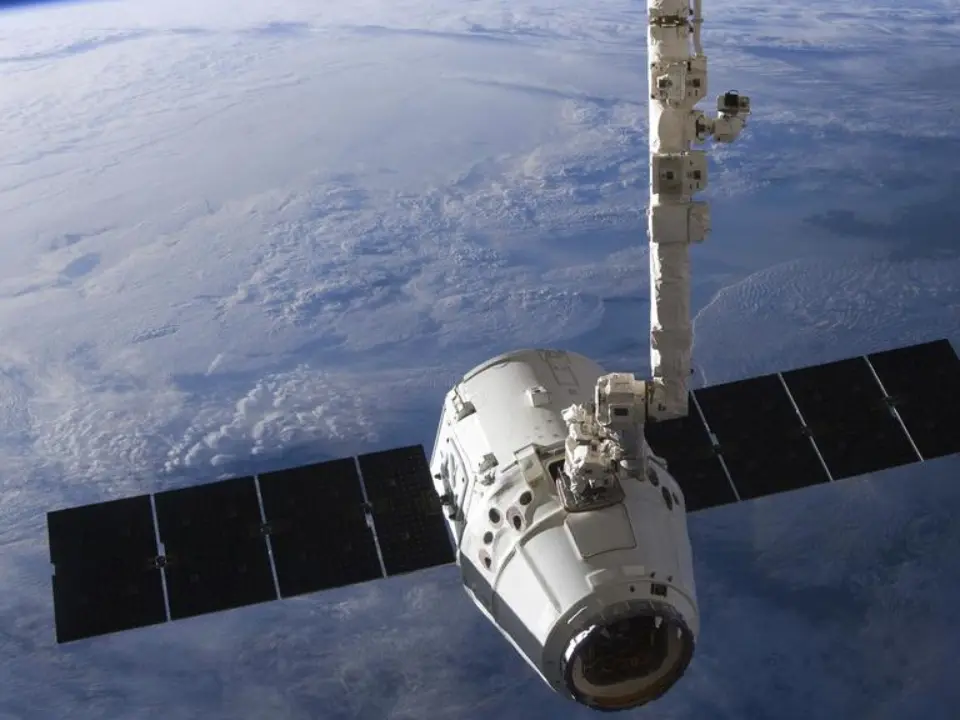
&imwidth=800&imheight=600&format=webp&quality=medium "'Scam, smuggling and wars': Why Elon Musk's Starlink is a 'help from heaven' for criminals")
Elon Musk sells Starlink as a force for good: internet for the remote, the disconnected, the places no cable will ever reach. Much of that is true. But there is a pattern running alongside it that Musk talks about far less, and it stretches across four continents.
From the Amazon to Myanmar to the front lines of Ukraine, the same dish keeps turning up in the hands of people the law is chasing.
The Amazon: Internet For Illegal Mines
In Brazil, Starlink became a tool of environmental crime.
Illegal gold miners operating on protected Yanomami land used Starlink to run their operations deep in the rainforest — coordinating logistics, taking payment, and receiving advance warning of police raids without ever leaving the forest. Brazil's environment agency seized dozens of terminals from illegal mines; miners reportedly painted the antennas black to hide them and favoured them because they were light enough to grab and run. The problem grew severe enough that in 2025 Brazil's federal prosecutors forced Starlink into an agreement to demand identification from users in the Amazon and share geolocation data with authorities.
Myanmar: The Scam Cities Run On It
Trending Stories
&imwidth=180&imheight=135&format=webp&quality=medium)
Shreyas Iyer blames dew for West Indies' record run chase in 2nd T20I in Ranchi
&im=FitAndFill=(700,400)&imwidth=180&imheight=135&format=webp&quality=medium)
Happy Birthday Rekha: Watch these 7 evergreen Bollywood hits on Netflix, Prime Video and more
&imwidth=180&imheight=135&format=webp&quality=medium)
'I am not going to be watching it': JD Vance on livestream of Nidal Hasan's firing squad execution
&imwidth=180&imheight=135&format=webp&quality=medium)
UK navy hit by espionage scandal: Sailor accused of spying for Russia | Gravitas
&imwidth=180&imheight=135&format=webp&quality=medium)
Katie Zacharia likely to succeed Karoline Leavitt as Trump's White House press secretary
&imwidth=180&imheight=135&format=webp&quality=medium)
Delhi on high alert for CJP protest: Delhi police to use body cams to 'prove whether we did anything’; Pink Force, RAF, 35,000 personnel deployed
&imwidth=180&imheight=135&format=webp&quality=medium)
‘Never-ending flow of cheap labour’: JD Vance hits back at Indian-origin Congresswoman over US green card curbs for major tech companies
&imwidth=180&imheight=135&format=webp&quality=medium)
Panama president declares ‘major disaster’ after powerful 7.7-magnitude earthquake; over 80 aftershocks recorded
&imwidth=180&imheight=135&format=webp&quality=medium)
‘250? Cool.’: Shai Hope takes swipe at Shubman Gill’s Instagram caption after Ranchi T20I masterclass
&imwidth=180&imheight=135&format=webp&quality=medium)
‘Ruh Roh’: Top US official mocks ‘Indian market collapse’ claim after Trump’s IT curbs. But did it? | FACT CHECK
&im=FitAndFill=(700,400)&imwidth=180&imheight=135&format=webp&quality=medium)
Fastest-growing Asian economies in 2026: Who tops the chart? Where does India rank?
&imwidth=180&imheight=135&format=webp&quality=medium)
'I ended 8 wars': Trump slams Nobel Peace prize decision, claims award was his due
&imwidth=180&imheight=135&format=webp&quality=medium)
Dhurandhar: The Revenge album submitted for Grammy consideration; But what does it mean?
&imwidth=180&imheight=135&format=webp&quality=medium)
J&K Government orders major police reshuffle, transfers 100 officers across UT
&imwidth=180&imheight=135&format=webp&quality=medium)
New York protests erupt as Trump administration defends ICE shooting
&imwidth=180&imheight=135&format=webp&quality=medium)
Delhi protest: Metro curbs, train cancellations, traffic diversions as protesters seek CEC Gyanesh Kumar’s resignation
&imwidth=180&imheight=135&format=webp&quality=medium)
Powerful 7.7 magnitude earthquake strikes Panama, tsunami warning issued
&imwidth=180&imheight=135&format=webp&quality=medium)
Hurricane Isaias makes landfall in Florida as Category 2 storm with winds of 105mph, threatens Gulf Coast with life-threatening surge
&imwidth=180&imheight=135&format=webp&quality=medium)
Trump has a new 'enemy': Anyone who calls it 'artificial intelligence'. Here's what we wants instead
&imwidth=180&imheight=135&format=webp&quality=medium)
Adéla gives KATSEYE’s Lara Raj and Megan Skendiel a shout-out at Fonda Theatre in LA
&imwidth=180&imheight=135&format=webp&quality=medium)
'Modi is a dictator': Abhijeet Dipke claims govt 'scared' of youth, slams stringent measures ahead of CJP Jantar Mantar protest
&im=FitAndFill=(700,400)&imwidth=180&imheight=135&format=webp&quality=medium)
New Friday OTT releases (October 9, 2026): Reporting Live, Animals, Take Charge of My Heart- 6 new titles coming on Netflix, JioHotstar and more
&imwidth=180&imheight=135&format=webp&quality=medium)
Trump announces Russian diesel deal as Zelensky criticises move
&imwidth=180&imheight=135&format=webp&quality=medium)
‘Right to protest must be protected, but...’: Delhi Police reveals why it denied CJP permission for October 10 Jantar Mantar protest
&imwidth=180&imheight=135&format=webp&quality=medium)
Pakistan denies reports of PAF jets being used in attacks against Iran-backed Houthis in Yemen
&imwidth=180&imheight=135&format=webp&quality=medium)
Ella Langley’s Oklahoma show abruptly cancelled over safety concerns after threat report
&imwidth=180&imheight=135&format=webp&quality=medium)
New York ICE shooting sparks protests as Mamdani to call on Trump to halt ICE operations
&imwidth=180&imheight=135&format=webp&quality=medium)
All 22 Indian seafarers safe in attack on Panama-flagged tanker off UAE coast
&imwidth=180&imheight=135&format=webp&quality=medium)
Ryan Reynolds’ private messages reveal his blunt views on Justin Baldoni from Blake Lively’s legal case
&im=FitAndFill=(700,400)&imwidth=180&imheight=135&format=webp&quality=medium)
Rakul Preet Singh birthday special: 7 times the Ramayana actress served glamorous looks

Kamal Haasan slams Elon Musk over Starlink delay row: 'Indian people, will decide our own future - not Western'
&im=FitAndFill=(700,400)&imwidth=180&imheight=135&format=webp&quality=medium)
Food shortages, suicide attempts and more: USS Abraham Lincoln returns to US after 321 day deployment — What happened aboard the US carrier?
&imwidth=180&imheight=135&format=webp&quality=medium)
OpenAI shuts down Russian, Iranian influence operations using ChatGPT to spread propaganda
&imwidth=180&imheight=135&format=webp&quality=medium)
SC questions closure of 57 Delhi Metro stations, asks Centre to resume services in regulated manner
&imwidth=180&imheight=135&format=webp&quality=medium)
'Even Indira Gandhi didn't do this': Abhijeet Dipke, Saurav Das and Ashutosh Ranka detained from inside their flight | Watch video
&imwidth=180&imheight=135&format=webp&quality=medium)
US midterm elections 2026: What a blue wave or blue tsunami could mean for Trump
&imwidth=180&imheight=135&format=webp&quality=medium)
Trump honours Microsoft CEO Satya Nadella with top technology honour amid immigration scrutiny
In Southeast Asia, Starlink became the lifeline of an industry built on fraud.
The vast scam compounds of Myanmar, cities like the notorious KK Park, where trafficked workers are forced to run online fraud against victims worldwide, increasingly rely on Starlink to stay online, especially after neighbouring Thailand cut cross-border power and internet to choke them. Analysts note these operations need little more than a building, captive workers, guards and reliable connectivity, and Starlink supplies the last piece. The scale drew in US lawmakers and the United Nations; regional scam operations defrauded people of tens of billions of dollars in a single year. SpaceX has said it disabled roughly 2,500 terminals powering the compounds.
Ukraine: Smuggled To The Enemy
On the battlefield, Starlink ended up serving the army it was meant to help defeat.
Russian forces obtained Starlink terminals through black-market smuggling, ordered via intermediaries and moved into occupied territory and deployed them on the front line and even mounted on attack drones. A Wall Street Journal investigation described middlemen funnelling terminals to US adversaries around the world. SpaceX says it never sold to Russia and has worked with Ukraine on a verification 'whitelist' to shut unauthorised terminals down, but the smuggling exposed how easily the hardware crosses into the wrong hands.
India: Smugglers And Insurgents
India has its own entries in this ledger, and they are central to why it is cautious.
Even before any commercial launch, Starlink terminals have been recovered in a major drug seizure in the Andaman and Nicobar Islands and in an army operation against insurgents in Manipur. For smugglers and militants, a connection the Indian state cannot see, trace or switch off is precisely the appeal. These cases are not a footnote to India's security review of Starlink; they are a large part of the reason for it.
The Common Thread
The point is not that SpaceX arms criminals. It does not, and in each case the terminals were smuggled, diverted or bought on the black market rather than sold for the purpose.
The point is structural. The very features that make Starlink revolutionary, portable, decentralised, independent of any national network and reachable from anywhere under open sky, are exactly the features that make it irresistible to anyone who needs to operate beyond a government's reach. A gold miner evading Brazil's forest wardens, a scam boss dodging Myanmar's blackout, a Russian unit beating Ukrainian jamming, and an insurgent in Manipur all want the same thing: connectivity the local state cannot control. Starlink, by design, provides it.
That is the uncomfortable truth beneath the 'connecting the world' slogan. A network that answers to no local authority connects the lawless as readily as the law-abiding.
What SpaceX Says, And What It Shows
In fairness, SpaceX is not indifferent. It bans fraudulent and illegal use in its terms, says it is not licensed in markets like Myanmar where the misuse occurs, and has disabled thousands of unauthorised terminals when pressed. Brazil's deal shows the company can be made to add identity checks and share location data when a government insists.
But that is the revealing part. SpaceX can control who uses its network and where, it simply tends to do so after a government forces the issue, country by country, scandal by scandal. Which is the strongest possible argument for the demand India and others are making: build that control in first, on our terms, before launch, not after the terminals turn up in a raid.
What To Watch
Whether Starlink's Brazil-style identity and geolocation controls are extended proactively to other markets. Whether the Myanmar and smuggling cases push more governments to demand in-country control as a condition of entry. And whether SpaceX treats the outlaw pattern as a problem to design against from the start, or keeps addressing it one embarrassment at a time.
