Nuclear engines for space rockets soon? First in-space test planned in early 2026. Promises vs risks

&imwidth=600&imheight=450&format=webp&quality=medium "Nuclear engines for space rockets soon? First in-space test planned in early 2026. Promises vs risks")
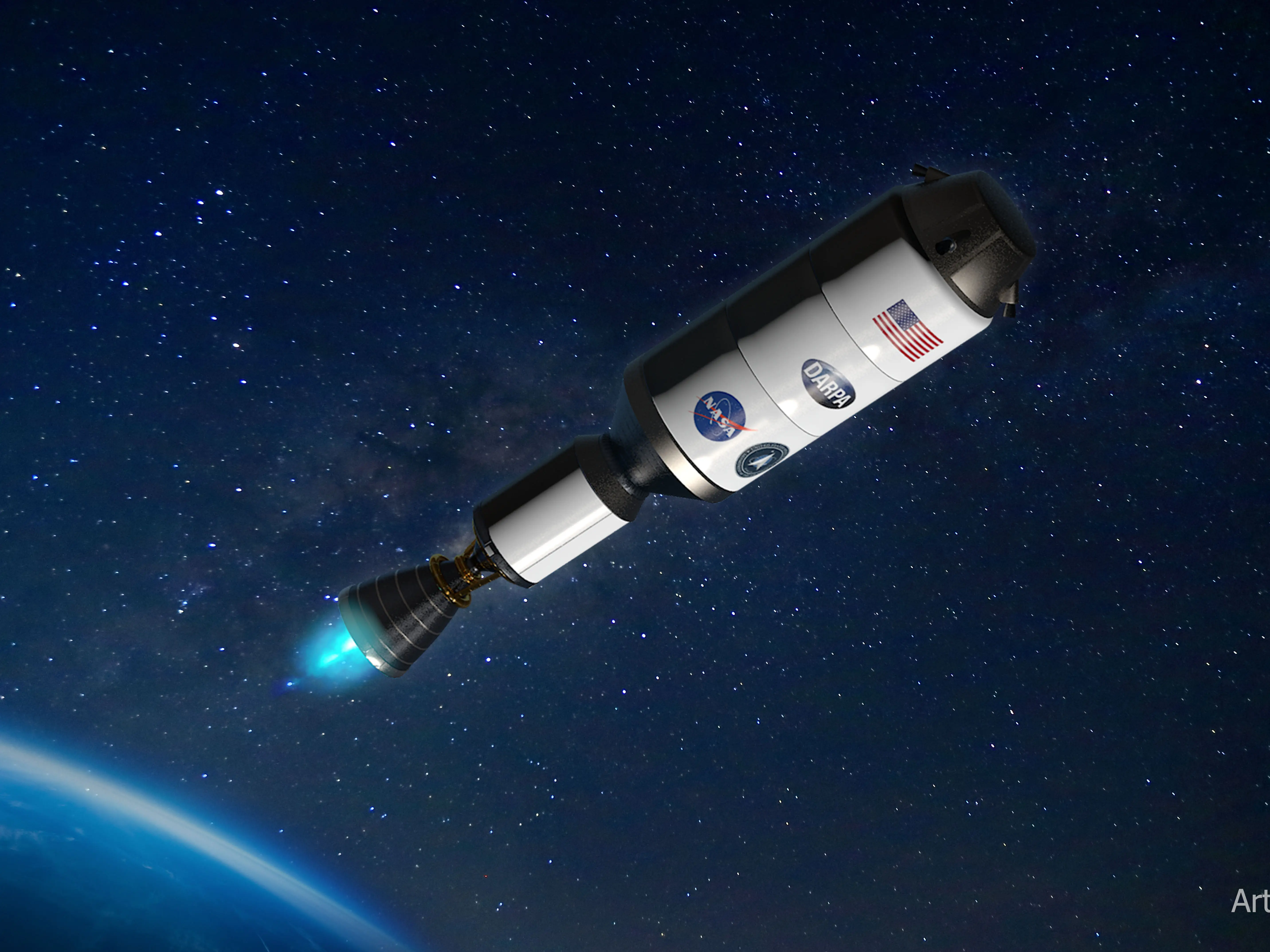
Artistic impression of a nuclear powered rocket engine in space Photograph: (Others)
Nuclear thermal propulsion or NPT technology could power future rockets, with NASA planning the first in-space test in early 2026. The technology is both promising and potentially horrifying. Here is why
Space rockets may soon use nuclear-powered engines based on nuclear thermal propulsion, or NTP technology. While no nuclear engine will fly this year, the field is approaching a major milestone, with the first in-space demonstration of an NTP engine currently planned for early 2026. If successful, this could open the door to practical nuclear-powered missions later in the 2020s and into the 2030s. NTP is often presented as a promising technology for faster and more capable deep-space missions, especially to Mars. At the same time, it raises concerns about safety, radiation, and the potential proliferation of nuclear material in space and on Earth. As development accelerates, it is time to understand both the prospects and the problems associated with nuclear thermal propulsion.
What is nuclear thermal propulsion or NTP?
Nuclear thermal propulsion uses nuclear fission rather than chemical combustion to produce thrust. Instead of burning fuel and oxidiser, an NTP engine pumps liquid hydrogen through a small nuclear reactor built into the engine. Inside the reactor, uranium atoms undergo fission, releasing extreme levels of heat. This heat raises the temperature of the hydrogen, which is then expelled through a nozzle to generate thrust for the rocket.
What are the advantages of NTP?
Nuclear thermal engines can be roughly twice as efficient as the best chemical rockets in use today. This means a spacecraft can travel farther using less propellant, and carry heavier payloads for the same amount of fuel. Because hydrogen is very light, it accelerates more easily than the heavier exhaust gases produced by chemical rockets, such as water vapour.
Trending Stories
&imwidth=280&imheight=210&format=webp&quality=medium)
&imwidth=280&imheight=210&format=webp&quality=medium)
&imwidth=280&imheight=210&format=webp&quality=medium)
&imwidth=280&imheight=210&format=webp&quality=medium)
&imwidth=280&imheight=210&format=webp&quality=medium)
&imwidth=280&imheight=210&format=webp&quality=medium)
&imwidth=280&imheight=210&format=webp&quality=medium)
&imwidth=280&imheight=210&format=webp&quality=medium)
&imwidth=280&imheight=210&format=webp&quality=medium)
&imwidth=280&imheight=210&format=webp&quality=medium)
&imwidth=280&imheight=210&format=webp&quality=medium)
&imwidth=280&imheight=210&format=webp&quality=medium)
&imwidth=280&imheight=210&format=webp&quality=medium)
&imwidth=280&imheight=210&format=webp&quality=medium)
&imwidth=280&imheight=210&format=webp&quality=medium)
&imwidth=280&imheight=210&format=webp&quality=medium)
&imwidth=280&imheight=210&format=webp&quality=medium)
&imwidth=280&imheight=210&format=webp&quality=medium)
&imwidth=280&imheight=210&format=webp&quality=medium)
&imwidth=280&imheight=210&format=webp&quality=medium)
&imwidth=280&imheight=210&format=webp&quality=medium)
&imwidth=280&imheight=210&format=webp&quality=medium)
&imwidth=280&imheight=210&format=webp&quality=medium)
&imwidth=280&imheight=210&format=webp&quality=medium)
&imwidth=280&imheight=210&format=webp&quality=medium)
&imwidth=280&imheight=210&format=webp&quality=medium)
&imwidth=280&imheight=210&format=webp&quality=medium)
&imwidth=280&imheight=210&format=webp&quality=medium)
&imwidth=280&imheight=210&format=webp&quality=medium)
&imwidth=280&imheight=210&format=webp&quality=medium)
&imwidth=280&imheight=210&format=webp&quality=medium)
&imwidth=280&imheight=210&format=webp&quality=medium)
&imwidth=280&imheight=210&format=webp&quality=medium)
&imwidth=280&imheight=210&format=webp&quality=medium)
&im=FitAndFill=(700,400)&imwidth=280&imheight=210&format=webp&quality=medium)
&imwidth=280&imheight=210&format=webp&quality=medium)
&imwidth=280&imheight=210&format=webp&quality=medium)
&imwidth=280&imheight=210&format=webp&quality=medium)
&imwidth=280&imheight=210&format=webp&quality=medium)
NTP engines' two-step process to enable thrust outside Earth
NTP process in rocket engines would not be used for lift-off from Earth. Instead, missions would follow a two-step process. First, the spacecraft would be launched into orbit using a conventional chemical rocket. The nuclear thermal engine would only be activated once the vehicle is safely in space. This approach significantly reduces the risk associated with launching nuclear material from Earth, at least in theory.
NTP engines to help Mars missions and wider launch windows
For missions to Mars, NTP could reduce travel time by up to about 25 per cent. Shorter journeys would reduce astronauts’ exposure to cosmic radiation and the health effects of long periods in microgravity. NTP systems are also less dependent on precise planetary alignments, allowing wider launch windows. In addition, the higher performance of nuclear propulsion could make it easier for crew to abort missions if needed.
Also read: Watch | Stunning visuals show SpaceX’s Crew-10 Dragon capsule docking at International Space Station
What NASA is doing now on nuclear engines
The most advanced current effort is a joint programme between NASA and the US Defense Advanced Research Projects Agency (DARPA), called DRACO. Short for Demonstration Rocket for Agile Cislunar Operations, DRACO aims to demonstrate a nuclear thermal rocket in space for the first time. The current plan is for the engine to be activated in Earth orbit in early 2026, although the schedule could slip into 2027. Lockheed Martin is developing the spacecraft. BWX Technologies is responsible for the reactor and fuel.
What is India doing on nuclear propulsion rockets?
India’s space agency, ISRO, is working on nuclear power systems and related foundational technologies to support nuclear propulsion. But an active nuclear thermal rocket programme could be years away. In the UK, private companies such as Pulsar Fusion are exploring nuclear fusion-based rocket concepts. Fusion propulsion promises very high performance, but the technology for it far less mature than fission-based NTP.
Risks of nuclear engines for rockets
Using uranium as rocket fuel raises security and safety concerns. NASA and the US Department of Energy are therefore working to use low-enriched uranium rather than highly enriched fuel, to cut both proliferation risks and security cost. Ground tests have shown that newer fuel types can survive the extreme temperatures and radiation inside an NTP reactor without significant damage.
Radiation remains the most obvious risk for both spacecraft and people. Shielding sensitive components and orienting the reactor away from crew areas are the solutions.
Launch failures are another major concern, amid fears of nuclear material releasing into the Earth's atmosphere or space. To address this, engineers are developing robust fuel forms designed to remain intact even in severe accidents.
Nuclear-powered rockets: Challenges and prospects ahead
NTP reactors operate at extremely high temperatures, pushing materials to their limits and making engineering especially challenging.
Storing and managing liquid hydrogen in space for long periods is also technically difficult. Beyond engineering, nuclear propulsion faces political, regulatory, and international policy hurdles over nuclear safety, environmental protection, and non-proliferation.
NTP offers significant potential benefits for deep-space exploration. But complex technical, safety, and political challenges remain. The planned in-space test in early 2026 will help decide whether NTP rockets can move from theory to real use in future space missions.

