Iran reportedly invited to join Makkah Defence Pact amid Saudi-Houthi tensions

&imwidth=600&imheight=450&format=webp&quality=medium "Iran reportedly invited to join Makkah Defence Pact amid Saudi-Houthi tensions")
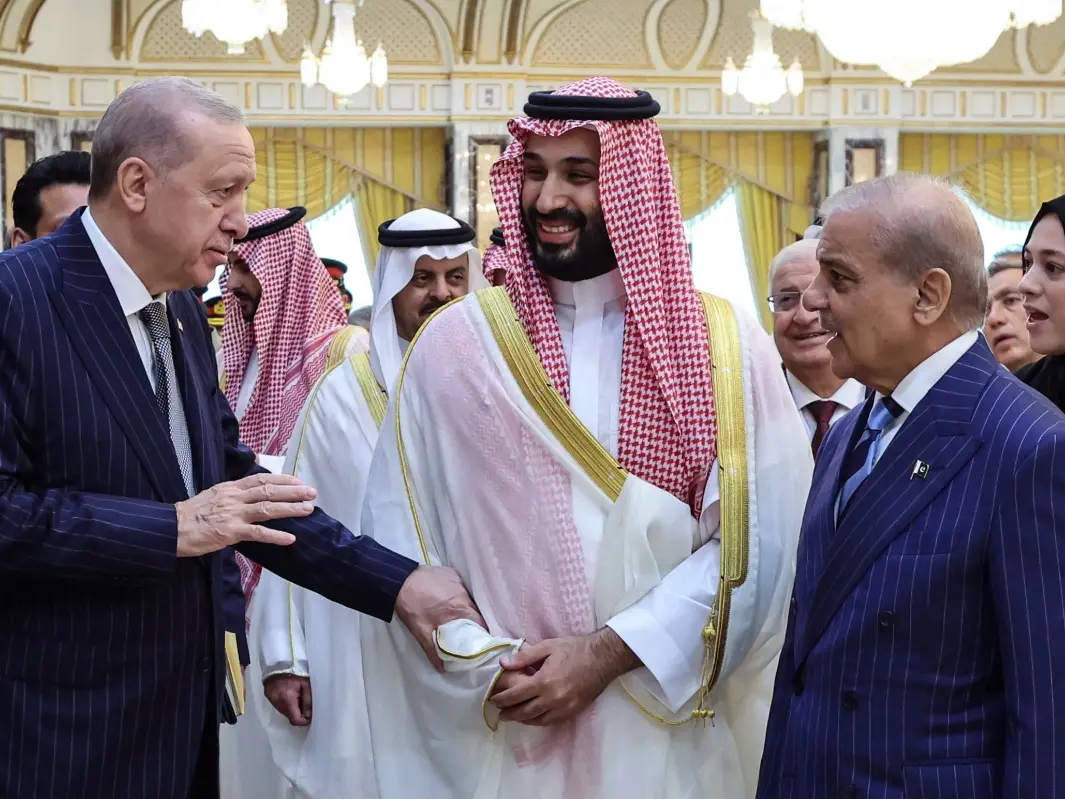
This handout photograph taken and released by the Turkish Presidency press office on August 7, 2026, shows Turkey's President Recep Tayyip Erdogan (L), Saudi Arabia's Crown Prince Mohammed bin Salman (C) and Pakistan’s Prime Minister Shehbaz Sharif meeting in Mecca. Photograph: (AFP)
Iran has reportedly been invited to join the Makkah Defence Pact signed by Saudi Arabia, Turkey and Pakistan, as Tehran considers a regional security framework.
Iran has been invited to join the Makkah Defence Pact signed by Saudi Arabia, Turkey and Pakistan on August 7. The development was reported by Lebanon-based Al Mayadeen, and it is being considered by Tehran reported Pakistan’s SAMAA TV. Iran's Foreign Ministry is yet to confirm that it has received an invitation to join the mutual defence agreement.
"Iran has received an invitation to join the Mecca Agreement, and the matter is under review," said Mehdi Rahimi, head of the Iranian parliament's Khaneh Mellat news agency. He added that the countries in the region are moving towards seeking "a regional security umbrella," and "a victory for Iran, because it has been calling for this for a long time."
However, the details of the invitation remain foggy, as Rahimi did not mention which country had extended the invitation, and no country has officially confirmed the development. The Makkah Defence Pact signed by Saudi Crown Prince Mohammed bin Salman, Turkish President Recep Tayyip Erdogan and Pakistani Prime Minister Shehbaz Sharif had a NATO-like mutual defense stipualtion and, under which an attack on one country will be considered an attack on all. Turkey has previously publicly expressed that it wants Egypt to join the agreement. Pakistan has also maintained that it does not want the Defence Pact to be an “exclusive club”. But the pact does not establish a NATO-style integrated military command and contains very few specific military commitments.
Tehran had been cautious in responding to the coalition, and it seeks a regional security umbrella outside of Washington's influence. Foreign Ministry spokesman Esmaeil Baghaei said on August 10 that Tehran had "no reason for concern" over the establishment of the alliance.
While the pact is born out of the chaos of the US-Iran war, regional analysts and Israeli security officials perceive the primary objective of the alliance as working as a deterrent against Israel's aggression. The pact is effectively the polar opposite of the pre-war vision of a US-brokered "New Middle East" where normalisation with Israel was the central requirement.
Trending Stories
&imwidth=280&imheight=210&format=webp&quality=medium)
&imwidth=280&imheight=210&format=webp&quality=medium)
&imwidth=280&imheight=210&format=webp&quality=medium)
&imwidth=280&imheight=210&format=webp&quality=medium)
&imwidth=280&imheight=210&format=webp&quality=medium)
&imwidth=280&imheight=210&format=webp&quality=medium)
&imwidth=280&imheight=210&format=webp&quality=medium)
&imwidth=280&imheight=210&format=webp&quality=medium)
&imwidth=280&imheight=210&format=webp&quality=medium)
&imwidth=280&imheight=210&format=webp&quality=medium)
&imwidth=280&imheight=210&format=webp&quality=medium)
&imwidth=280&imheight=210&format=webp&quality=medium)
&imwidth=280&imheight=210&format=webp&quality=medium)
&imwidth=280&imheight=210&format=webp&quality=medium)
&imwidth=280&imheight=210&format=webp&quality=medium)
&imwidth=280&imheight=210&format=webp&quality=medium)
&imwidth=280&imheight=210&format=webp&quality=medium)
&imwidth=280&imheight=210&format=webp&quality=medium)
&imwidth=280&imheight=210&format=webp&quality=medium)
&imwidth=280&imheight=210&format=webp&quality=medium)
&im=FitAndFill=(700,400)&imwidth=280&imheight=210&format=webp&quality=medium)
&imwidth=280&imheight=210&format=webp&quality=medium)
&imwidth=280&imheight=210&format=webp&quality=medium)
&imwidth=280&imheight=210&format=webp&quality=medium)
&imwidth=280&imheight=210&format=webp&quality=medium)
&imwidth=280&imheight=210&format=webp&quality=medium)
&imwidth=280&imheight=210&format=webp&quality=medium)
&imwidth=280&imheight=210&format=webp&quality=medium)
&imwidth=280&imheight=210&format=webp&quality=medium)
&imwidth=280&imheight=210&format=webp&quality=medium)
&imwidth=280&imheight=210&format=webp&quality=medium)
&imwidth=280&imheight=210&format=webp&quality=medium)
&imwidth=280&imheight=210&format=webp&quality=medium)
&im=FitAndFill=(700,400)&imwidth=280&imheight=210&format=webp&quality=medium)
&imwidth=280&imheight=210&format=webp&quality=medium)
&imwidth=280&imheight=210&format=webp&quality=medium)
&imwidth=280&imheight=210&format=webp&quality=medium)
&imwidth=280&imheight=210&format=webp&quality=medium)
Houthis are preparing to seize land along the Bab-el-Mandeb Strait, which would allow them to threaten the vital shipping artery. Saudi Arabia relies entirely on Red Sea ports to export its oil amid the Hormuz crisis. So Iran’s reported invitation to the pact is highly paradoxical, as the Houthis represent the most immediate test to the alliance. It is unclear how comfortable a Sunni monarch will be with a Shia militant group on its border. For such an inclusion to work, both Riyadh and Tehran would have to reach a compromise on Yemen and the Houthis and trade concrete concessions.