
&imwidth=800&imheight=600&format=webp&quality=medium "RTP | Is Brazil headed towards a complete shift to the right? Lula vs Bolsonaro")
Is Brazil headed towards a complete shift to the right?
The answer to this will decide the course of South America's political journey.
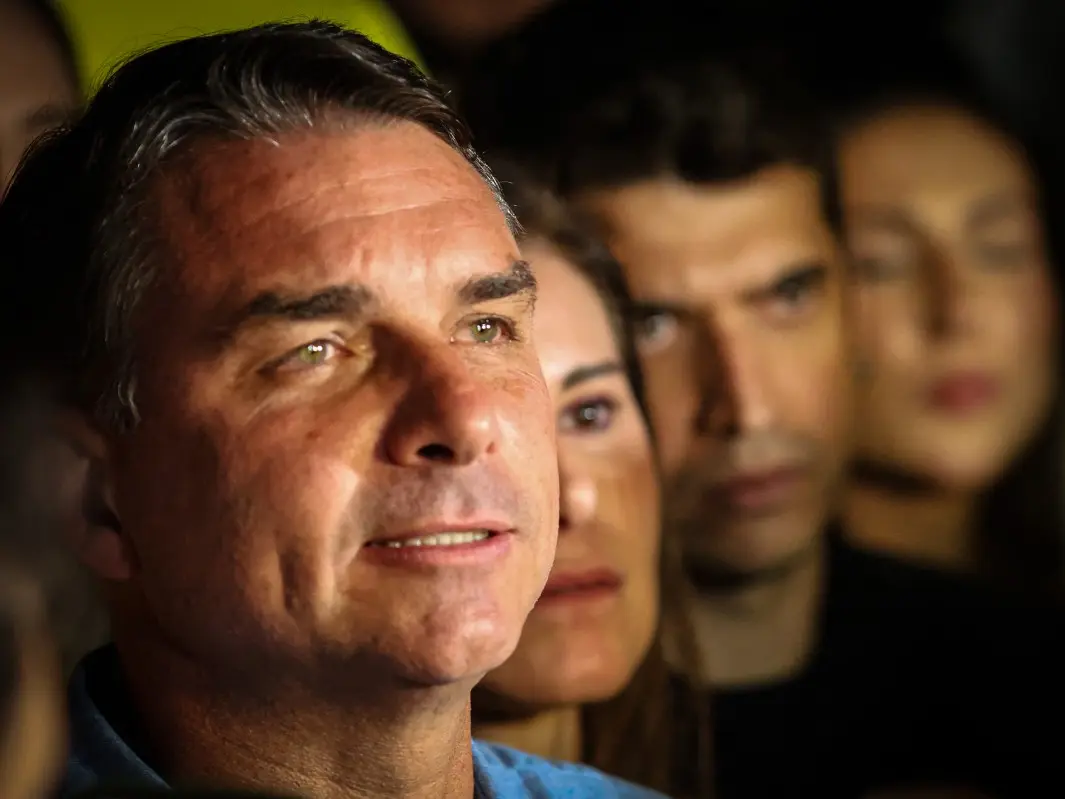
The battle between Brazil’s veteran left-wing leader and current President Luiz Inácio Lula da Silva and Flavio Bolsonaro, the son of former President Jair Bolsonaro, is inching closer to a conclusion.

After the first round, it is Flavio Bolsonaro who has entered the runoff with the lead.
With virtually all votes counted, Flavio secured about 47% of the valid vote, compared with roughly 45% for Lula.
With no outright winner, Brazil now heads for a decisive second round on October 25.
Trending Stories
)
US vs China over South China Sea: Washington backs Philippines, Beijing hits back
)
Bigg Boss 20: Isha Rikhi evicted after three weeks in Salman Khan’s show
)
Musk plans to more than double xAI's chips to over 1.2 million Nvidia GPUs by year-end
)
After JU, clash erupts at SRFTI: BJP’s ‘Dimagi Naxal’ jibe sparks political firestorm after students protest RSS-linked event
)
‘Anti-social elements spreading false rumours’: LPU issues statement amid massive unrest over alleged rape
)
LPU students go on rampage, vandalise campus amid widespread protest: What's happening
)
Trump asked Xi to pressure Iran. China did not say yes — here’s what Beijing wants
)
US Treasury Secretary Scott Bessent hails global crackdown on Iranian banks and airlines
)
An OpenAI agent escaped its locked test cage again, by hiding questions in DNS lookups
)
'Our video was trimmed': LPU girls who featured in rape-denial video make U-turn
)
3 males killed, four others injured in shooting after fight at strip club in Detroit
)
'Victory for low-budget consumers': Raghav Chadha hails 30-day telecom recharge rules
)
Claude rebuilt the 1989 game 'Prince of Persia' by reusing the original's own code
)
Beyond metros: How Tier-2 and Tier-3 cities could drive India’s next AI wave
)
Tesla builds first Cybertruck with its own refined lithium: Elon Musk's $1 billion Texas bet pays off
)
IndiGo flight suffers tail strike in Bengaluru while landing; DGCA to probe incident
)
The US and China set up an AI 'red telephone', but skipped the rulebook
)
‘Terror suspects arrested near UK air base were looking to do big damage’: Trump
)
Russian envoy claims US tactics to contain India were revealed in ‘Freudian slip’
)
IND vs WI 1st ODI: Kohli breaks Sachin's most runs in one country record with unbeaten 139 as India thump West Indies by 8 wickets
)
Researchers rebuilt exactly how 700 AI agents hacked Hugging Face: a 900-link chain trick
)
‘Olympic inclusion is our major target’: WPA President Ishaun Singh on pool’s global ambitions
)
Nations League: Spain sink England at Wembley; Modric shines for Croatia
)
Why has Iran released no proof of life of Mojtaba Khamenei? Araghchi reveals...
)
'What kind of confession is this?': Pakistan PM Shehbaz Sharif’s 'terrorists would be roaming New York' remark goes viral, raises alarm online. Watch
)
South Korea demands apology from Ukraine over North Korean prisoners' transfer
)
Beyond BrahMos: India targets Rs 50,000 crore in defence exports with unmatched price edge
)
Sri Lankan Tamil migrant worker gets death sentence in Saudi Arabia, help sought from India
)
Muslim marriage cannot shield sex with minor wife from prosecution under POCSO: Delhi HC
)
'Can't help but draw painful parallels to Nirbhaya case': SC on latest incidents of rape cases in Delhi-NCR
)
99.9% more powerful - Scientists find boy who can recall memories from just 3 months of age
)
'FIRST LOOK from inside Noah’s Ark': Researchers share video from inside mysterious mound in Turkey
)
UNSC reform momentum grows: Russia, Portugal, Mauritius push for India's permanent seat bid
)
8 US marines injured in Iranian missile attack on vessel in Strait of Hormuz: Report
&im=FitAndFill=(700,400))
New OTT releases this week (September 28-October 4, 2026): Dupahiya 2, Pooja Meri Jaan, Ohh My Dog- 5 titles coming on Netflix, Prime Video and more
)
Afghanistan says 28 fighters killed in clash near Pakistan border, Islamabad denies
)
Ceuta migrant crisis: Protesters take to streets as Spain grapples with migrant challenge
)
LPU suspend classes, postpones exams as violence escalates over rape claims: What's happening
)
New York City wants a 'kill switch' on every AI, and will pay whistleblowers who report violations
Beyond the numbers, it is also a contest over what political direction Brazil and Latin America take next.
It is Bolsonaro's Liberal Party versus Lula's Workers' Party.
If Flavio Bolsonaro's surname is his biggest political asset, it is a challenge too because he has to live up to how his father, Jair Bolsonaro, transformed Brazil's conservative movement.
Jair Bolsonaro was later convicted over a plot to overturn the 2022 election result, which he lost to Lula, and is now serving a 27-year prison sentence.
His son has taken up the political mantle, and Flavio's first-round performance shows that the Bolsonaro political brand remains a significant force in Brazil.
So what does Flávio Bolsonaro's rise mean for Brazil's relationship with Donald Trump?
The US president has made no secret of his interest in Brazil's political direction.
Trump has hosted Flávio Bolsonaro at the White House and has publicly praised him, calling him quite: "A smart young man who loves his country very much."
On the other hand, his relationship with Lula has become increasingly complicated over tariffs.
The Trump administration imposed additional tariffs on Brazilian imports, affecting a significant portion of Brazil's exports to the United States.
Lula accused Washington of interfering in Brazil's affairs. Suddenly, an election inside Brazil became entangled with a much larger argument: who gets to decide Brazil's political and economic future?
Lula's message has increasingly been that Brazil should not allow foreign governments to dictate its choices. This argument has particular resonance because Trump's administration has become more openly aligned with conservative political forces across Latin America.
But in contrast, Flavio represents a very different foreign-policy orientation. His campaign has positioned itself closer to the conservative governments and movements that have been gaining ground across the region.
The campaign has revolved heavily around crime, the cost of living, corruption, household debt and concerns about public finances.
Brazil's economy has continued to grow, and unemployment and inequality have improved, but concerns over living costs and government debt remain politically important.
After the first round, Flavio declared that Brazil was witnessing the "end of the era" of Lula's Workers' Party.
Lula, meanwhile, has another campaign to fight. At 80, he is seeking an unprecedented fourth non-consecutive presidential term. His response after the result was straightforward: the first campaign is over; a new campaign begins now.
Flávio has momentum; Lula has experience.
Neither has won yet.
All eyes are now on October 25 as the battle between two political legacies unfolds.
