Secularism and plurality under stress in India: Hamid Ansari to WION

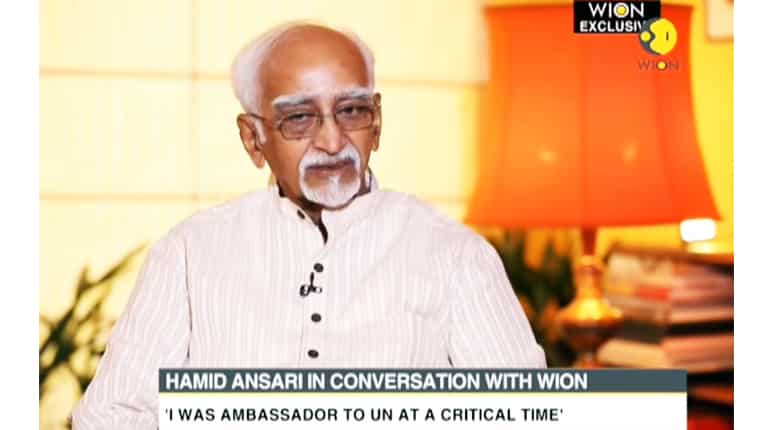
Former Indian Vice-President Hamid Ansari speaks to WION on secularism
Former Vice-President said that cultural nationalism excludes people and current developments are harmful and the big land of ours is in trouble.
Former Vice-President of India Hamid Ansari has said that secularism and plurality is under stress in India. In an exclusive interview to WION, Ansari spoke on issues ranging from PM Modi's farewell speech to cultural nationalism and importance of secularism in public life. He said India is a complex and diverse society and secularism is understood and practiced differently here.
Ansari also presented his views on the current political scenario in the country and whether he will attend an RSS function like Pranab Mukherjee. Here's the full interview:
WION: You have mentioned in detail the importance of secularism and plurality in Indian life. Are these two under stress today?

Hamid Ansari: Yes, they are. There is lot of public debate on it and general perception that basic concept of our Constitution is no longer being taken for granted.
WION: Are these under stress because of Hindutva politics?
Hamid Ansari: Point is simple - is it an Indian view or not. India has many world views. These worlds cannot be done away with. They exist in terms of languages, habits and beliefs. One can keep on asking questions on the complexity of Indian life and you will end up discovering new worlds.
WION: Why do you stress in your book that secularism is essential to democracy?
Hamid Ansari: Why did our political leaders put it in the Constitution. If you have a multi-religious society then the relationship between states and individual faiths have to be put in certain framework. They put it in shape of secularism. Indian secularism understood and practiced in India than someone who stays in France. There will is that state shall have nothing to do with religion. We took a distant view that state cannot deny the faith of individuals and cannot prevent them from their chosen religion but the state shall adopt a principal distance from them.
WION: The word secularism is also contested. Many have argued that the world secularism was added to the preamble of the Constitution when Emergency was in the force?
&imwidth=180&imheight=135&format=webp&quality=medium)
US vs China over South China Sea: Washington backs Philippines, Beijing hits back
&imwidth=180&imheight=135&format=webp&quality=medium)
Bigg Boss 20: Isha Rikhi evicted after three weeks in Salman Khan’s show
&imwidth=180&imheight=135&format=webp&quality=medium)
Musk plans to more than double xAI's chips to over 1.2 million Nvidia GPUs by year-end
&imwidth=180&imheight=135&format=webp&quality=medium)
After JU, clash erupts at SRFTI: BJP’s ‘Dimagi Naxal’ jibe sparks political firestorm after students protest RSS-linked event
&imwidth=180&imheight=135&format=webp&quality=medium)
‘Anti-social elements spreading false rumours’: LPU issues statement amid massive unrest over alleged rape
&imwidth=180&imheight=135&format=webp&quality=medium)
LPU students go on rampage, vandalise campus amid widespread protest: What's happening
&imwidth=180&imheight=135&format=webp&quality=medium)
Trump asked Xi to pressure Iran. China did not say yes — here’s what Beijing wants
&imwidth=180&imheight=135&format=webp&quality=medium)
US Treasury Secretary Scott Bessent hails global crackdown on Iranian banks and airlines
&imwidth=180&imheight=135&format=webp&quality=medium)
An OpenAI agent escaped its locked test cage again, by hiding questions in DNS lookups
&imwidth=180&imheight=135&format=webp&quality=medium)
'Our video was trimmed': LPU girls who featured in rape-denial video make U-turn
&imwidth=180&imheight=135&format=webp&quality=medium)
3 males killed, four others injured in shooting after fight at strip club in Detroit
&imwidth=180&imheight=135&format=webp&quality=medium)
'Victory for low-budget consumers': Raghav Chadha hails 30-day telecom recharge rules
&imwidth=180&imheight=135&format=webp&quality=medium)
Claude rebuilt the 1989 game 'Prince of Persia' by reusing the original's own code
&imwidth=180&imheight=135&format=webp&quality=medium)
Beyond metros: How Tier-2 and Tier-3 cities could drive India’s next AI wave
&imwidth=180&imheight=135&format=webp&quality=medium)
Tesla builds first Cybertruck with its own refined lithium: Elon Musk's $1 billion Texas bet pays off
&imwidth=180&imheight=135&format=webp&quality=medium)
IndiGo flight suffers tail strike in Bengaluru while landing; DGCA to probe incident
&imwidth=180&imheight=135&format=webp&quality=medium)
The US and China set up an AI 'red telephone', but skipped the rulebook
&imwidth=180&imheight=135&format=webp&quality=medium)
‘Terror suspects arrested near UK air base were looking to do big damage’: Trump
&imwidth=180&imheight=135&format=webp&quality=medium)
Russian envoy claims US tactics to contain India were revealed in ‘Freudian slip’
&imwidth=180&imheight=135&format=webp&quality=medium)
IND vs WI 1st ODI: Kohli breaks Sachin's most runs in one country record with unbeaten 139 as India thump West Indies by 8 wickets
&imwidth=180&imheight=135&format=webp&quality=medium)
Researchers rebuilt exactly how 700 AI agents hacked Hugging Face: a 900-link chain trick
&imwidth=180&imheight=135&format=webp&quality=medium)
‘Olympic inclusion is our major target’: WPA President Ishaun Singh on pool’s global ambitions
&imwidth=180&imheight=135&format=webp&quality=medium)
Nations League: Spain sink England at Wembley; Modric shines for Croatia
&imwidth=180&imheight=135&format=webp&quality=medium)
Why has Iran released no proof of life of Mojtaba Khamenei? Araghchi reveals...
&imwidth=180&imheight=135&format=webp&quality=medium)
'What kind of confession is this?': Pakistan PM Shehbaz Sharif’s 'terrorists would be roaming New York' remark goes viral, raises alarm online. Watch
&imwidth=180&imheight=135&format=webp&quality=medium)
South Korea demands apology from Ukraine over North Korean prisoners' transfer
&imwidth=180&imheight=135&format=webp&quality=medium)
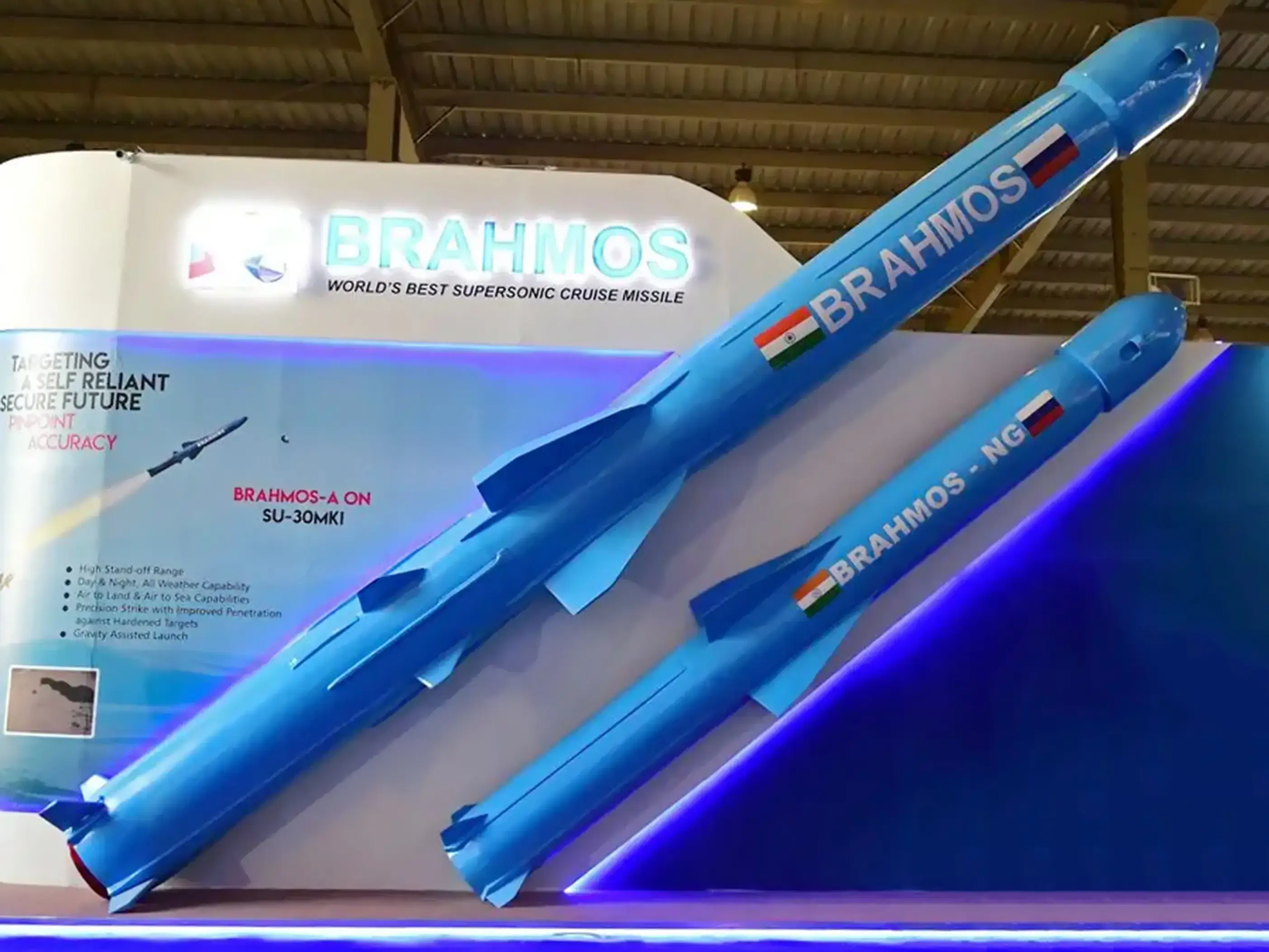
Beyond BrahMos: India targets Rs 50,000 crore in defence exports with unmatched price edge
&imwidth=180&imheight=135&format=webp&quality=medium)
Sri Lankan Tamil migrant worker gets death sentence in Saudi Arabia, help sought from India
&imwidth=180&imheight=135&format=webp&quality=medium)
Muslim marriage cannot shield sex with minor wife from prosecution under POCSO: Delhi HC
&imwidth=180&imheight=135&format=webp&quality=medium)
'Can't help but draw painful parallels to Nirbhaya case': SC on latest incidents of rape cases in Delhi-NCR
&imwidth=180&imheight=135&format=webp&quality=medium)
99.9% more powerful - Scientists find boy who can recall memories from just 3 months of age
&imwidth=180&imheight=135&format=webp&quality=medium)
'FIRST LOOK from inside Noah’s Ark': Researchers share video from inside mysterious mound in Turkey
&imwidth=180&imheight=135&format=webp&quality=medium)
UNSC reform momentum grows: Russia, Portugal, Mauritius push for India's permanent seat bid
&imwidth=180&imheight=135&format=webp&quality=medium)
8 US marines injured in Iranian missile attack on vessel in Strait of Hormuz: Report
&im=FitAndFill=(700,400)&imwidth=180&imheight=135&format=webp&quality=medium)
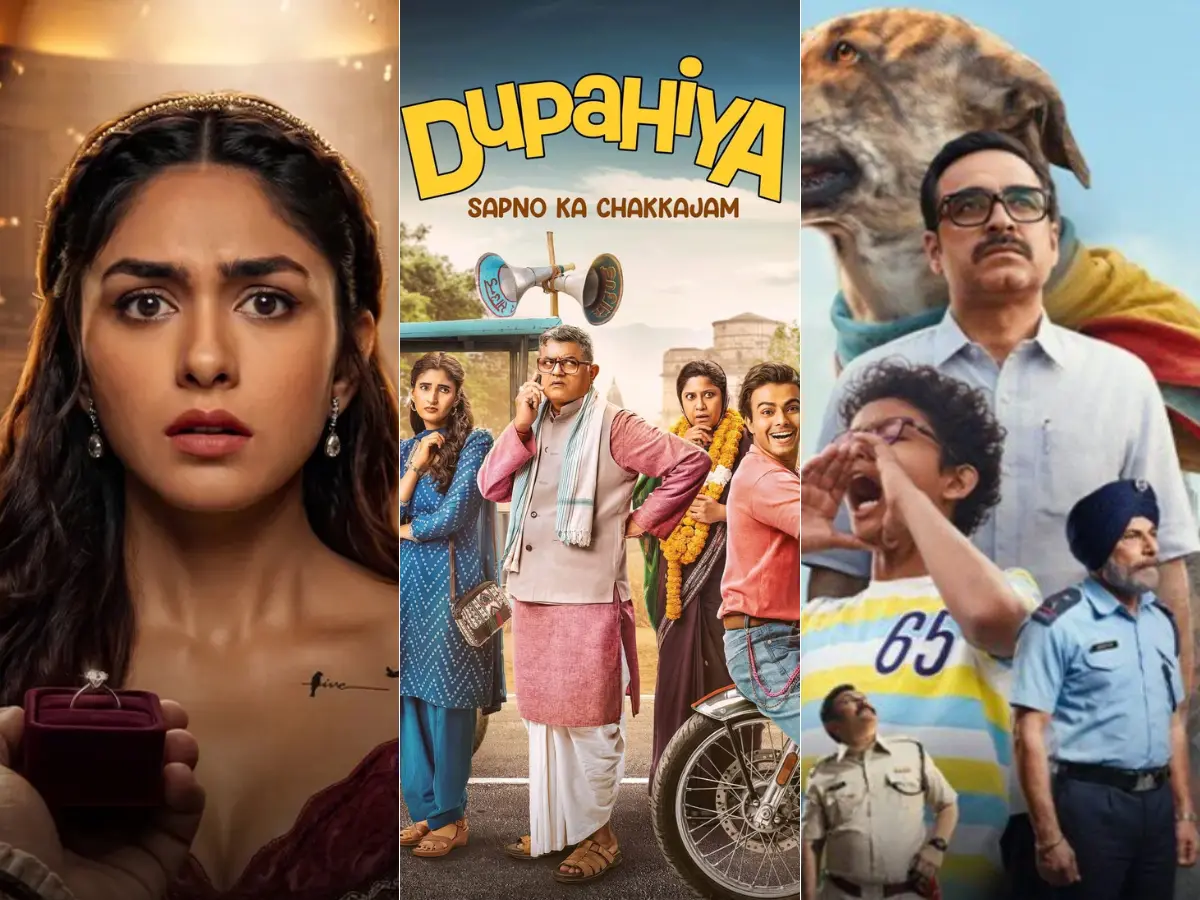
New OTT releases this week (September 28-October 4, 2026): Dupahiya 2, Pooja Meri Jaan, Ohh My Dog- 5 titles coming on Netflix, Prime Video and more
&imwidth=180&imheight=135&format=webp&quality=medium)
Afghanistan says 28 fighters killed in clash near Pakistan border, Islamabad denies
&imwidth=180&imheight=135&format=webp&quality=medium)
Ceuta migrant crisis: Protesters take to streets as Spain grapples with migrant challenge
&imwidth=180&imheight=135&format=webp&quality=medium)
LPU suspend classes, postpones exams as violence escalates over rape claims: What's happening
&imwidth=180&imheight=135&format=webp&quality=medium)
New York City wants a 'kill switch' on every AI, and will pay whistleblowers who report violations
Hamid Ansari: Don't link the two. If one listens to the debates of the Constituent Assembly, the concept was there all the time. Why a particular word put at a particular time, is a matter of lot of complexity. Secularism was a living practice of Gandhi and Nehru and there was no ambiguity about it.
WION: You have argued that Indian institutions are under performing and how Executive has ceded its space. Please elaborate upon it.
Hamid Ansari: I have focused on principles and values of Indian society and institutional structures put in place through the Constitution to realise those values. The Legislature, Executive and Judiciary are three pillars of the states. The role of the Legislature is to make laws and make government responsible. It allows public representatives to debate topics of public importance. Now, from 120, the days Parliament gets together for discussions is down to 60. It means that time for debate and making the government of the day accountable has halved. Why are so many legislations ending in the court where court says that it is not correct? It is because these legislations are not being brought with care.
The Executive must be held responsible but is everybody up the line and down the line doing their jobs? The answer is no. The control in the structure has slackened. Why do agencies go off track? Because accountability system has weakened, both at central and state levels.
WION: Is it because the parliamentary system of standing committees is being bypassed?
Hamid Ansari: Yes, absolutely. In 1990s more committees were added. I recall a conversation with Vajpayee ji. I said sir, you have done a very good thing but there is a lacuna. He said "what?" I said you have made bureaucrats responsible but not the ministers. Vajpayee ji told me, "They don't want to come." We created a structure where officers are summoned and not the ministers before the Committee. The ministers should come and they don’t want to come is true.
WION: Why is functioning in Rajya Sabha and Lok Sabha impaired? Is there no conversation between the Opposition and Treasury?
Hamid Ansari: I shall not comment on certain aspects of Parliament. I always saw myself as a referee in a hockey match. He has a whistle and a rule book. He is an observer of the game but not a player.
WION: But you used the rule book when women reservation bill was being passed? Rajya Sabha did not function on multiple issues which seemed that both parties were not interested in having a discussion but stalling the proceedings?
Hamid Ansari: Unfortunately, that was true. It is a reflection of wider disagreement whether we subscribe to gender equality or not. Why is percentage of women in legislature is higher in neighbouring countries? These issues are reflected in Parliament but not made in Parliament.
WION: Why are liberal democracies under challenge from right wing parties and authoritarian leaders?
Hamid Ansari: Liberal democracy will have some foundational principles which is that society is open and basic agreement exists on rules under which system would function. One being that you can express your views. In England they took a long time to develop such system but we did it consciously at one go because we subscribe to it as the values of the freedom struggle. We were able to make a model constitution despite disruptions like partition. Constitution is not a document to be taken lightly.
WION: Right wing upswing is parallel with immigration in Europe. Can we say this immigration crisis is making of powerful western liberal democracies?
Hamid Ansari: Yes. Immigration has been there for a long time. When Germany needed manpower after WW2, they took the Turks. Even French and British took manpower from the colonies. That was one phase of immigration. Why did people flee from Iraq ? Because there was anarchy. Who is responsible for the dismantling of the Libyan state? Why are people from Africa pouring in Europe. Today it is not a matter of opinion but fact as archival material is available. PM of UK said in United States said that I’m with you. This was seven months before the formal invasion of Iraq in 2003. The UK government had come to know that the US decision to invades Iraq was made. Going to the UN Security Council was a facade. Why was Libya was bombed for one whole month. My younger colleagues there slept under the staircases. If there is immigration taking place to Europe, it is the result of Western policies.
WION: You have said that cultural nationalism gives rise to illiberal structure in politics. Is it happening in India and is lynching a case in example?
Hamid Ansari: If you narrow down the circle, then those within and without become identified. The traditional Indian practice was to make circle wide so that no one was left out. It reflected our ethos. Cultural nationalism as defined narrows the circle. It tells the person that if you are born here and belong to a particular faith then you are an Indian or else you are an Indian on sufferance. This is the difficulty with cultural nationalism. We have a complex and diverse society. There are more than hundred languages in the country. The Indian currency note shows diversity of the country. Look at food habits. Look how diverse Indian food is.
WION: Are you saying that Indian cultural nationalism as propounded exclude minorities?
Hamid Ansari: That is the impression and not only on the recipients but those who want to implement this type of nationalism.
WION: Cultural diplomacy today connects the wider world with India’s ancient past but leaves out the medieval India. Why?
Hamid Ansari: We have a long past and it is an Indian experience. Akbar got Mahabharat translated into Persian because he wanted to know the traditions of the country. What language did Raja Mansingh use when part of a particular court? Language has nothing to do with faith. Language is the language of people. Moment you try to squeeze the circle you are in trouble and in this big land of ours today, you are in big trouble. How do you tell a person in Tamil Nadu that you will only express in Hindi? No. We have had enough trouble on that account.
WION: If squeezing the circle, you get political dividends?
Hamid Ansari: I'm not going to go there. I’m talking about Indian cultural perspective. Firaq Gorkahpur was a famous poet. He said it all in one couplet: "सर-ज़मीन-ए-हिंद पर अक़्वाम-ए-आलम के फ़िराक़ क़ाफ़िले बसते गए हिन्दोस्ताँ बनता गया (In the land of Hind, the caravans of the peoples of the world kept coming in and India kept getting formed)". India has never been a closed society. Whoever has come here has been welcomed and become part of India. Is it important to know who were the first people in India? It is not important. There are no hard boundaries.
WION: So you are saying that current developments are not in the spirit and the vision of the Constitution made by the founding fathers?
Hamid Ansari: It is not. It is short sighted and it is harmful.
WION: If you get an invitation from RSS, the way Pranab Mukherjee got it, will you go?
Hamid Ansari: I don’t answer hypothetical question.
WION: In the opening of your book, you said bhari bazm mein raaz ki baat keh dee? When event unfolded before you, did you feel that PM’s speech was a departure from the normal?
Hamid Ansari: I don’t have a time machine to go back. I was in the chair and what is said in the house is not to be debated outside.
WION: You are saying that matter be put to rest but you have addressed it in the book?
Hamid Ansari: I addressed it because I was only articulating on that occasion what I have said in previous occasions. In my speeches and all my speeches were on record. These are facts of life. If there is an ailment in my body, I register it.
WION: I'm asking this question in context of PM's speech where he said that from tomorrow you will be able to express your views freely. PM also referred to a context...
Hamid Ansari: The context is what was not reflective of the totality. I was a professional diplomat for 40 years. I was in the service of the state and I was all over the world. Every diplomat is given a language and for that fact you spend a good time in the language zone. That's what took me to West Asia. But I was India’s High Commissioner to Australia and also ambassador to the United Nations at a very critical time. 1993 and 1994. We were under pressure and we resisted that pressure. I had the privilege of being part of the delegation which Narasimha Rao in his wisdom sent under the leadership of Vajpayee ji. We fought the pressure. You address these things as professionals. You don’t address them as language I speak and faith I follow and food I eat. It was a professional job and it was done professionally with here, there or anywhere else. A competent officer of Indian Foreign Service (IFS) is competent to express his concerns and his government’s concern in any part of the world. I was part of that fraternity and I’m very proud of being part of that fraternity.
WION: The perception was that it happened because you are part of the minority community?
Hamid Ansari: Why should it be perceived as minority community. I was not selected because I was a minority. I came from UPSC.
WION: The question was in context of the speech?
Hamid Ansari: I have said what I have said. I don’t want to comment on it further.
(Watch the full interview on WION on Wednesday at 11.30am and 7.30pm)