US-based chip-tech group moving to Switzerland over trade curb fears

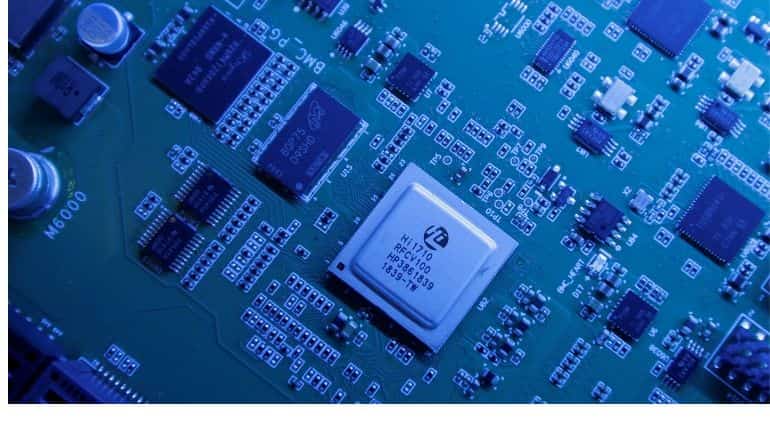
Chip-tech group
AUS-basedfoundationoverseeing promising semiconductortechnology developed with Pentagon support will soon move toSwitzerlandafter several of thegroup's foreign members raised concerns about potentialUStradecurbs.
The nonprofit RISC-V Foundation (pronounced risk-five) wants to ensure that universities, governments, and companies outside the United States can help develop its open-sourcetechnology, it's Chief Executive Calista Redmond said in an interview with Reuters.
She said the foundation's global collaboration has faced no restrictions to date but members are "concerned about possible geopolitical disruption."

"From around the world, we've heard that 'If the incorporation was not in theUS, we would be a lot more comfortable'," she said. Redmond said the foundation's board of directors approved the move unanimously but declined to disclose which members prompted it.
Created in 2015, the RISC-V Foundation sets standards for the corechiparchitecture and controls who can use the RISC-Vtrademark on products, as other organizations do for Wi-Fi and Bluetoothchips. It does not own or control thetechnology.
More than 325 companies or other entities pay to be members, includingUSand Europeanchipsuppliers such as Qualcomm Inc and NXP Semiconductors, as well as China's AlibabaGroupHolding Ltd and HuaweiTechnologies Co Ltd.
)
US vs China over South China Sea: Washington backs Philippines, Beijing hits back
)
Bigg Boss 20: Isha Rikhi evicted after three weeks in Salman Khan’s show
)
Musk plans to more than double xAI's chips to over 1.2 million Nvidia GPUs by year-end
)
After JU, clash erupts at SRFTI: BJP’s ‘Dimagi Naxal’ jibe sparks political firestorm after students protest RSS-linked event
)
‘Anti-social elements spreading false rumours’: LPU issues statement amid massive unrest over alleged rape
)
LPU students go on rampage, vandalise campus amid widespread protest: What's happening
)
Trump asked Xi to pressure Iran. China did not say yes — here’s what Beijing wants
)
US Treasury Secretary Scott Bessent hails global crackdown on Iranian banks and airlines
)
An OpenAI agent escaped its locked test cage again, by hiding questions in DNS lookups
)
'Our video was trimmed': LPU girls who featured in rape-denial video make U-turn
)
3 males killed, four others injured in shooting after fight at strip club in Detroit
)
'Victory for low-budget consumers': Raghav Chadha hails 30-day telecom recharge rules
)
Claude rebuilt the 1989 game 'Prince of Persia' by reusing the original's own code
)
Beyond metros: How Tier-2 and Tier-3 cities could drive India’s next AI wave
)
Tesla builds first Cybertruck with its own refined lithium: Elon Musk's $1 billion Texas bet pays off
)
IndiGo flight suffers tail strike in Bengaluru while landing; DGCA to probe incident
)
The US and China set up an AI 'red telephone', but skipped the rulebook
)
‘Terror suspects arrested near UK air base were looking to do big damage’: Trump
)
Russian envoy claims US tactics to contain India were revealed in ‘Freudian slip’
)
IND vs WI 1st ODI: Kohli breaks Sachin's most runs in one country record with unbeaten 139 as India thump West Indies by 8 wickets
)
Researchers rebuilt exactly how 700 AI agents hacked Hugging Face: a 900-link chain trick
)
‘Olympic inclusion is our major target’: WPA President Ishaun Singh on pool’s global ambitions
)
Nations League: Spain sink England at Wembley; Modric shines for Croatia
)
Why has Iran released no proof of life of Mojtaba Khamenei? Araghchi reveals...
)
'What kind of confession is this?': Pakistan PM Shehbaz Sharif’s 'terrorists would be roaming New York' remark goes viral, raises alarm online. Watch
)
South Korea demands apology from Ukraine over North Korean prisoners' transfer
)
Beyond BrahMos: India targets Rs 50,000 crore in defence exports with unmatched price edge
)
Sri Lankan Tamil migrant worker gets death sentence in Saudi Arabia, help sought from India
)
Muslim marriage cannot shield sex with minor wife from prosecution under POCSO: Delhi HC
)
'Can't help but draw painful parallels to Nirbhaya case': SC on latest incidents of rape cases in Delhi-NCR
)
99.9% more powerful - Scientists find boy who can recall memories from just 3 months of age
)
'FIRST LOOK from inside Noah’s Ark': Researchers share video from inside mysterious mound in Turkey
)
UNSC reform momentum grows: Russia, Portugal, Mauritius push for India's permanent seat bid
)
8 US marines injured in Iranian missile attack on vessel in Strait of Hormuz: Report
&im=FitAndFill=(700,400))
New OTT releases this week (September 28-October 4, 2026): Dupahiya 2, Pooja Meri Jaan, Ohh My Dog- 5 titles coming on Netflix, Prime Video and more
)
Afghanistan says 28 fighters killed in clash near Pakistan border, Islamabad denies
)
Ceuta migrant crisis: Protesters take to streets as Spain grapples with migrant challenge
)
LPU suspend classes, postpones exams as violence escalates over rape claims: What's happening
)
New York City wants a 'kill switch' on every AI, and will pay whistleblowers who report violations
The foundation's move from Delaware toSwitzerlandmay foreshadow furthertechnology flight because ofUSrestrictions on dealing with some Chinesetechnology companies, said William Reinsch, who was undersecretary of commerce for export administration in the Clinton administration.
"There is a message for the government. The message is if you clamp down on things too tightly this is what is going to happen. In a global supply chain world, companies have choices, and one choice is to gooverseas," he said.
In a statement to Reuters, theUSDepartment of Commerce said its controls were designed to safeguardU.S. national security and to "ensure bad actors cannot acquiretechnology that harmsUScitizens or interests while promoting innovation to fuel continued Americantechnological leadership." The department said it meets regularly with private industry to gauge market conditions and the effects of its regulations.
Some RepublicanUSlawmakers said they are concerned the United States will lose influenceoverRISC-Vchiparchitecture, which can be used to make microprocessors for almost every type of electronic device, making it a crucial building block of a modern economy. Thetechnology came from labs at the University of California, Berkeley, and later benefited from funding by the Pentagon's Defense Advanced Research Projects Agency (DARPA).
The lawmakers warn that the foundation's Chinese members could influence thetechnology's development to help China's semiconductor industry.
"The Chinese Communist Party is trying to circumvent our export control system to support national security threats like Huawei - we cannot let it succeed," Representative Mike Gallagher, a Republican from Wisconsin, told Reuters.
Arkansas Republican Senator Tom Cotton saidmovingthe foundation to ensure it could retain Chinese members was "short-sighted at best." He added that "if American public funds were used to develop thetechnology, it’s also completely outrageous."
Redmond said in follow-up emails after speaking to Reuters that given thetechnology is open source and available to anyone, she does not see how the move could be against theUSnational interest.
A DARPA spokesman told Reuters the agency intended for RISC-V work is funded to be publicly available to companies and academics around the world.
Morgan Reed, president of The App Association, which receives funding from majorUStechnology firms such as Apple Inc and Microsoft Corp in Washington, likened the RISC-V Foundation's work to efforts betweenUSand Chinese companies to jointly develop Wi-Fichipstandards.
"The notion that China can be barred from participating in standards alongside theUSand the EU is simply not viable," Reed said. "China is too important as a manufacturer and an end-market to ignore."
The RISC-V Foundation announced at a meeting last December it would seek a "neutral" country before making a formal decision to go toSwitzerlandearlier this year, a decision that got little public attention. Final approvals inSwitzerlandfor the move are expected as soon as the end of November, Redmond said.
Chinese companies have had access to the RISC-V architecture, which is publicly available, since its creation, Redmond said.
Alibaba claimed in July it had developed the fastest RISC-V processor to date. The company declined to comment for this story.
The RISC-V Foundation's move shows howUS-Chinatradetensions could make the United States a harder place to hosttechnology standards groups, according to two attorneys who represent such groups.
The lawyers said it is unclear whether standards groupsare allowed to work with Huawei. These groupsare concernedUSauthorities may decide that some closed-doortechnical discussions involve the transfer of sensitivetechnology to the Chinese or others on banned lists, said one of the attorneys, Brad Biddle, who works for several standards groups.
In June, more than two dozen standards groups- including thoseoverseeing SD memory cards and Ethernet and HDMI cables - wrote a letter to US Commerce Secretary Wilbur Ross asking for clarification of the rules on working with Huawei.
The groupswarned Ross that the Huawei restrictions posed a "serious risk" that standards work could move out of the United States, which could end a long-held trend whereUS-basedgroupsset de facto standards for the rest of the world, they wrote.
The Commerce Department published an advisory opinion seeking to clarify the issue in August, but standards lawyers said the rules remain confusing.
The RISC-V Foundation's Redmond does not yet see a "credible threat" to international collaboration. "But we're taking out an insurance policy against that type of action bymovingour incorporation," she told Reuters.
The board's seven current members are allbasedin North America. After the move, the foundation's board will be expanded and European and Asian members will be added, said Redmond. Reuters could not confirm whether any Chinese companies planned to join the board.
Andrew Updegrove, an attorney who does work for standards groups, said thatUSrestrictions on transferringUS-origintechnology to Chinese companies will still apply regardless of where the RISC-V Foundation is headquartered.
At Netherlands-basedNXP Semiconductors, which is a member of the foundation, customers have asked the company to detail where thetechnology in itschips comes from, said Lars Reger, its chieftechnology officer. The customers do not want to be cut off in futuretradedisputes, he said.
US officials and some lawmakers have alleged Huawei's telecom equipment may enable surveillance by China. The resulting backlash has prevented it from making inroads into theUSmarket. Huawei has denied the claims.
In response to Reuter's questions, a Huawei spokesman said: "We support RISC-V Foundation identifyingSwitzerlandas a neutral venue for open source development. Making open source as open as possible is important for the industry."
He said that RISC-V "might fit well into Huawei's vision of this heterogeneous, open world."