Netanyahu orders action against Hezbollah after army reports ceasefire breaches

&imwidth=600&imheight=450&format=webp&quality=medium "Netanyahu orders action against Hezbollah after army reports ceasefire breaches")
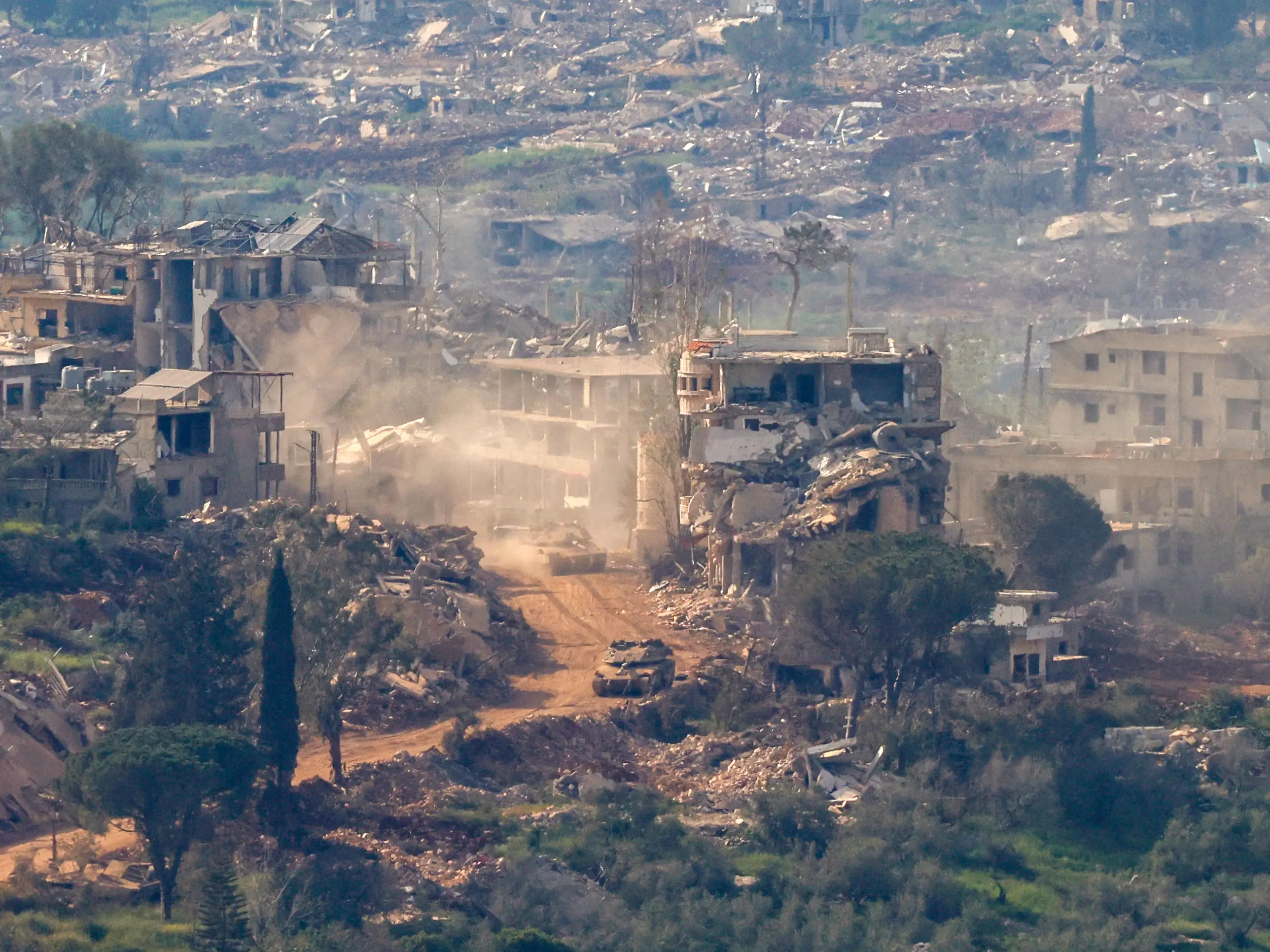
This photograph taken from the northern Israel shows Israeli tanks and military vehicles driving along the road between destroyed houses in southern Lebanon near the border with Israel, on April 25, 2026. Photograph: (AFP)
These strikes mark a major escalation in a fragile truce reached between Israel and Lebanon on April 16, brokered by US President Donald Trump. The ceasefire was initially agreed for 10 days and later extended by three weeks for wider talks.
Israeli Prime Minister Benjamin Netanyahu on Saturday (April 26) ordered the military to strike Lebanon’s Hezbollah hard after the army reported a series of ceasefire violations, marking the first major escalation since a ceasefire reached between the two countries after weeks of intense cross-border strikes.
In a brief statement, his office said the premier had directed the Israel Defence Forces to “forcefully attack Hezbollah targets in Lebanon” after accusing the Iran-backed group of breaching the truce that was extended earlier this week.
Hours earlier, the military said it had “eliminated more than 15 terrorists in southern Lebanon”, including three who were travelling in a vehicle loaded with weapons.
It also accused militants of launching explosive drones towards Israeli troops in the Qantara area. The drones detonated near the soldiers but caused no injuries.
The army said troops also uncovered an anti-tank missile cache at a Hezbollah weapons storage facility, along with an underground shaft containing Kalashnikov rifles.
These fresh strikes mark a major escalation in a fragile truce reached between Israel and Lebanon on April 16. The ceasefire, brokered with direct mediation by US President Donald Trump, was initially agreed for 10 days and later extended by three weeks to allow wider diplomatic talks.
Trending Stories
)
)
)
)
)
)
)
)
)
)
)
)
)
)
)
)
)
)
)
)
)
)
)
)
)
)
)
)
)
)
)
)
)
)
&im=FitAndFill=(700,400))
)
)
)
)
The truce is also linked to a parallel understanding between the United States and Tehran, with Iran insisting on a ceasefire between Lebanon and Israel as a key condition for broader regional security talks and the reopening of the Strait of Hormuz.
The timing of Netanyahu's orders becomes notable as it comes hours after the US President Donald Trump decided to call off the visit of American negotiators Steve Witkoff and Jared Kushner to Pakistan at the last moment for talks with Tehran, minutes after Iran's Foreign Minister Abbas Araghchi left Pakistan after wrapping up a diplomatic visit to Islamabad ahead of the expected arrival of the Washington delegation.
However, Trump, signalling his willingness to continue negotiations with Tehran, said Iranian negotiators could call Washington "anytime they want" while confirming that calling off the visit did not automatically mean that war with Iran would resume despite the setback in peace efforts.