Germany pledges €1.3 billion aid to Ukraine during Merz's Kyiv visit

&imwidth=600&imheight=450&format=webp&quality=medium "Germany pledges €1.3 billion aid to Ukraine during Merz's Kyiv visit")
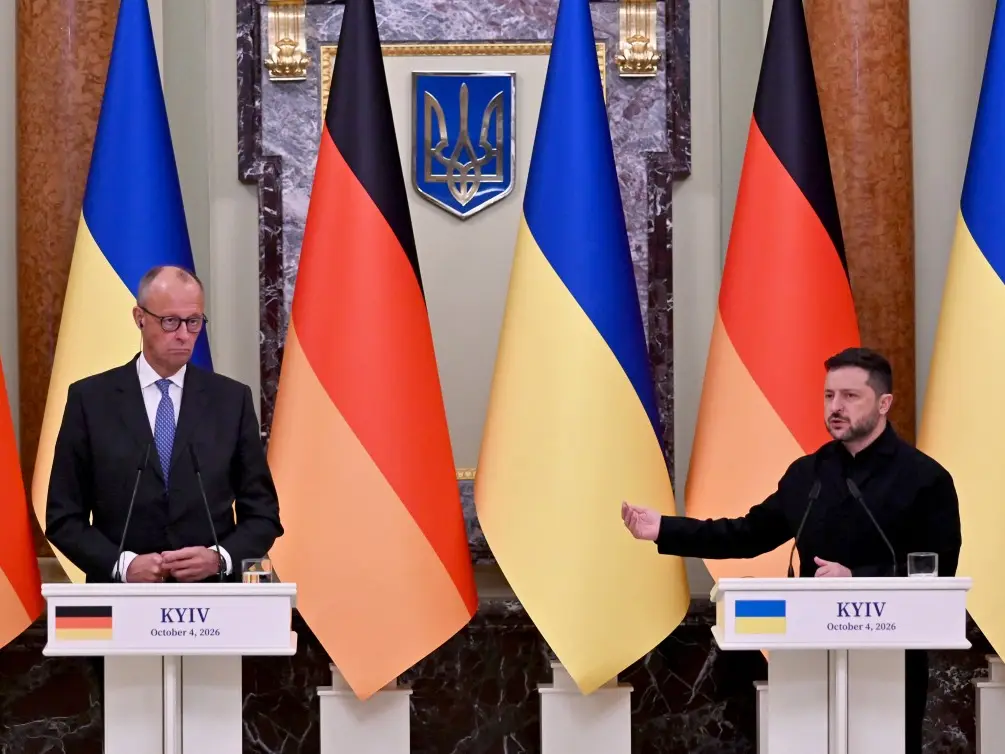
Ukraine's President Volodymyr Zelensky (R) and Germany's Chancellor Friedrich Merz hold a press conference in Mariinsky Palace following talks in Kyiv on October 4, 2026, amid the Russian invasion of Ukraine. Photograph: (AFP)
German Chancellor Friedrich Merz announced more than €1.3 billion in military and energy aid for Ukraine during his surprise visit to Kyiv amid Russian strikes.
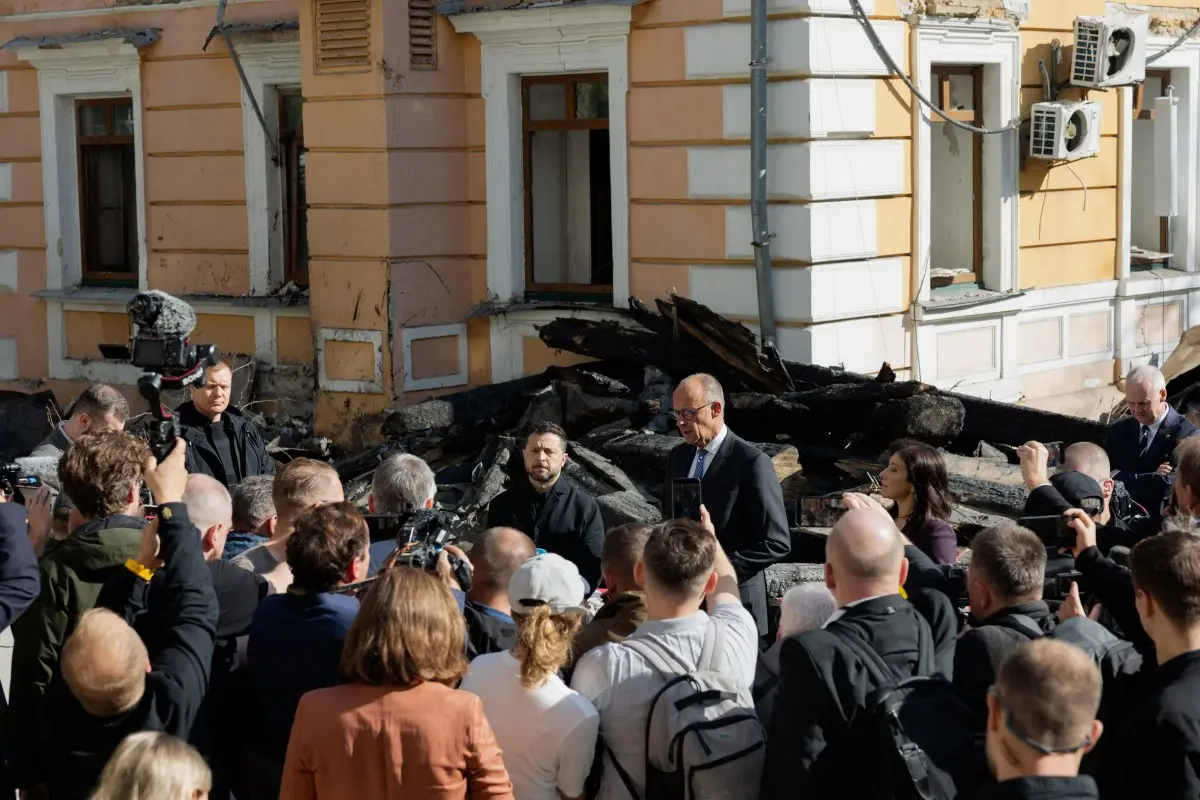
German Chancellor Friedrich Merz has committed military and energy assistance of more than €1.3 billion ($1.5 billion) to Ukraine during his high-level visit to Kyiv. The surprise visit of Merz also coincided with Russian strikes on northern bridges in Kyiv over the Dnipro River on the morning of Sunday, October 4, 2026. The newly announced package contains €1 billion ($1.13 billion) in military aid and approximately €350 million ($396 million) in energy infrastructure support.
The military aid prioritises long-range strike capabilities, layered air defence, combat drones, and space-based satellite communications. It also accelerates assembly lines for the transfer of 1000 newly developed interceptors designed to destroy jet-powered Shahed strike drones. The energy infrastructure support was announced to reinforce the Ukrainian power sector ahead of winter, such as purchasing mobile generators, repairing damaged electrical substations, and restoring transmission infrastructure.
“We are facing what may be a very difficult winter. Moscow is deliberately targeting energy supply infrastructure – thermal power plants, substations, fuel stations, and railway infrastructure,” Merz said.
“The goal is entirely obvious: to break the morale of Ukrainians. Despite the attack that occurred this morning, I see here a determined people and a determined government.”
“To date, we have 15 agreements and documents, and most of them concern security cooperation, manufacturing, corresponding procurement, our orders for German industry, and joint projects in Ukraine,” Zelensky said.
Trending Stories
)
)
)
)
)
)
)
)
)
)
)
)
)
)
)
)
)
)
)
)
)
)
)
)
)
)
)
)
)
)
)
)
)
)
&im=FitAndFill=(700,400))
)
)
)
)
“The total weight of today’s agreements is more than €8.5 billion.”
This agreement allows German defence manufacturers to integrate Ukrainian battlefield lessons directly into joint high-tech production ventures situated on Ukrainian soil.
The announcement comes during Merz's visit, which had not been publicly announced beforehand. Russia in October has increased the intensity of attacks in Ukraine, targeting civilian bridges and other infrastructure in Kyiv as well as power infrastructure. Alongside Merz was Economy Minister Katherina Reiche, as well as around ten representatives of German companies from the defence and energy sectors.
“Together with France and Great Britain, we want to hold a meeting of the Coalition of the Willing in Berlin this winter, particularly to coordinate further assistance,” said the German Chancellor.