'8,000 candidate exoplanets': NASA's TESS is hiding mind-boggling space secrets in its 8-year data

&imwidth=600&imheight=450&format=webp&quality=medium "'8,000 candidate exoplanets': NASA's TESS is hiding mind-boggling space secrets in its 8-year data")
'8,000 candidate exoplanets': NASA's TESS is hiding mind-boggling space secrets in its 8-year data
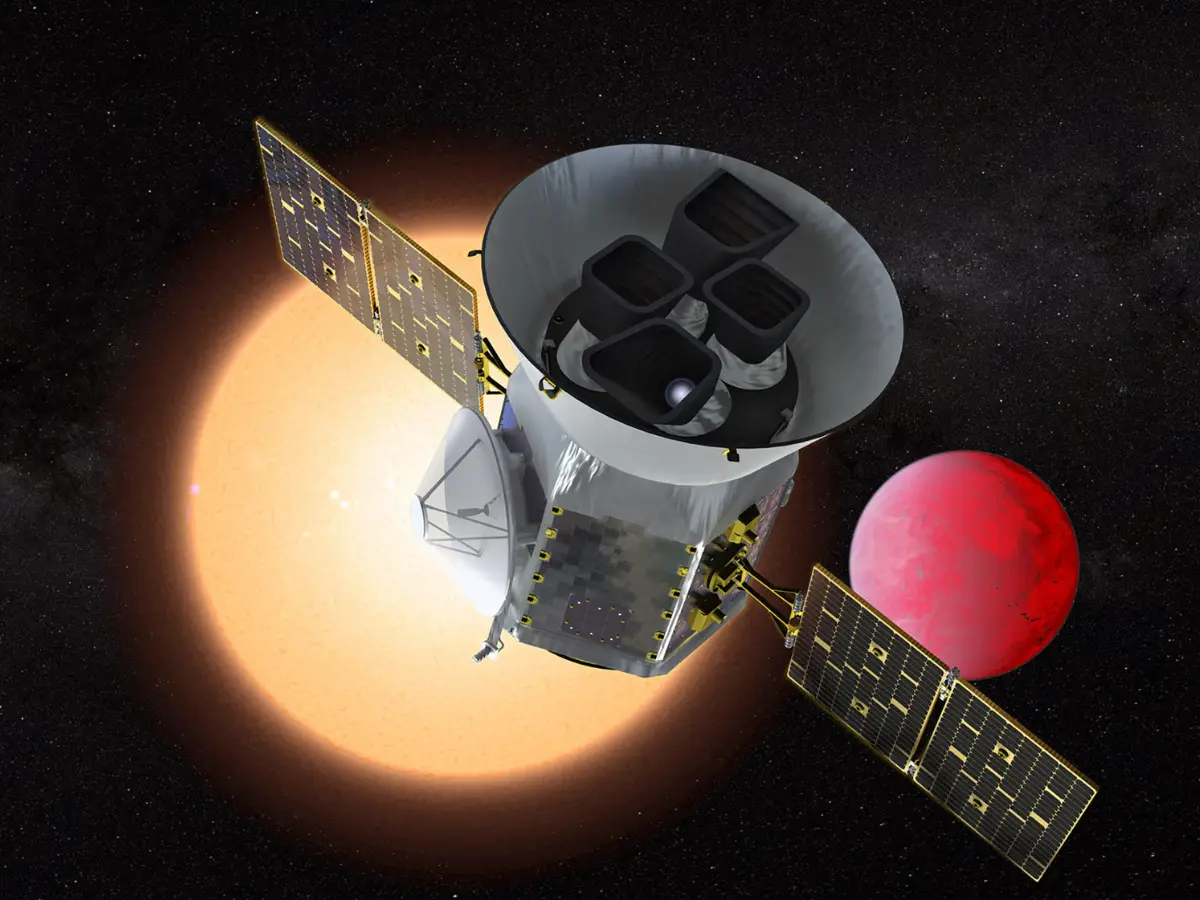
NASA's TESS telescope has been staring at the sky for eight years, and scientists are only now beginning to understand how much it has recorded. With nearly 8,000 candidate exoplanets found, AI tools uncovering over 10,000 more hidden in its archive, and the first-ever microlensing planet discovered in its data in 2026, TESS has become one of the most productive science machines ever built and researchers say the biggest discoveries may still be buried in its data.
When NASA launched the Transiting Exoplanet Survey Satellite in April 2018, the mission's goal was straightforward: scan the sky for planets orbiting nearby stars by detecting the tiny dips in starlight that occur when a planet passes in front of its host. Eight years and billions of data points later, TESS has become something considerably more than its original brief. Its archive holds nearly 8,000 candidate exoplanets, nearly 900 of which have been confirmed. It has found worlds orbiting two stars simultaneously, planets being actively destroyed by their host stars, ultra-hot Jupiters completing full orbits in under a day, and — as of a study published in The Astrophysical Journal Letters on July 1, 2026 — the first planet ever detected by TESS using gravitational microlensing, a completely different detection method that opens an entirely new class of world to the telescope's gaze.
What TESS Does And How It Works
TESS surveys the sky in sectors, spending roughly 27 days staring at a patch of the sky before moving on. Its primary method is the transit technique: when a planet passes between its star and TESS's camera, the star appears fractionally dimmer. The depth and timing of those dips reveal the planet's size and orbital period. It is an elegant method, but it has a limitation — it only works for planets whose orbits are aligned just right to pass in front of their star from TESS's perspective. The vast majority of planets are invisible to this approach. The 2026 findings suggest TESS has been detecting them anyway — through methods that were never its primary purpose.
The First Microlensing Planet In TESS Data
The headline discovery from the July 2026 study is Gaia23bra b — a super-Jupiter approximately 1.63 times the mass of Jupiter, orbiting an orange dwarf star at a distance similar to Jupiter's orbit around the Sun. What makes this planet extraordinary is how it was found. TESS detected it not through a transit, but through gravitational microlensing — the bending of light from a background star by the gravity of the planet's host star and the planet itself. Less than five percent of all known exoplanets have been found this way, and TESS was not designed to do it. Lead author Mallory Harris, a doctoral candidate at the University of New Mexico, described the discovery as a case study in what happens when you look carefully at data collected for one purpose and find it is recording something entirely different.
AI Is Finding 10,000 Hidden Planets In The Archive
Trending Stories
)
)
)
)
)
)
)
)
)
)
)
)
)
)
)
)
)
)
)
)
)
)
)
)
)
)
)
)
)
)
)
)
)
)
&im=FitAndFill=(700,400))
)
)
)
)
The microlensing discovery is not the only secret TESS has been keeping. Researchers applying machine learning to the telescope's eight-year archive have found 10,091 candidate planets that had never been identified through conventional analysis — new worlds hiding in data that had already been processed and set aside. A separate AI study confirmed over 100 exoplanets from the TESS archive, including 31 that had never previously been catalogued. Among these were rare and extreme examples: planets with orbital periods of less than one Earth day, worlds in the habitable zones of their stars where liquid water might exist, and planets with characteristics that do not fit neatly into existing classification systems.
Worlds That Should Not Exist — But Do
Part of what has made the TESS archive so productive for AI-driven searches is the sheer diversity of what it has captured. The telescope has found planets being torn apart by the tidal forces of their host stars, their atmospheres being stripped away in real time. It has found circumbinary planets — worlds orbiting not one but two stars — a configuration that was once thought too dynamically unstable to host stable orbits. It has found a planet orbiting a star using ripples in space-time as the detection mechanism, and it has found planets with volcanic activity implied by their surface temperatures and orbital geometry. The range of planetary environments in the TESS data has consistently surprised researchers who expected the galaxy to be more uniform than it is.
What The Nancy Grace Roman Telescope Will Do Next
The TESS microlensing discovery is also significant as a preview of what NASA's next major space telescope will accomplish. The Nancy Grace Roman Space Telescope, expected to launch in autumn 2026, is specifically designed for large-scale microlensing surveys and is projected to detect approximately 1,000 microlensing planets — compared to the handful identified in eight years of TESS data. The Roman telescope's discovery of Gaia23bra b in the TESS archive provides a critical methodological template: it demonstrates exactly how microlensing signals look in TESS data, which will help researchers identify and verify similar signals in Roman's far larger dataset.
Eight Years Of Data, Decades Of Science To Come
TESS is still operating. Every 27 days it moves to a new patch of sky, adding more data to an archive that researchers expect will take decades to fully mine. The confirmation that AI tools can extract thousands of previously unknown planet candidates from data that was thought to have been thoroughly analysed suggests that the most important discoveries from TESS may not have happened yet. As one team of researchers described it, the telescope's archive is not a finished record — it is an ongoing source of surprises. With nearly 8,000 candidates already identified and thousands more potentially buried in processed data, TESS's eight years of sky-watching appear to be just the beginning of what it has to tell us.
