'25 light-years away': Scientists discover a potentially habitable planet near our solar system

&imwidth=600&imheight=450&format=webp&quality=medium "'25 light-years away': Scientists discover a potentially habitable planet near our solar system")
'25 light-years away': Scientists discover a potentially habitable planet near our solar system Photograph: (NASA)
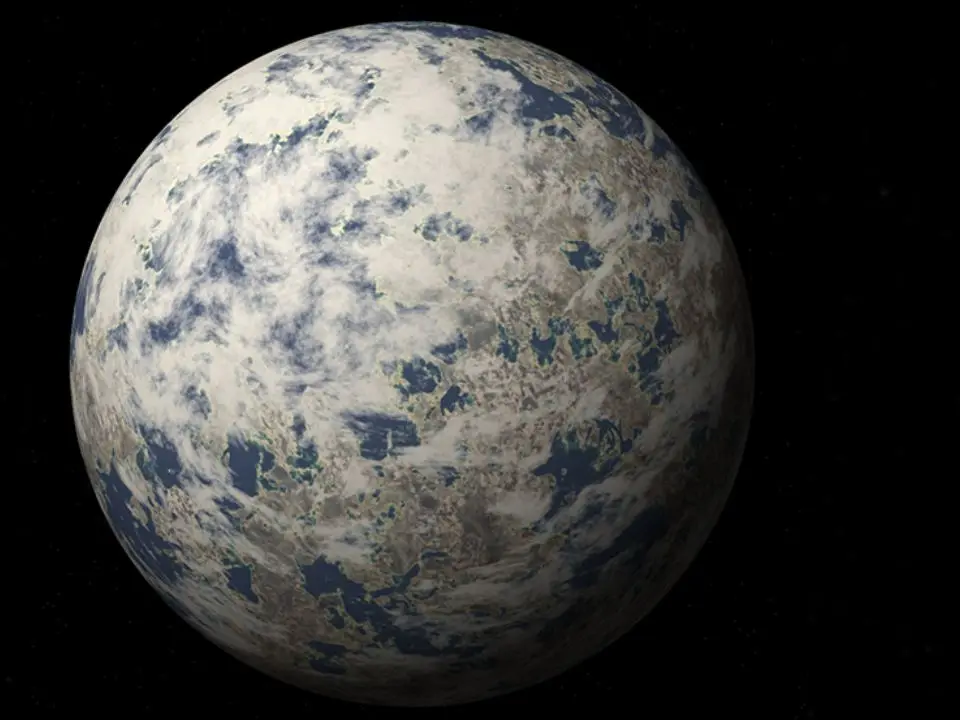
Astronomers have discovered a super-Earth orbiting a red dwarf star just 25 light-years away — one of the closest potentially habitable worlds ever found. The planet, GJ 3378b, sits squarely in its star's habitable zone, receives about 90 percent of the solar radiation Earth does, and has a mass roughly 2.3 times that of Earth. The catch: its star is a red dwarf, and those are some of the most dangerous hosts in the galaxy.
In the search for worlds that could harbour life, proximity matters enormously. A planet that might be habitable but sits hundreds of light-years away may as well be unreachable for practical science — too far for detailed atmospheric studies, too faint for the instruments we have or will have for decades. GJ 3378b is different. At just 25 light-years from Earth, this newly confirmed super-Earth is practically a cosmic neighbour — and it sits in the habitable zone of its host star, where temperatures could theoretically allow liquid water to exist on its surface. ‘This one is exciting,’ said Dr. Paul Robertson of the University of California, Irvine, one of the lead researchers behind the discovery.
What We Know About GJ 3378b
GJ 3378b orbits a faint red dwarf star in the constellation Camelopardalis — the Giraffe — completing one full orbit every 21.45 days. The planet has a mass approximately 2.3 times that of Earth and a diameter roughly twice as large, placing it firmly in the super-Earth category: bigger and heavier than Earth, but not large enough to be a gas giant. Crucially, GJ 3378b receives about 90 percent of the solar radiation that Earth receives from the Sun — sitting close enough to the habitable zone's inner edge to be warm, but not so close as to be cooked. Its position in the habitable zone is not hypothetical or borderline. It is well within the range where liquid water is physically plausible.
How It Was Found
The discovery used two of the world's most sensitive spectrographs dedicated to finding planets around red dwarf stars. The Habitable-zone Planet Finder instrument on the Hobby-Eberly Telescope at McDonald Observatory in Texas and the NEID spectrometer on the WIYN Telescope at Kitt Peak National Observatory in Arizona both contributed data. The research team, led by Dr. Michael Endl of the University of Texas at Austin and Dr. Paul Robertson of UC Irvine, published their findings in the Astrophysical Journal in 2026 in a paper titled A Revised Mass and Period for the Habitable Zone super-Earth GJ 3378b: A Planet Straddling the Cosmic Shoreline.
What The ‘Cosmic Shoreline’ Means
Trending Stories
)
)
)
)
)
)
)
)
)
)
)
)
)
)
)
)
)
)
)
)
)
)
)
)
)
)
)
)
)
)
)
)
)
)
&im=FitAndFill=(700,400))
)
)
)
)
The paper's subtitle — A Planet Straddling the Cosmic Shoreline — refers to a concept in planetary science used to distinguish worlds likely to retain an atmosphere from those that have had it stripped away by stellar radiation. On one side of the shoreline are planets with enough gravity and protection from their star's radiation to hold onto an atmosphere. On the other side are bare, airless rocks. GJ 3378b sits right on that boundary — massive enough to potentially hold an atmosphere, but exposed enough to its red dwarf host that the outcome is far from certain. This is precisely what makes it both exciting and uncertain.
The Red Dwarf Problem
Red dwarf stars are the most common type of star in the Milky Way, and many of the closest potentially habitable planets discovered so far orbit them. But red dwarfs come with a serious hazard: they are far more magnetically active than the Sun, particularly in their early lives. They emit powerful bursts of ultraviolet and X-ray radiation called stellar flares, and they drive intense stellar winds that can erode a planet's atmosphere over geological timescales. For GJ 3378b, the key question is whether its 2.3-Earth-mass bulk provides enough gravitational grip to hold onto an atmosphere despite billions of years of bombardment from its host star. No current instrument can answer that question with certainty.
Why 25 Light-Years Matters
Most potentially habitable exoplanets discovered so far orbit stars that are hundreds or thousands of light-years away — far enough that detailed atmospheric characterisation is essentially impossible with any telescope currently in operation or under construction. At 25 light-years, GJ 3378b is different. It is close enough to be a genuine near-term target for atmospheric study. The James Webb Space Telescope may be able to obtain some spectroscopic data on the planet's atmosphere, though red dwarf planetary atmospheres are notoriously difficult to study even with Webb. The real opportunity will come with NASA's planned Habitable Worlds Observatory, an extremely large space telescope expected to launch sometime in the 2040s, which is specifically designed to directly image rocky planets around nearby stars and analyse their atmospheric chemistry for signs of biological activity.
The Nearest Candidates Keep Getting Closer
GJ 3378b joins a short but growing list of potentially habitable worlds within striking distance of our solar system. Proxima Centauri b, orbiting the nearest star to the Sun at just 4.2 light-years, is another candidate — though its habitability is equally contested due to its red dwarf host's activity. The consistent finding of habitable-zone planets around nearby red dwarfs suggests that such worlds may be extraordinarily common in our galactic neighbourhood. Whether any of them actually harbour life — or even stable atmospheres — remains the central question that the next generation of telescopes will be built to answer. For now, GJ 3378b is one of the best places to start looking.
