Double trouble brews under Mouth of Hell volcano as magma chambers start filling up

&imwidth=600&imheight=450&format=webp&quality=medium "Double trouble brews under Mouth of Hell volcano as magma chambers start filling up")
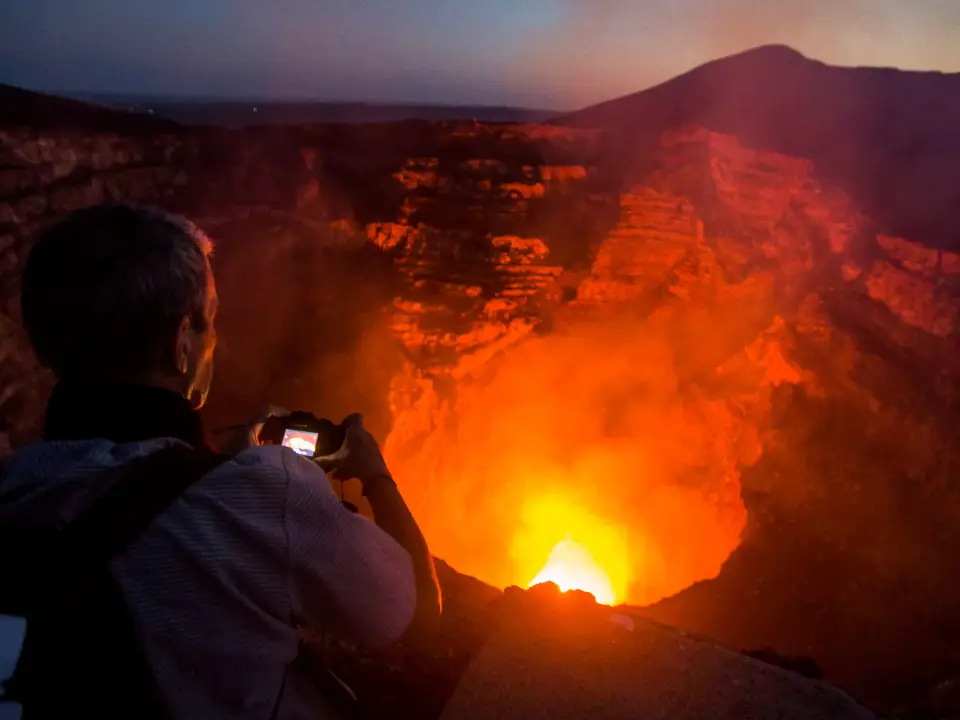
Mouth of Hell volcano has two chambers filling up with magma. Photograph: (AFP)
Two reservoirs could be filling up with magma inside the Masaya Volcano in Nicaragua. Satellite images show that the ground at the site of the famous "Mouth of Hell" lava lake has changed, suggesting activity deep inside.
Masaya Volcano in Nicaragua could be undergoing something incredible, with scientists noting that two of its reservoirs could be filling up with magma. Researchers from Pennsylvania State University detailed the findings in Geophysical Research Letters, pointing to a double threat brewing inside the volcano.
The lava lake "Mouth of Hell" inside the volcano attracts thousands of tourists. Nearly two million people live in the vicinity of the volcano. This lake is only a small surface feature of the Masaya volcano, with a lot going on deep inside. Seeing as two reservoirs of magma are active at the same time, the authors said it is important to monitor the volcano to prevent a disaster.
Geoscientist Lizzie Johnson, lead author of the study, said, "Although Masaya last produced a major lava flow in 1772, its persistent degassing often produces dangerously high concentrations of sulfur dioxide volcanic gas." There are around two million people who live in the region, with the capital city Managua about 20 kilometres away, who could be affected by it.
The team of scientists studied Sentinel-1 satellite radar images taken roughly every 12 days for six years, studying specific points on its surface. They measured how these points might have changed over the years to detect what could be brewing inside the volcano.
They found that between 2018 and mid-2022, the Masaya Central Reservoir, a magma chamber, had moved about 3 centimetres away from the satellite. This meant that the ground was sinking and some of the magma had moved away from the chamber.
Magma chambers deflate and swell
Trending Stories
&imwidth=280&imheight=210&format=webp&quality=medium)
&im=FitAndFill=(700,400)&imwidth=280&imheight=210&format=webp&quality=medium)
&imwidth=280&imheight=210&format=webp&quality=medium)
&imwidth=280&imheight=210&format=webp&quality=medium)
&imwidth=280&imheight=210&format=webp&quality=medium)
&imwidth=280&imheight=210&format=webp&quality=medium)
&imwidth=280&imheight=210&format=webp&quality=medium)
&imwidth=280&imheight=210&format=webp&quality=medium)
&imwidth=280&imheight=210&format=webp&quality=medium)
&imwidth=280&imheight=210&format=webp&quality=medium)
&imwidth=280&imheight=210&format=webp&quality=medium)
&imwidth=280&imheight=210&format=webp&quality=medium)
&imwidth=280&imheight=210&format=webp&quality=medium)
&imwidth=280&imheight=210&format=webp&quality=medium)
&imwidth=280&imheight=210&format=webp&quality=medium)
&imwidth=280&imheight=210&format=webp&quality=medium)
&imwidth=280&imheight=210&format=webp&quality=medium)
&imwidth=280&imheight=210&format=webp&quality=medium)
&imwidth=280&imheight=210&format=webp&quality=medium)
&imwidth=280&imheight=210&format=webp&quality=medium)
&imwidth=280&imheight=210&format=webp&quality=medium)
&imwidth=280&imheight=210&format=webp&quality=medium)
&imwidth=280&imheight=210&format=webp&quality=medium)
&imwidth=280&imheight=210&format=webp&quality=medium)
&imwidth=280&imheight=210&format=webp&quality=medium)
&imwidth=280&imheight=210&format=webp&quality=medium)
&imwidth=280&imheight=210&format=webp&quality=medium)
&imwidth=280&imheight=210&format=webp&quality=medium)
&imwidth=280&imheight=210&format=webp&quality=medium)
&im=FitAndFill=(700,400)&imwidth=280&imheight=210&format=webp&quality=medium)
&imwidth=280&imheight=210&format=webp&quality=medium)
&imwidth=280&imheight=210&format=webp&quality=medium)
&imwidth=280&imheight=210&format=webp&quality=medium)
&imwidth=280&imheight=210&format=webp&quality=medium)
It started rising between 2022 and 2024, suggesting it was filling up with magma. But the area directly around the Santiago crater appeared to sink from 2018 to 2024. This hinted that a second reservoir 656 feet below the volcano's surface had become active. "When it's subsiding, that means that there's probably magma draining away from the volcano, but once the ground starts uplifting again, that can mean that there's potentially new magma moving in," said Johnson.
Tracking ground movement is how scientists keep track of volcanoes and whether they are on the cusp of eruption. "Further long-term geodetic and modelling studies will provide a more thorough understanding and allow for effective hazard monitoring and mitigation at Masaya and other lava-lake hosting basaltic volcanoes," Johnson says.

