Do not open until 2276: Inside the US time capsule that won't be opened for 250 years

&imwidth=600&imheight=450&format=webp&quality=medium "Do not open until 2276: Inside the US time capsule that won't be opened for 250 years")
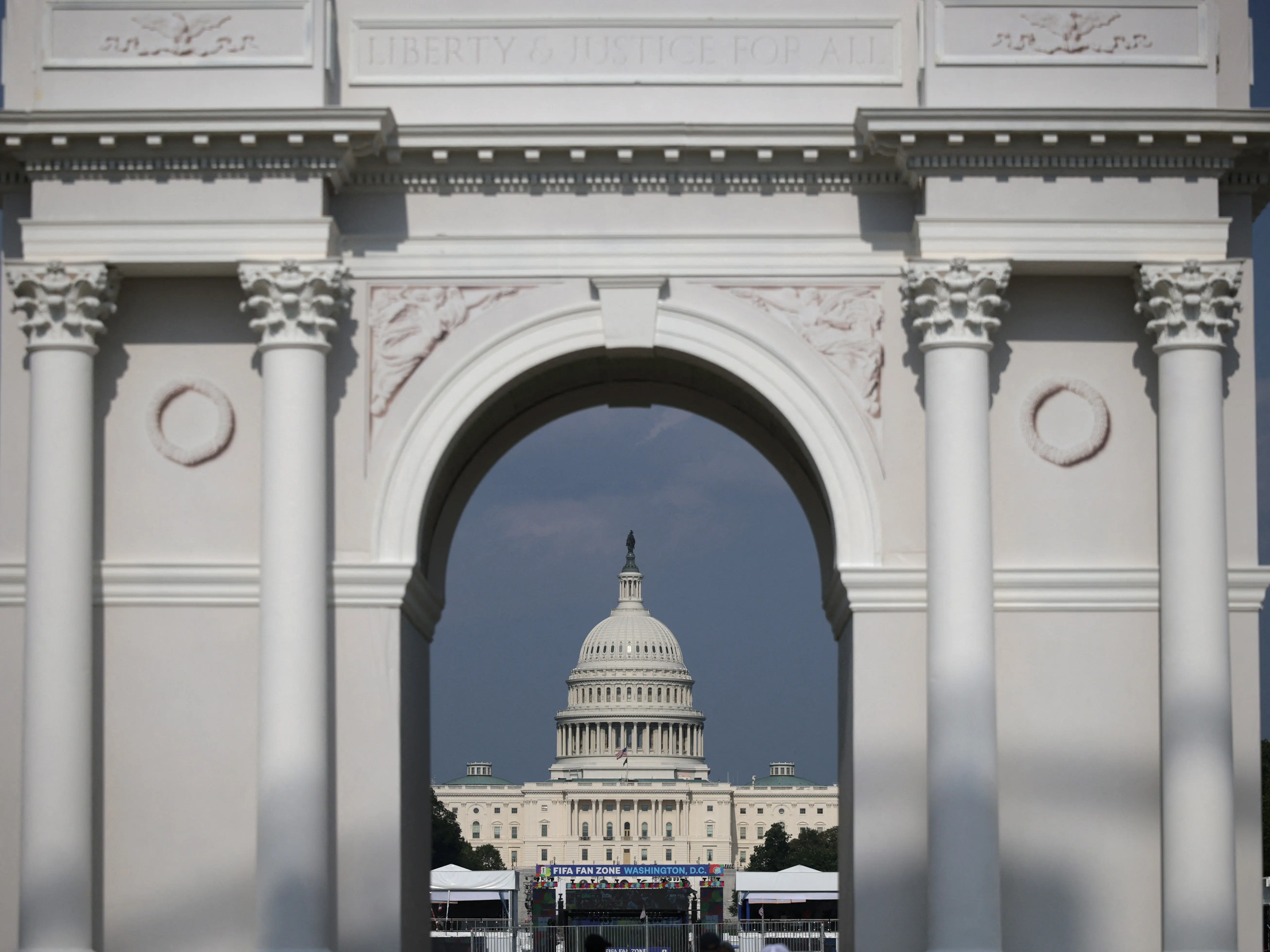
A replica of President Trump’s planned “triumphal arch” and the U.S. Capitol are seen during the "Great American State Fair" on the National Mall on July 1, 2026 in Washington, DC. Photograph: (AFP)
As the United States marks its 250th anniversary, a 900-pound stainless-steel time capsule packed with items ranging from a Claude AI prediction to Civil War memorabilia will be buried near Independence Hall, with strict instructions not to open it until 2276. Here's what's inside.
Two hundred and fifty years from now, Americans may get a glimpse of how their country saw itself in 2026. As the United States marks its 250th anniversary this July 4 (Saturday), a massive stainless-steel time capsule weighing nearly 900 pounds will be buried near Philadelphia's Independence Hall, the birthplace of the Declaration of Independence. Its instructions are simple: do not open until 2276.
The project is part of the official America250 celebrations and is designed to serve as a snapshot of the nation at a historic milestone. "We want future generations to have a clear, authentic window into who we were at 250," said Rosie Rios, chairwoman of America250.
From eagle feathers to artificial intelligence
The capsule's contents offer a surprisingly eclectic portrait of modern America. Every US state, along with five territories and several cultural and sporting organisations, contributed items intended to represent their identity.
According to reports, Wisconsin submitted a feather from a bald eagle known as "Old Abe," a Civil War mascot named after President Abraham Lincoln. Ohio contributed a piece of fabric linked to the Wright brothers' pioneering aircraft, which achieved the world's first sustained powered flight in 1903.
Trending Stories
)
)
)
)
)
)
)
)
)
)
)
)
)
)
)
)
)
)
)
)
)
)
)
)
)
)
)
)
)
)
)
)
)
)
&im=FitAndFill=(700,400))
)
)
)
)
Maine chose a bone from the endangered North Atlantic right whale.
California, meanwhile, went in a very different direction. Its contribution is a response generated by Claude, an artificial intelligence chatbot, after being asked to predict what California might look like 250 years from now.
America250 itself added a late-model orange iPhone, perhaps one of the most recognisable symbols of contemporary life.
Other items include a Native American bookmark, a diamond from Arkansas, a traditional New Mexico cookie recipe and a commemorative pin celebrating the Oklahoma City Thunder's 2025 NBA championship.
Also read | JD Vance says coming weeks could be decisive for US-Iran ties, warns 'a lot more game to play'
Built to survive for centuries
Designing a container capable of surviving underground for 250 years proved almost as challenging as selecting the contents.
Engineers rejected several ideas, including storing items inside a monument or using more elaborate shapes. Instead, they settled on a stainless-steel cylinder designed to minimise weak points such as seams and joints.
The capsule will sit inside a metallic bell-shaped structure that creates an air pocket to help keep moisture away. It is also sealed with indium, a soft metal often used to create airtight barriers.
Some items were excluded because experts doubted they would survive. A leather American football, for example, did not make the final cut.
A message to the future
America has experimented with time capsules before. One buried in 1876 was opened a century later in 1976, while another created during the bicentennial celebrations remains sealed in the National Archives until 2076.
But the Philadelphia capsule is intended to last much longer.
When Americans of 2276 finally open it, they will discover not only relics from the past, but also clues about what their ancestors valued, celebrated and worried about during the country's 250th year.
As Rios put it, the goal is simple: to show future generations "what we valued, what we built, and how we saw ourselves as a nation."

