25 pilot whales lost in River Thames steered to sea in 'unusual' 6-hour operation

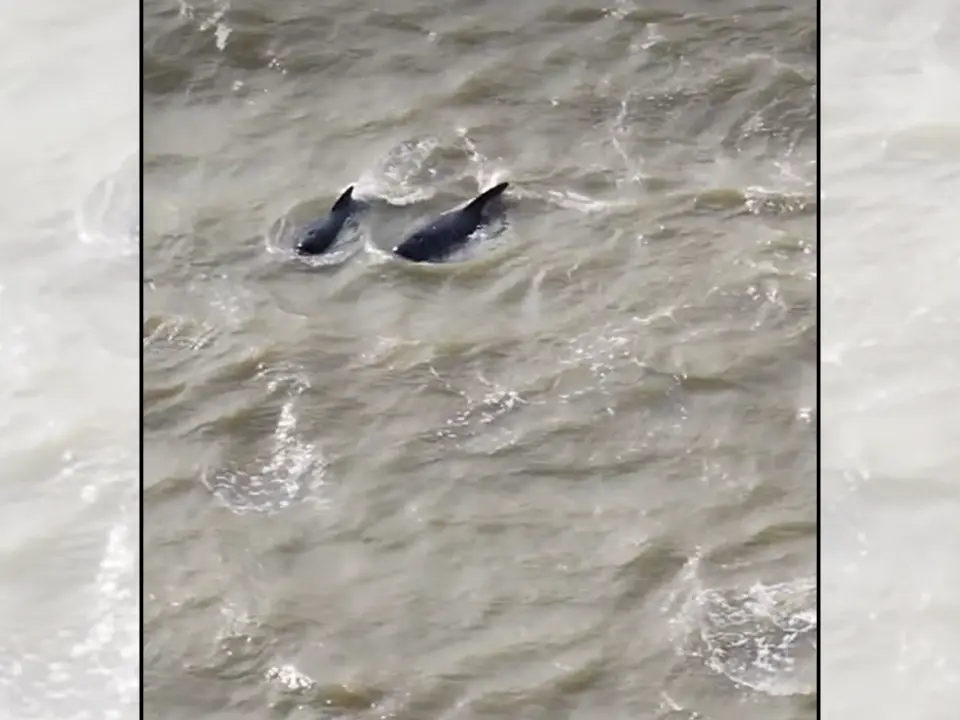&imwidth=600&imheight=450&format=webp&quality=medium "25 pilot whales lost in River Thames steered to sea in 'unusual' 6-hour operation")
Pod of 27 pilot whales got lost and reached River Thames and were rescued in a days-long operation. Photograph: (Port of London Authority)
River Thames is not an ideal environment for whales. If the pod had not been steered safely to the sea, a mass stranding would have occurred, leading to most of the animals dying. However, rescue teams safely steered them for over six hours, but two of them died.
A pod of 27 pilot whales got lost and became stranded in the River Thames last week and were directed towards the sea in an operation that ran for six hours. Two of them died amid the rescue operation. The pod was spotted by Marine Pilots on September 17. After Port of London Authority officials learned about the whales, they alerted the public on September 18 and told them to stay away from the area to avoid hurting them or themselves.
Whales looked confused
The operation to help them return to sea proved cumbersome. The pilot whales, which appear similar to dolphins, looked visibly confused in the Thames. Port of London Authority harbour master Lyn Kindlen told The Times that "they were heading off in all different directions." Many vessels also move through the area, and halting them was not an option. With this in mind, as well as the distress among whales, the rescue team kept adjusting the plan and regularly assessed the animals.
Six-hour operation saved 25 whales
The operation was carried out slowly over the weekend of September 19. Crews with the British Divers Marine Life Rescue organization (BDMLR), Marine Pilots, and local authorities in Gravesham and Thurrock led the pilot whales out. The "carefully co-ordinated effort" started at 7 am with experts in eight boats. They started directing the whales towards the sea. It was a slow process since the pod comprised mother whales with calves who needed to rest. The crew covered 20 nautical miles over six hours and rescued 25 pilot whales.
Two members of the pod died. One of them appeared unwell and washed up on the shore Friday. A second whale also reached the shore but managed to return to the water. However, officials said that it also likely died.
Trending Stories
)
)
)
)
)
)
)
)
)
)
)
)
)
)
)
)
)
)
)
)
)
)
)
&im=FitAndFill=(700,400))
)
)
)
)
)
)
)
)
)
&im=FitAndFill=(700,400))
)
)
&im=FitAndFill=(700,400))
)
Thames River “not normal” environment for whales
Port of London Authority said in a report that the River Thames "isn’t a normal place to see them," especially such a large pod, as it is not a "normal environment." It added, "This is not an environment where they do well, and the worst-case scenario was that we would see a mass-stranding, with the whole pod eventually washing up on the foreshore and dying."
Kindlen said it was "one of the most unusual and memorable operations" he had been involved in. "Herding a pod of lost pilot whales is not something I have ever done or thought I would end up doing!" He admitted that initially they thought that this might not end well. However, thankfully, they were able to save 25 of them.

