Sixty years after being discovered from a cave wall, 300,000-year-old skull is found to be a hominid

&imwidth=600&imheight=450&format=webp&quality=medium "Sixty years after being discovered from a cave wall, 300,000-year-old skull is found to be a hominid")
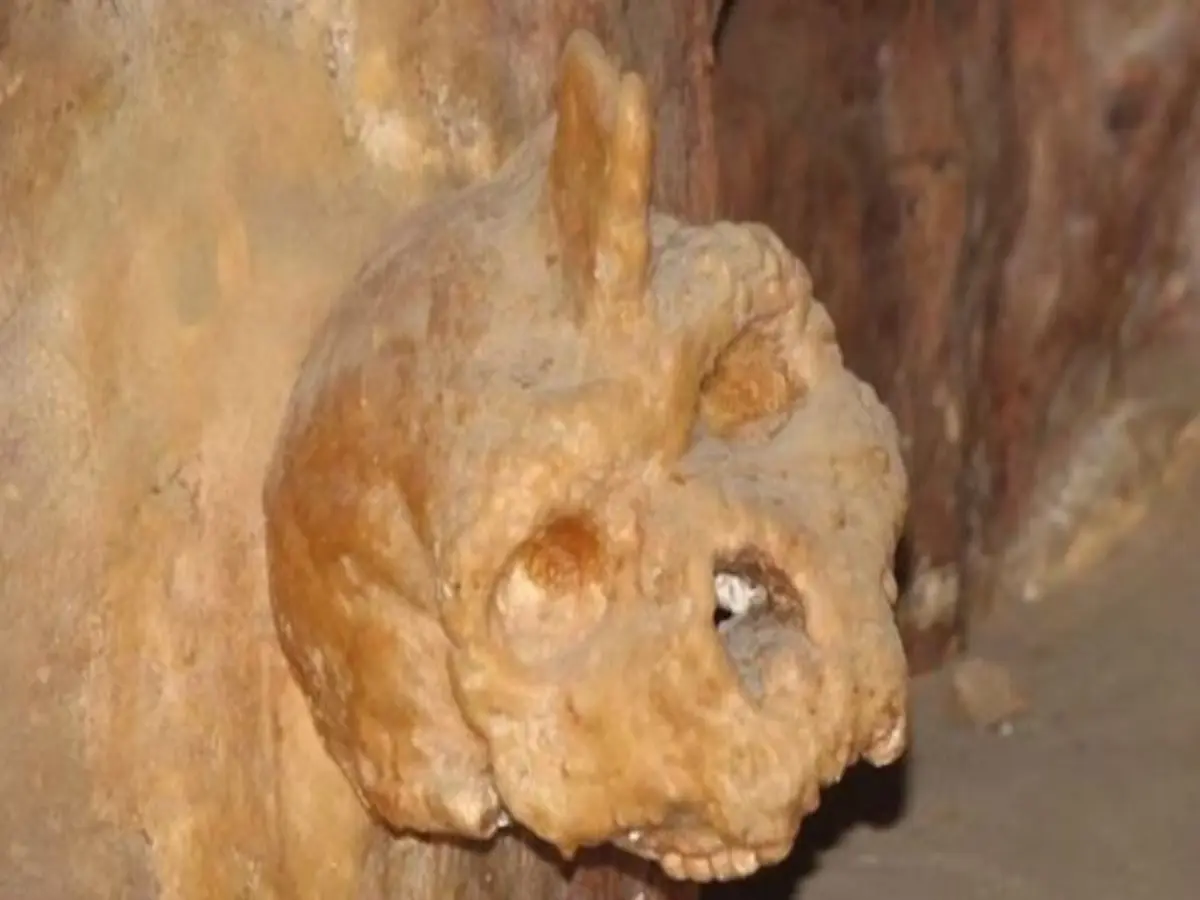
Petralona Cave skull
The findings corroborate previous research of the individual living in Europe alongside Neanderthals, but was part of the Homo heidelbergensis group.
After 60 years of it being discovered, scientists have finally identified the origins of a mysterious 300,000-year-old skull. The skull when discovered in 1960 was originally found attached to a wall in Petralona Cave in northern Greece. After a lot of research, using a precision technique called uranium-thorium dating, scientists have come to the conclusion that the skull likely belongs to a primitive, extinct hominid that lived alongside the Neanderthals.
Initially believed to be 170,000 and 700,000 years old, the uranium-series analysis of the calcite coating on the skull helped scientists to believe that the skull is 286,000 years old. The findings corroborate previous research of the individual living in Europe alongside Neanderthals, but was part of the Homo heidelbergensis group, which is distinct from both Homo sapiens and Neanderthals, according to a study published in Journal of Human Evolution.
After analysing the fossil's size and robustness, scientists came to the conclusion that the skull is of a man and gave it the name "Petralona man".
The Homo heidelbergensis group is believed to have lived between 300,000 and 600,000 years ago, in Africa. Some later migrated to Europe about 500,000 years ago.
"From a morphological point of view the Petralona hominin forms part of a distinct and more primitive group than Homo sapiens and Neanderthals, and the new age estimate provides further support for the coexistence of this population alongside the evolving Neanderthal lineage in the later Middle Pleistocene of Europe," the study said.
About the Petralona Cave where the skull was found
Trending Stories
&imwidth=280&imheight=210&format=webp&quality=medium)
&imwidth=280&imheight=210&format=webp&quality=medium)
&imwidth=280&imheight=210&format=webp&quality=medium)
&imwidth=280&imheight=210&format=webp&quality=medium)
&imwidth=280&imheight=210&format=webp&quality=medium)
&imwidth=280&imheight=210&format=webp&quality=medium)
&im=FitAndFill=(700,400)&imwidth=280&imheight=210&format=webp&quality=medium)
&imwidth=280&imheight=210&format=webp&quality=medium)
&imwidth=280&imheight=210&format=webp&quality=medium)
&imwidth=280&imheight=210&format=webp&quality=medium)
&imwidth=280&imheight=210&format=webp&quality=medium)
&imwidth=280&imheight=210&format=webp&quality=medium)
&imwidth=280&imheight=210&format=webp&quality=medium)
&imwidth=280&imheight=210&format=webp&quality=medium)
&imwidth=280&imheight=210&format=webp&quality=medium)
&imwidth=280&imheight=210&format=webp&quality=medium)
&imwidth=280&imheight=210&format=webp&quality=medium)
&imwidth=280&imheight=210&format=webp&quality=medium)
&imwidth=280&imheight=210&format=webp&quality=medium)
&imwidth=280&imheight=210&format=webp&quality=medium)
&im=FitAndFill=(700,400)&imwidth=280&imheight=210&format=webp&quality=medium)
&imwidth=280&imheight=210&format=webp&quality=medium)
&imwidth=280&imheight=210&format=webp&quality=medium)
&imwidth=280&imheight=210&format=webp&quality=medium)
&imwidth=280&imheight=210&format=webp&quality=medium)
&imwidth=280&imheight=210&format=webp&quality=medium)
&imwidth=280&imheight=210&format=webp&quality=medium)
&imwidth=280&imheight=210&format=webp&quality=medium)
&imwidth=280&imheight=210&format=webp&quality=medium)
&imwidth=280&imheight=210&format=webp&quality=medium)
&im=FitAndFill=(700,400)&imwidth=280&imheight=210&format=webp&quality=medium)
&imwidth=280&imheight=210&format=webp&quality=medium)
&imwidth=280&imheight=210&format=webp&quality=medium)
&imwidth=280&imheight=210&format=webp&quality=medium)
&imwidth=280&imheight=210&format=webp&quality=medium)
&imwidth=280&imheight=210&format=webp&quality=medium)
&imwidth=280&imheight=210&format=webp&quality=medium)
The Petralona Cave, where the discovery was made sixty years ago is located in Greece's Chalkidiki which is almost 50 km from the city of Thessaloniki. The cave was developed in the Upper Jurassic limestone of Mount Katsika where an important horizontal karstic network runs for several hundred meters.
