China lands reusable rocket booster, closes gap with SpaceX and Blue Origin

&imwidth=600&imheight=450&format=webp&quality=medium "China lands reusable rocket booster, closes gap with SpaceX and Blue Origin")
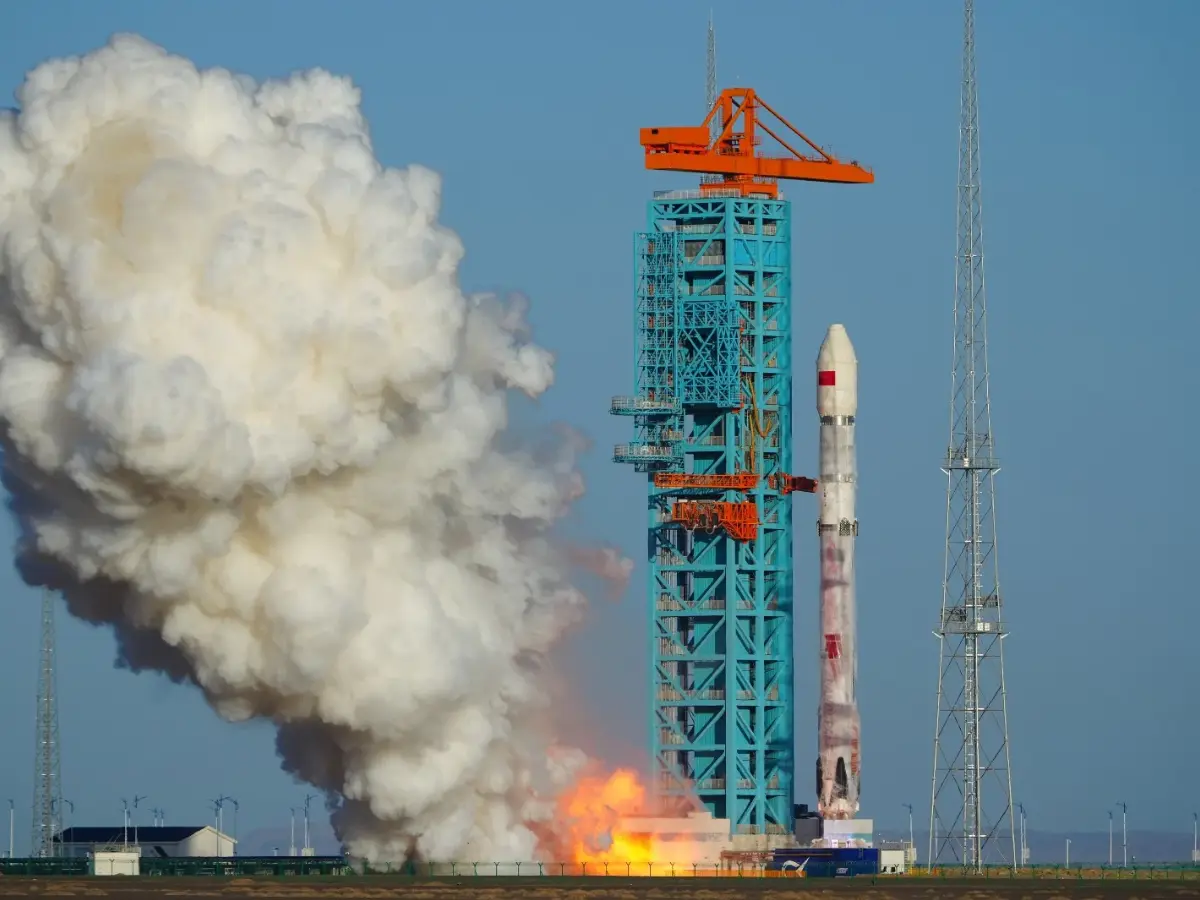
Zhuque-3 lands: China moves closer to SpaceX-style reusable rocket launches Photograph: (Xinhua)
China's private space race has taken a major leap. LandSpace has successfully landed the first stage of its Zhuque-3 rocket, moving the country closer to routine reusable launches and putting a new challenger into the race with SpaceX.
China has taken a major step forward in its push to build a reusable commercial space industry after startup LandSpace successfully landed the first stage of its Zhuque-3 rocket on Wednesday (Aug 18). The achievement puts LandSpace in a small group of private companies to have successfully recovered an orbital-class rocket booster, alongside SpaceX and Blue Origin. For China, the milestone marks progress in an area where the United States has built a significant lead.
Why this matters: The ability to recover and fly boosters again is seen as crucial to lowering launch costs and making frequent satellite launches commercially viable.
Also read | Want to survive the apocalypse? This Swiss firm is making end-of-the world bunkers for billionaires
Second attempt ends in successful landing
The 66.1-metre Zhuque-3 lifted off from the Dongfeng Commercial Space Innovation Pilot Zone in northwestern China.
Its nine-engine first stage separated after the launch and travelled back to a landing site in Gansu province, around 390 kilometres southeast of the launch pad, according to Chinese state media.
Trending Stories
)
)
)
)
)
)
)
)
)
)
)
)
)
)
)
)
)
)
)
)
)
)
)
)
)
)
)
)
)
)
)
)
)
)
&im=FitAndFill=(700,400))
)
)
)
)
The successful landing came on LandSpace's second attempt. The company's first reusable rocket attempt in December 2025 reached orbit but failed to complete the controlled landing.
China's answer to Falcon 9
LandSpace has positioned Zhuque-3 as a Chinese competitor to Elon Musk's SpaceX Falcon 9. The rocket uses a stainless-steel structure, which the company says can withstand higher temperatures and could reduce manufacturing costs compared with the aluminium-lithium alloy used in Falcon 9.
It is powered by methane and liquid oxygen, a combination LandSpace says burns more cleanly than Falcon 9's liquid oxygen and kerosene system.
Also read | Baba Vanga's 2026 prophecy: 2 predictions 'already came true', 3 terrifying ones remain. Details inside
For a one-time launch, Zhuque-3 can carry up to 14.2 tonnes into low Earth orbit, compared with 22.8 tonnes for Falcon 9, according to LandSpace. The company wants the Zhuque-3 booster to eventually be reused as many as 20 times.
LandSpace eyes rapid reuse
The next challenge is to prove that recovering a rocket can become a repeatable commercial operation. LandSpace says it plans to fly a recovered first-stage booster again within six months. That would be an important test of whether China can move beyond individual demonstration flights towards high-frequency launches.
SpaceX has already made booster reuse routine, launching Falcon 9 rockets roughly three times a week and flying recovered boosters repeatedly.
LandSpace is also seeking to raise 7.5 billion yuan, or about $1.11 billion, through a planned listing on Shanghai's STAR Market. Its updated prospectus says the company is targeting profitability by 2029.
China steps closer to the reusable launch market
Wednesday's landing was China's fourth attempt at recovering an orbital-class booster. The country has also been testing different recovery approaches. In July, China successfully demonstrated a net-based system for catching an experimental booster on a floating platform.

