Rahul Gandhi’s police station dharna: Political theatre, but a serious question remains

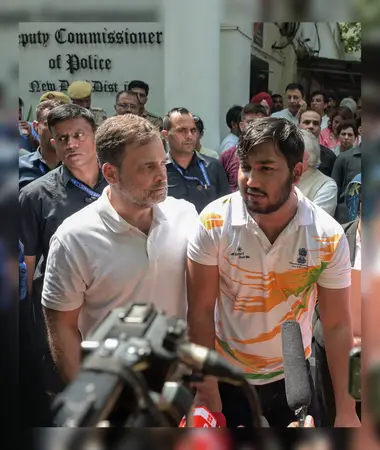
Rahul Gandhi Photograph: (ANI)
Rahul Gandhi’s dharna may be political theatre, but the unanswered question remains: why couldn’t a young man register an FIR after the July 20 Delhi clashes?
Rahul Gandhi’s dharna outside Delhi's parliament street police station is political theatre, but that does not make the question that he is raising any less serious. Right from the Monsoon Session of the parliament to the streets of the national capital, 20th July, this one date has created question after question, without a clear answer.
On 20th July, a protest by students in Delhi ended up in violent clashes. Amid competing political narratives of ‘violence by protesters’ vs ‘excessive force by police’, one basic question is getting buried: what happened to the individual who suffered? Will his grievance receive due process? The government can certainly point to anti-social elements for the violence. The opposition can point to police action. Both can hold press conferences, trade accusations and score political brownie points.
But why was a young man unable to register a simple FIR? Rahul Gandhi sitting at a police station may be dismissed as ‘politics of anarchy’ by the BJP, but the sharper question is this: if there's confidence that the July 20 actions were lawful, why should a transparent investigation and a properly recorded complaint be threatening?
The opposition cannot convert every victim into a political prop. But the police and state have to ensure that trust is brought back. If there was violence by protesters, investigate it. If there was excessive force by police, investigate that transparently too. Accountability cannot have a political party's flag because ultimately the question is why must an ordinary citizen need a politician to sit on a dharna, before his grievance is taken seriously. Political noise should not bury individual voice.
)
)
)
)
)
)
)
)
)
)
)
)
)
)
)
)
)
)
)
)
)
)
)
)
)
)
)
)
)
)
)
)
)
)
&im=FitAndFill=(700,400))
)
)
)
)
