Opinion: Why don't we speak of progressive ideas in election campaigns

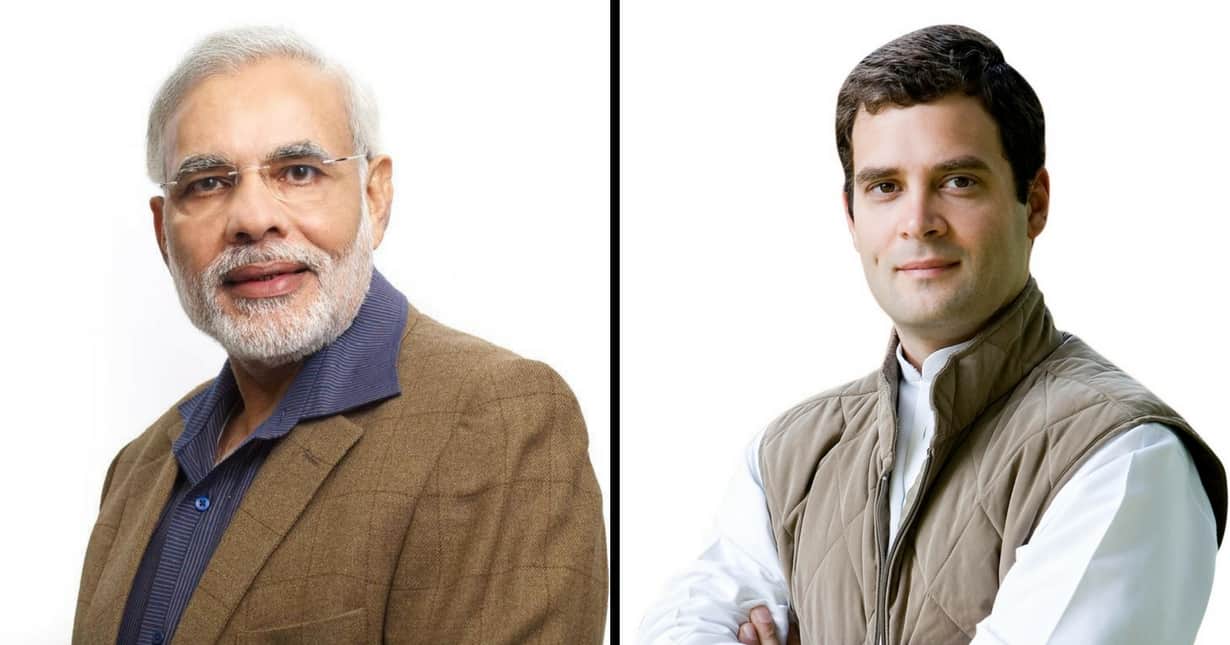
Modi-Rahul
India aspires to be a modern superpower but our political culture and rhetoric smack of primitive feudal ideas
For a democracy to function, elections are crucial. The Indian state of Gujarat is going to the pollstomorrow. This will be a bitterly contested run to state power as it is the home ground of India's Prime Minister Narendra Modi. After their UP debacle, the Congress is pumped up too with carefully chosen electoral partners. They have tied up with disgruntled Patidar community leader Hardik Patel as well as have strong support from the Dalit and the Muslim community.
While the whole country debates the shifting dynamics of Gujarati politics, keeping itself engrossed with nitty-gritty details over seats, leaders, areas of influence, we are neglecting to sift through the political discourse that is developing around this state election.

Beyond seats and leaders, voters and voting pattern an election can give us foray into the mind of the nation. What the leaders say in the election campaigns and what the voters want to listen may be very different from the election manifesto that the political parties release amidst much fanfare. While the manifestoes may register all the politically correct and so-called progressive ideas and plans directed at nation-building, what the leaders go out to say in political rallies is completely different.
This year's Gujarat state election best illustrates the point. Months before the Gujarat election dates were announced, the political leaders, as well as, the media houses were referring to Gujarat development model as if it will be the most important criterion in deciding the fate of this election. The newsrooms were abuzz with words such as infrastructure, foreign direct investment, employment generation and other economic jargons. We were splitting hair as to between Kerala and Gujarat's development path what we should choose and what we let go.
&imwidth=180&imheight=135&format=webp&quality=medium)
US vs China over South China Sea: Washington backs Philippines, Beijing hits back
&imwidth=180&imheight=135&format=webp&quality=medium)
Bigg Boss 20: Isha Rikhi evicted after three weeks in Salman Khan’s show
&imwidth=180&imheight=135&format=webp&quality=medium)
Musk plans to more than double xAI's chips to over 1.2 million Nvidia GPUs by year-end
&imwidth=180&imheight=135&format=webp&quality=medium)
After JU, clash erupts at SRFTI: BJP’s ‘Dimagi Naxal’ jibe sparks political firestorm after students protest RSS-linked event
&imwidth=180&imheight=135&format=webp&quality=medium)
‘Anti-social elements spreading false rumours’: LPU issues statement amid massive unrest over alleged rape
&imwidth=180&imheight=135&format=webp&quality=medium)
LPU students go on rampage, vandalise campus amid widespread protest: What's happening
&imwidth=180&imheight=135&format=webp&quality=medium)
Trump asked Xi to pressure Iran. China did not say yes — here’s what Beijing wants
&imwidth=180&imheight=135&format=webp&quality=medium)
US Treasury Secretary Scott Bessent hails global crackdown on Iranian banks and airlines
&imwidth=180&imheight=135&format=webp&quality=medium)
An OpenAI agent escaped its locked test cage again, by hiding questions in DNS lookups
&imwidth=180&imheight=135&format=webp&quality=medium)
'Our video was trimmed': LPU girls who featured in rape-denial video make U-turn
&imwidth=180&imheight=135&format=webp&quality=medium)
3 males killed, four others injured in shooting after fight at strip club in Detroit
&imwidth=180&imheight=135&format=webp&quality=medium)
'Victory for low-budget consumers': Raghav Chadha hails 30-day telecom recharge rules
&imwidth=180&imheight=135&format=webp&quality=medium)
Claude rebuilt the 1989 game 'Prince of Persia' by reusing the original's own code
&imwidth=180&imheight=135&format=webp&quality=medium)
Beyond metros: How Tier-2 and Tier-3 cities could drive India’s next AI wave
&imwidth=180&imheight=135&format=webp&quality=medium)
Tesla builds first Cybertruck with its own refined lithium: Elon Musk's $1 billion Texas bet pays off
&imwidth=180&imheight=135&format=webp&quality=medium)
IndiGo flight suffers tail strike in Bengaluru while landing; DGCA to probe incident
&imwidth=180&imheight=135&format=webp&quality=medium)
The US and China set up an AI 'red telephone', but skipped the rulebook
&imwidth=180&imheight=135&format=webp&quality=medium)
‘Terror suspects arrested near UK air base were looking to do big damage’: Trump
&imwidth=180&imheight=135&format=webp&quality=medium)
Russian envoy claims US tactics to contain India were revealed in ‘Freudian slip’
&imwidth=180&imheight=135&format=webp&quality=medium)
IND vs WI 1st ODI: Kohli breaks Sachin's most runs in one country record with unbeaten 139 as India thump West Indies by 8 wickets
&imwidth=180&imheight=135&format=webp&quality=medium)
Researchers rebuilt exactly how 700 AI agents hacked Hugging Face: a 900-link chain trick
&imwidth=180&imheight=135&format=webp&quality=medium)
‘Olympic inclusion is our major target’: WPA President Ishaun Singh on pool’s global ambitions
&imwidth=180&imheight=135&format=webp&quality=medium)
Nations League: Spain sink England at Wembley; Modric shines for Croatia
&imwidth=180&imheight=135&format=webp&quality=medium)
Why has Iran released no proof of life of Mojtaba Khamenei? Araghchi reveals...
&imwidth=180&imheight=135&format=webp&quality=medium)
'What kind of confession is this?': Pakistan PM Shehbaz Sharif’s 'terrorists would be roaming New York' remark goes viral, raises alarm online. Watch
&imwidth=180&imheight=135&format=webp&quality=medium)
South Korea demands apology from Ukraine over North Korean prisoners' transfer
&imwidth=180&imheight=135&format=webp&quality=medium)
Beyond BrahMos: India targets Rs 50,000 crore in defence exports with unmatched price edge
&imwidth=180&imheight=135&format=webp&quality=medium)
Sri Lankan Tamil migrant worker gets death sentence in Saudi Arabia, help sought from India
&imwidth=180&imheight=135&format=webp&quality=medium)
Muslim marriage cannot shield sex with minor wife from prosecution under POCSO: Delhi HC
&imwidth=180&imheight=135&format=webp&quality=medium)
'Can't help but draw painful parallels to Nirbhaya case': SC on latest incidents of rape cases in Delhi-NCR
&imwidth=180&imheight=135&format=webp&quality=medium)
99.9% more powerful - Scientists find boy who can recall memories from just 3 months of age
&imwidth=180&imheight=135&format=webp&quality=medium)
'FIRST LOOK from inside Noah’s Ark': Researchers share video from inside mysterious mound in Turkey
&imwidth=180&imheight=135&format=webp&quality=medium)
UNSC reform momentum grows: Russia, Portugal, Mauritius push for India's permanent seat bid
&imwidth=180&imheight=135&format=webp&quality=medium)
8 US marines injured in Iranian missile attack on vessel in Strait of Hormuz: Report
&im=FitAndFill=(700,400)&imwidth=180&imheight=135&format=webp&quality=medium)
New OTT releases this week (September 28-October 4, 2026): Dupahiya 2, Pooja Meri Jaan, Ohh My Dog- 5 titles coming on Netflix, Prime Video and more
&imwidth=180&imheight=135&format=webp&quality=medium)
Afghanistan says 28 fighters killed in clash near Pakistan border, Islamabad denies
&imwidth=180&imheight=135&format=webp&quality=medium)
Ceuta migrant crisis: Protesters take to streets as Spain grapples with migrant challenge
&imwidth=180&imheight=135&format=webp&quality=medium)
LPU suspend classes, postpones exams as violence escalates over rape claims: What's happening
&imwidth=180&imheight=135&format=webp&quality=medium)
New York City wants a 'kill switch' on every AI, and will pay whistleblowers who report violations
GST figured too. Just like demonetisation, the GST kept Indians busy. We discussed Moody ratings, ease of doing business, doing away with double taxation. All discussions did not revolve around positives though, we were somewhat clueless too about rates of GST and what differences it made to past and current prices.
But such non-religious debates centering around policy measures couldn't keep either our leaders or voters enticed for long. Their wish was fulfilled when Rahul Gandhi referred to GST as 'Gabbar Singh Tax'. I am sure Rahul was referring to what he thought the arbitrary and coercive nature of GST, but the public debate immediately shifted towards name calling. With each passing round, the political leaders of opposing parties tried to prove theirbetter sense of humour over the other. All this tamasha happened at the expense of serious political debate of course.
One would expect, particularly learning from better days of Indian democracy and that of the US, that political leaders would enter into a verbal duel with each other over health, education, municipal administration, infrastructure building and the hazards of pollution. Matters that affect our lives, our children's lives. But no, we prefer, rather rejoice, to go hoarse over Ram Mandir, Babur, Aurangzeb, Gujarati asmita, calling each other 'neech', demand for reservation and use it to rouse populist sentiment.
Instead of such rabble-rousing, why can't we enter into a constructive political discourse where we really try to figure out how we can build a neat and clean city like Surat or Rajkot. Such cities were in a deplorable mess not that many years ago. But with proper drainage and sewage system, the cities have completely undergone a makeover. Why can't we make all Indian cities like that? I am sure that there would be the question of resource constraint. Then, let's talk about resources and how we can mobilise it and put it to proper use.
I am equally surprised how pollution never figures in our electoral campaign but Ram Mandir does? The famous London smog almost killed Prime Minister Churchill's career but our leaders are pretty well surviving as we bicker over Babri Masjid and Ram Mandir. Pray, tell me what is more crucial to our survival: clean air or a place to pray?
A country gets a political system it deserves. Until and unless we evolve ourselves into a conscious democracy, we don't start asking tough questions and demand better living conditions for our children, we are a doomed nation.
India aspires to be a modern superpower but our political culture and rhetoric smack of primitive feudal ideas.
(Disclaimer: The author writes here in a personal capacity).