Cannes Film Festival 2026: Pawel Pawlkowski returns with Fatherland, receives six-minute standing ovation

&imwidth=600&imheight=450&format=webp&quality=medium "Cannes Film Festival 2026: Pawel Pawlkowski returns with Fatherland, receives six-minute standing ovation")
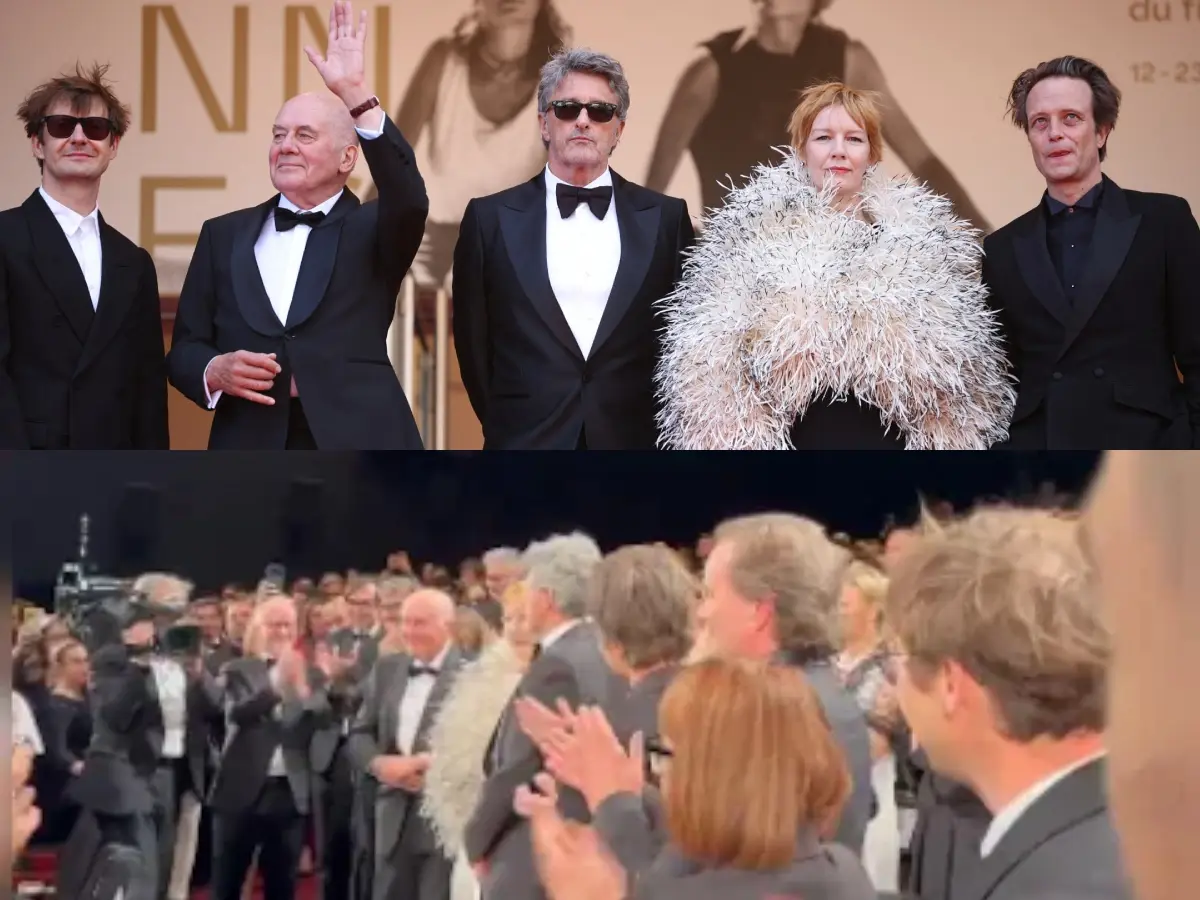
Fatherland receives standing ovation at Cannes Photograph: (X)
Pawel Pawlkowski's Fatherland received a six-minute standing ovation at the Cannes Film Festival. The world premiere of the film was on May 14.
The 79th Cannes Film Festival is currently underway on the French Riviera, which kicked off on May 12 and will end on May 23. From Alia Bhatt's red carpet looks that became the talk of the town to Vin Diesel making an appearance to celebrate the 25th anniversary of The Fast and the Furious franchise to Dylan Sprouse and Barbara Palvin announcing pregnancy on the red carpet. This year's event is buzzing on the internet. The latest addition to the list is Pawel Pawlkowski's Fatherland, receiving a standing ovation.
Pawel Pawlkowski's Fatherland receives standing ovation at Cannes
Pawel Pawlkowski's Fatherland received a six-minute standing ovation inside a packed Grand Theatre Lumiere. Pawlikowski, who co-wrote the screenplay with Hendrik Handloegten, appeared emotional. During the speech, Pawlikowski said, "I hope fifty per cent of you meant it. For once, I enjoyed watching one of my movies."
Fatherland marks Pawlikowski's return after an eight-year hiatus following his acclaimed 2018 film Cold War. The emotional reception inside the Palais has already sparked early Best Actress buzz for Sandra Hüller.
Trending Stories
)
)
)
)
)
)
)
)
)
)
)
)
)
)
)
)
)
)
)
)
)
)
)
)
)
)
)
)
)
)
)
)
)
)
&im=FitAndFill=(700,400))
)
)
)
)
All about Fatherland
Fatherland is a biographical film directed by Pawel Pawlikowski, who co-wrote the screenplay with Hendrik Handloegten. It centres on Nobel Prize-winning German writer Thomas Mann (played by Hanns Zischler) and his daughter Erika (Sandra Hüller) as they embark on a melancholy road trip across a devastated, divided Germany in 1949.
The film stars Sandra Hüller and Hanns Zischler as Erika; August Diehl; Devid Striesow; Anna Madeley; and Thomas Mann. The film will have its world premiere in the main competition of the 79th Cannes Film Festival on 14 May 2026, where it will compete for the Palme d'Or. It will receive a theatrical release in Poland by Kino Świat on June 19, 2026.
The film features Pawlikowski’s signature luminous black-and-white cinematography (shot by Lukasz Zal) and strict, minimal framing, rounding out a loose, thematic trilogy on postwar European regret that includes Ida and Cold War.

