&imwidth=800&imheight=600&format=webp&quality=medium "Iran war and G7 nations: Why is it similar to the ‘blind men and the elephant’ story? The Big Question")
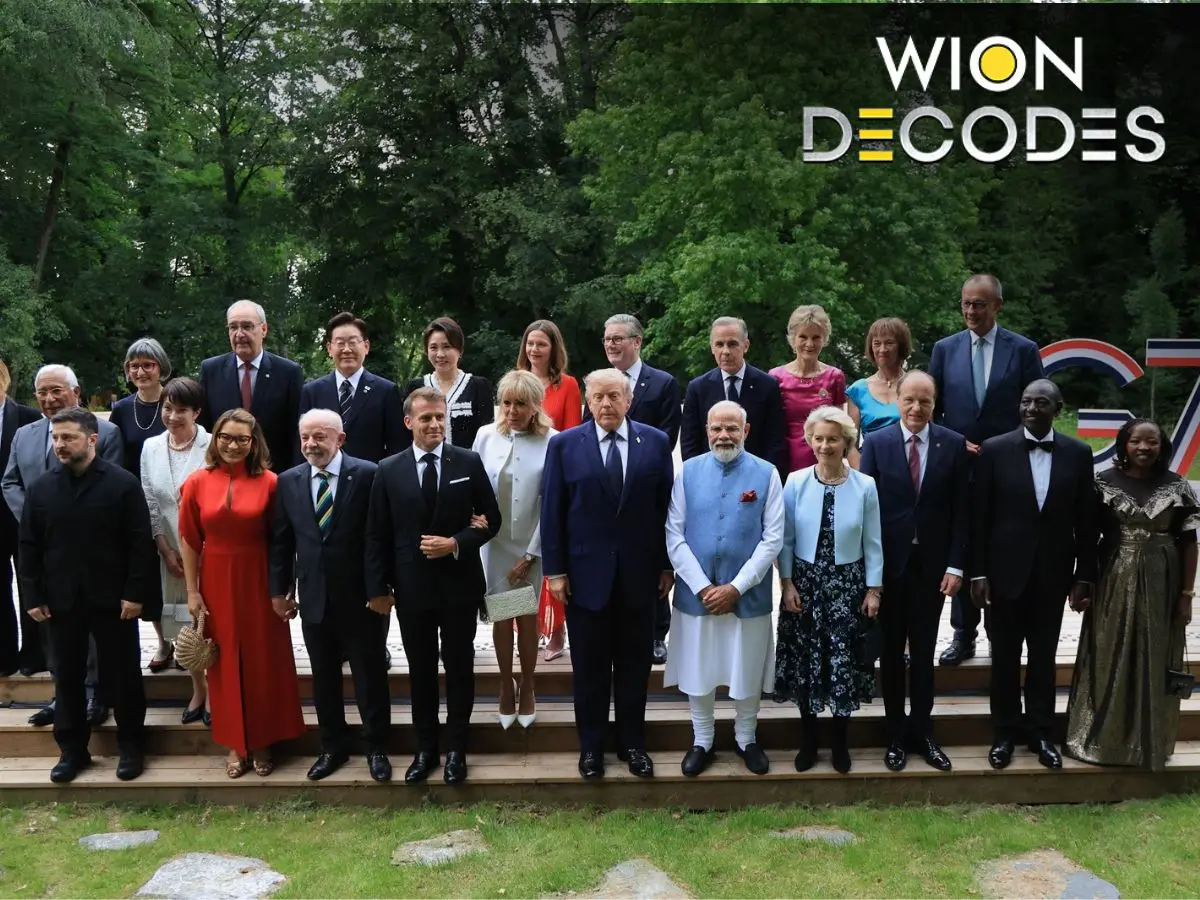
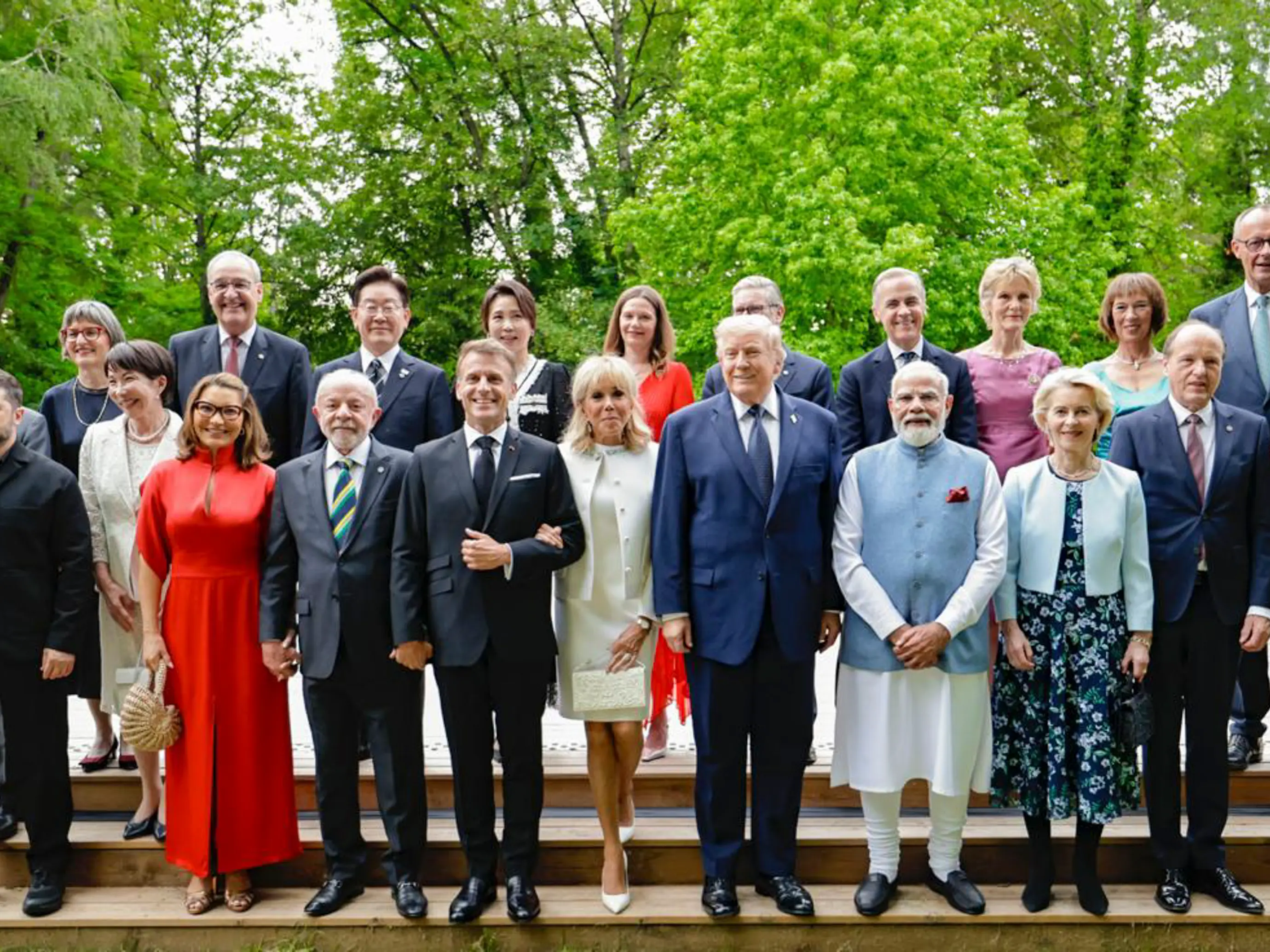
The just-concluded G7 summit in France had the Iran-US-Israel war as its main focus, overshadowing the rest of its agenda. That's because US President Donald Trump hogged the limelight with talk about the Iran-US peace deal before, during, and after the meeting. The G7 member states exhibited national-interest-focused approaches to the Iran war, similar to the blind men and the elephant story, with each considering the shape of the problem from its own perspective. The US-Iran memorandum of understanding (MoU), announced by Trump just ahead of the G7 summit, was remotely signed after the gathering. For most of the G7 participants, the war was primarily an economic headache, particularly because of the disruption to energy traffic through the Strait of Hormuz. The sharp spikes in global oil and liquefied natural gas (LNG) prices, which resulted in an increased cost of living in many countries, were at the back of their minds. Here is how G7 member states and guest nations, particularly India, viewed the four-month war and its aftermath.
How Trump shaped the G7 atmospherics around Iran

Trump arrived at G7 summit after announcing the Iran-US MoU. After the summit, it was remotely signed by him and Iranian President Masoud Pezeshkian. The MoU will pave the way for the Strait of Hormuz to reopen completely, toll-free after mine-clearing.
The 14-point "Islamabad MoU", mediated in part by Pakistan, includes:
- An immediate ceasefire across all fronts, including Lebanon.
- An end to the US naval blockade of Iranian ports.
- Phased sanctions relief for Iran, subject to its compliance on nuclear issues and support for regional proxy militant groups.
- A 60-day period for nuclear negotiations.
- The clearing of mines by Iran from the Strait of Hormuz within 30 days.
- Oil export waivers for Iran.
- Access for Iran to a $300 billion regional development fund, subject to its behaviour.
Trending Stories
)
IND vs JPN one-off T20I: India survive scare from Japan to win five-over a side match by 2 runs
)
Putin's United Russia party wins 355 seats in Duma election; 4 other parties cross threshold to enter parliament
)
AI models chose to harm humans to stop ‘pain,’ alarming study raises fresh safety questions
)
‘0% chance’: Nvidia CEO Jensen Huang dismisses AI extinction fears by 2030
)
Samay Raina-Mukesh Chhabra controversy explained: What happened over girlfriend joke on India's Got Latent?
)
Trump's helipad event overshadowed by audio failure as major TV networks suspend pool coverage
)
Russia-Ukraine war: Russian strikes knock out three of Ukraine's largest steel plants
)
'Needs time away from the international scene': England white-ball captain Brook on pacer Brydon Carse's future
)
Glitch in the matrix caught on camera: Woman vanishes after talking to reporter
)
Anti-AI activists storm summit, say 'incompetent' leaders are leading us into a disaster - 'We need a vote'
)
Samsung raises Galaxy S26 prices by Rs 20,000: Here’s what each model now costs
)
J&K Assembly Session begins amid chaos: BJP, ruling alliance clash as statehood demand dominates
)
Key accused in Bihar's Jamui molestation case, arrested after police shoot him in leg
)
Randeep Hooda arrives in Gujarat for his first National Film Award: ‘Very grateful’
)
US and China vie for AI dominance as calls grow for regulation | Gravitas
&im=FitAndFill=(700,400))
Anant Nag to recieve Dadasaheb Phalke Award: From Ankur to Nishant- Revisit his best films and iconic performances on OTT
)
FIFA chief Infantino wants to reform governing body with consultation from federations
)
The Verdict | The Mecca Agreement is under scrutiny as Houthis attack Saudis
)
India at UNGA81: Jaishankar warns global order under 'growing stress', pushes for ‘reformed multilateralism’
)
Raaka creates history! Allu Arjun’s film secures Guinness World Record ahead of release
)
Saudi Arabia exits China-led mBridge digital currency platform amid Saudi-Houthi conflict
)
'Lot of things to learn from experienced players': Jayasuriya backs Rohit, Virat for 2027 ODI World Cup
)
$110 billion Warner Bros merger: Paramount reaches settlement with 12 US states
&im=FitAndFill=(700,400))
New OTT releases this week (September 21-27, 2026): Shaque: Trust No One, Hunkkaar, Don’t Be Shy- 5 new titles coming to Netflix, Prime Video and more
)
From ‘communist’ to ‘great mayor’: Trump praises Mamdani after New York meeting, discusses immigration and housing
)
Report: Zelensky meets CIA chief Ratcliffe at Shannon airport, weeks after his secret Moscow trip
)
How Zaheer Khan came to be CSK's head coach of IPL 2027
)
Pilot recreates Mona Lisa in sky over Oklahoma and Arkansas in four-hour flight: VIDEO
)
UK PM Burnham agrees to 'defensive' military support for Saudi Arabia against Houthis
)
Jailer 2: Vidya Balan joins Rajinikanth's upcoming film as Kantha | Watch
)
Microsoft executive called AI training the ‘largest theft of labour in human history’
)
40-foot waves crash into cruise ship in dangerous stretch near Antarctica. Watch
)
US-Iran war, peace deals and more: What to expect from Trump's UNGA 2026 speech
)
Explainer: Why rare-earth export licences and Board of Trade are US priorities ahead of Trump-Xi summit
)
BTS fans mock iHeartRadio’s day 2 turnout after short set controversy
)
Two infants die after fire breaks out at RIMS newborn care unit in Telangana's Adilabad
Even after signing, both the US and Iran gave different public accounts of what had been agreed. More details are expected when the agreement is formally signed in Geneva on Friday.
G7 economic pressures may have driven the urgency to end the Iran war
The Hormuz blockade halted nearly 25 per cent of global seaborne oil trade and 20 per cent of LNG flows, including supplies to most G7 nations. Some 20,000 mariners were stranded and 2,000 ships were stuck, according to the International Maritime Organization (IMO). The resulting oil price spikes led to higher inflation and gas prices. The US's allies, most of them also G7 members, pushed for rapid implementation of the agreement to stabilise markets, as their main interest was the economy, not any regime change in Iran.
How the G7 leaders reacted to Iran peace: All about Hormuz and the economy
Once the peace MoU was announced, the G7 leaders welcomed the agreement primarily for easing economic instability. French President Emmanuel Macron said the war had "terrible consequences for our economies". While France did not do much during the war to help the US, Macron said his country and its partners were "ready to take action very quickly", including observation flights within 48 hours, frigates, and aircraft carrier support already in the region to reopen the strait peacefully.
Japan stressed free and safe navigation through the Strait of Hormuz, even as it opposed unjustified export restrictions, linking the issue to its own energy security concerns. Macron had invited energy-producing nations such as Qatar and the United Arab Emirates (UAE) to the G7 as strategic hedges. Trump met the Emir of Qatar, a top LNG producer, on the sidelines of the summit.
For India, it was concerns over energy prices and seafarer safety
Indian Prime Minister Narendra Modi, a special invitee to the G7, was categorical in mentioning the safety of Indian seafarers during his bilateral meeting with Trump. India, a net energy importer, was among the nations badly affected by the energy price shocks caused by the Hormuz blockade.
Equally concerning for India were the killings of Indian seafarers operating vessels in international waters.